Trump’s Allies Stumble, Exposing MAGA Movement’s Weaknesses
Recent events reveal cracks in the MAGA movement, from JD Vance's failed support for Viktor Orban in Hungary to disappointing Turn Point USA rallies. Trump's attacks on Pope Leo also alienate allies and expose strategic missteps. These challenges suggest a weakening of the movement's influence.

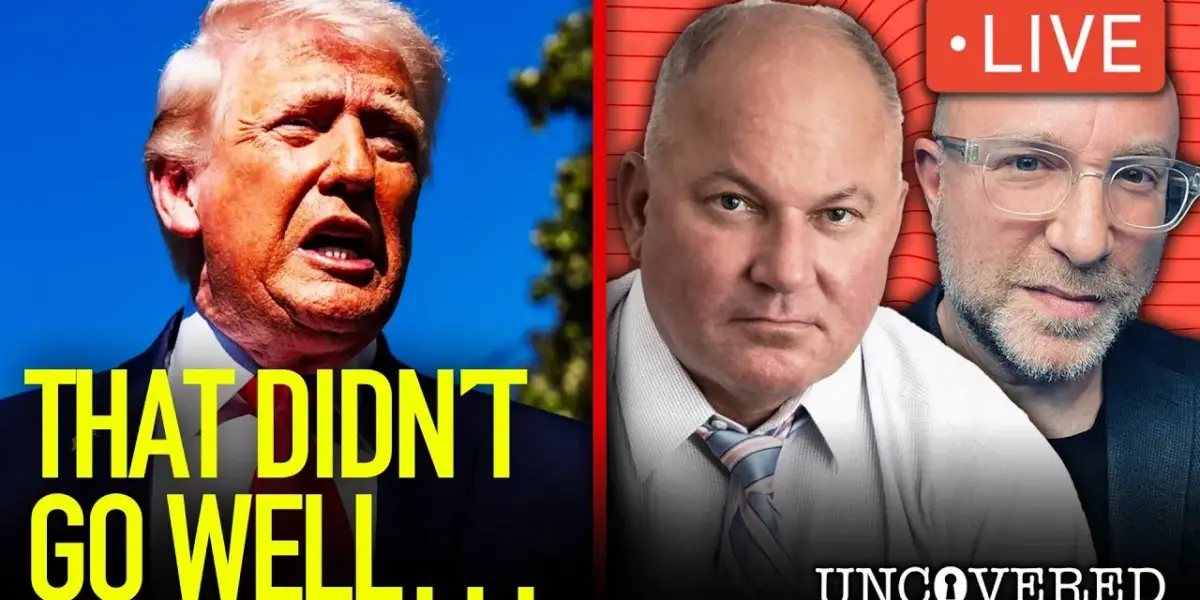
MAGA’s Global Footprint Shows Cracks
Recent events suggest that the MAGA movement, often presented as a unified force, is facing significant challenges both at home and abroad. A key figure, Vice President JD Vance, recently traveled to Hungary to campaign for Viktor Orban. However, Orban’s party lost the election, a clear setback for Vance and the Trump-aligned agenda he was promoting.
This move by Vance, along with Senator Rubio’s similar support for Orban, raises questions about political judgment. Both politicians were backing a candidate whose party was widely predicted to lose, despite polls showing a strong possibility of defeat. This decision to heavily invest their political capital in Orban’s campaign, especially for a rising politician like Vance, appears risky.
Hungary: A Troubling Connection
The situation in Hungary is particularly concerning. Reports suggest that the Orban government has been used as a channel for Russian money. This funding, allegedly from Vladimir Putin, is said to have been funneled through Hungary to right-wing groups in the United States, like CPAC, and other movements across Europe. The newly elected Hungarian government, led by Peter Magyar, has indicated a strong intention to investigate these financial flows, which could expose uncomfortable truths for many figures in both Europe and the U.S.
The involvement of JD Vance in campaigning for Orban, especially given these allegations, suggests a potential quid pro quo. Following the money trail in this instance appears to lead directly back to the Kremlin, highlighting a worrying link between certain MAGA-aligned figures and Russian influence.
JD Vance: A Political Chameleon’s Struggles
JD Vance’s political career itself has been marked by significant shifts. Early on, he was an outspoken critic of Donald Trump, even describing him in harsh terms. He also identified as an atheist and was married to an Indian-American woman, a combination not typically favored in conservative Republican primaries.
However, as he sought a Senate seat in Ohio, Vance underwent a dramatic transformation. He became a staunch supporter of Trump, converted to Catholicism (a faith with a strong following in Ohio’s Republican party), and changed his public persona. Despite these significant changes and considerable financial backing from wealthy donors, Vance struggled in the Republican primary, often placing fourth.
His breakthrough into the Senate, and later to the vice-presidential nomination, was not due to his own electoral success. Instead, it was a direct result of Donald Trump’s endorsement, which propelled him from fourth place to victory in the primary. Similarly, his selection as Trump’s running mate came after many advised against it, again demonstrating reliance on Trump’s favor rather than independent political strength.
Turning Point USA Event: A Sign of Declining Influence
The struggles of Turning Point USA, an organization that previously mobilized young conservative voters, also point to a potential decline in MAGA’s grassroots power. A recent rally featuring JD Vance, intended to support Republican candidates, was a major disappointment. Despite renting a large arena, very few people showed up, leaving the venue largely empty.
This event highlights several issues. Firstly, the passing of Charlie Kirk, the charismatic founder of Turning Point USA, has left a void. His ability to organize and connect with audiences was a key driver of the organization’s success. His successors have apparently struggled to maintain that momentum, leading to a decline in engagement.
Secondly, JD Vance himself was the headline speaker. His presence, meant to draw a crowd, seemed to have the opposite effect. Combined with a perceived lack of charisma and a history of empty promises, Vance’s appearance likely contributed to the poor turnout. The event was further marred by controversy surrounding Erica Kirk, Charlie Kirk’s widow, who withdrew at the last minute, citing security threats. However, Candace Owens publicly challenged this, suggesting the real reason was poor ticket sales, a claim that gained traction given similar issues with other Turning Point events.
Trump’s Attacks on Pope Francis: A Strategic Blunder
Another significant misstep has been Donald Trump’s public criticism of Pope Francis. Historically, Trump found political success in attacking Pope Francis, an act that helped him win over conservative Catholic voters in 2016. However, the current Pope, Pope Francis, is deeply unpopular with American conservative Catholics, while the newly elected American Pope, Pope Leo, is highly regarded by this same group, with a 79% approval rating.
Trump appears to be attempting to repeat his 2016 strategy by attacking Pope Leo. This is proving to be a major political error. Pope Leo’s message of peace and his focus on the suffering caused by war, particularly in the Middle East and Ukraine, resonate strongly with many. Trump’s personal attacks on the Pope, accusing him of being too liberal and not caring about crime or nuclear threats, are backfiring.
Alienating Key Allies
This conflict with Pope Leo has not only alienated a popular religious figure but also strained relationships with international allies. Giorgia Meloni, the Prime Minister of Italy, a key ally of Trump, publicly denounced his remarks about the Pope. This forced Meloni to take a stand against Trump, a departure from her previous cautious approach, creating a rift between them.
Trump’s claims that Iran is close to developing nuclear weapons and that this is the primary threat are also being questioned. Critics point out that Trump himself previously claimed to have dismantled Iran’s nuclear program. Furthermore, there is strong suspicion that Trump’s focus on Iran’s nuclear capabilities is not primarily about protecting American cities, but rather about protecting Israel, a point often overlooked in his rhetoric.
The Crumbling MAGA Matrix
The events described—Orban’s election loss, the empty Turning Point rally, and the conflict with Pope Leo—paint a picture of a movement facing significant internal and external pressures. The loss in Hungary, where Orban had systematically worked to rig elections, sends a strong message that such tactics may not be sustainable indefinitely. The Hungarian people, after a long period of manipulation, chose a different path, electing Peter Magyar, a conservative who is not seen as a Putin puppet or corrupt.
The connection between Hungarian politics and the MAGA movement, particularly through alleged Russian funding of groups like CPAC, suggests a broader network that is now under scrutiny. The failure of Turning Point USA events to draw crowds indicates a potential waning of enthusiasm among younger supporters, especially without charismatic leadership.
Finally, Trump’s attacks on Pope Leo, a figure widely respected by conservative Catholics, risk alienating a crucial voting bloc. This is compounded by the fact that these attacks have also damaged his relationship with Prime Minister Meloni, his second-biggest ally in Europe after Orban. These combined factors suggest that the MAGA movement, despite its continued presence, is showing signs of internal weakness and external isolation.
Why This Matters
The unfolding events are crucial for understanding the current state and future trajectory of the MAGA movement. The struggles of key figures like JD Vance, the apparent decline in the effectiveness of organizations like Turning Point USA, and the alienating rhetoric towards influential figures like Pope Leo all suggest a movement that may be losing its grip. The alleged financial ties to Russia through Hungary also raise serious questions about foreign influence in American politics. The outcome of these challenges will shape not only future elections but also the broader political landscape and America’s standing on the global stage.
Implications and Future Outlook
The recent setbacks suggest that the MAGA movement may be entering a more challenging phase. The reliance on Trump’s endorsement rather than organic support, the apparent difficulty in mobilizing grassroots enthusiasm without charismatic leaders, and the alienation of potential allies all point towards a potential decline in influence. The upcoming elections will be a critical test of whether these weaknesses are temporary or indicative of a more permanent shift. The continued investigation into alleged foreign funding could also have significant repercussions.
Historical Context
The political landscape has long been shaped by figures who adapt their personas and ideologies to gain power. JD Vance’s transformation from a Trump critic to a loyal supporter mirrors historical examples of political opportunism. Similarly, the use of populist rhetoric and the targeting of established institutions, like the Papacy, have been tactics employed by various political movements throughout history. The allegations of foreign interference in domestic politics also have historical precedents, though the specific nature of these allegations involving Russia and right-wing movements adds a contemporary layer to these concerns.
Source: LIVE: MAGA gets UNCOVERED as Trump Stunts SPARK BACKLASH (YouTube)

Related Articles
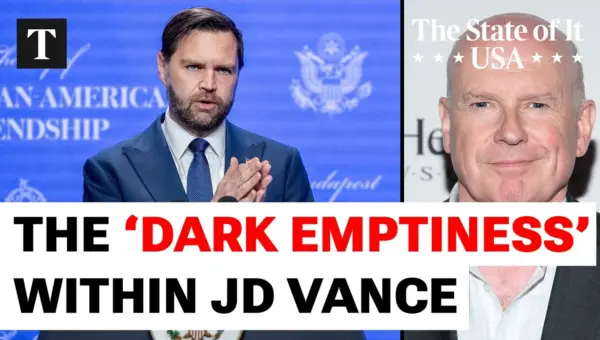
Trump’s “Malignant Narcissism” and Vance’s “Dark Emptiness”
Gerard Baker and Katy Balls discuss Donald Trump's "malignant narcissism" and JD Vance's perceived "dark emptiness." The conversation covers the US blockade of Iran, Vance's evolving role, and Trump's controversial "Jesus Christ" post, exploring its political implications and the nature of faith and authenticity in politics.
Trump Officials Dodge Key Questions on Economy, Gas Prices
Top Trump administration officials faced tough questions on rising gas prices and economic woes during a press briefing. Critics argue officials dodged key issues, offered vague promises, and deflected criticism by attacking opponents, all while serious economic concerns were met with lighthearted jokes.
China-US Tensions Flare: Blockade Risk Sparks Superpower War Fears
The U.S. blockade in the Strait of Hormuz has intensified tensions with China, raising fears of a potential superpower conflict. Expert Roger Boyes highlights China's use of a "shadow fleet" and military support for Iran, while President Trump attempts a delicate diplomatic approach ahead of a key meeting with President Xi Jinping.