China’s Iran Gambit: Deception or a New World Order?
President Trump claims China will stop sending weapons to Iran, but deep skepticism remains due to China's past support and use of spy satellites to aid Iran. This move could be a strategic ploy to weaken the US military.

China’s Iran Gambit: Deception or a New World Order?
President Donald Trump made a significant announcement on April 15th, claiming China has agreed to stop sending weapons to Iran. This statement comes amid ongoing conflict and a complex web of international relations. Trump suggested this agreement was part of a broader effort to stabilize the Strait of Hormuz, stating, “I am doing it for them also and the world. This situation will never happen again.” He even predicted a friendly meeting with Chinese President Xi Jinping, saying, “President Xi will give me a big fat hug when I get there in a few weeks.” This hopeful outlook contrasts sharply with the harsh realities of the conflict and China’s past actions.
A History of Support and Suspicion
The claim that China will cease arms shipments to Iran is met with considerable skepticism. For a long time, China has been a key supporter of Iran, especially in its energy sector. Iran’s cheap oil helps prop up the Chinese economy. Therefore, cutting ties with Iran would be a major shift for Beijing. The speaker in the video expresses doubt, suggesting China might simply become more secretive about its support rather than stopping it entirely. This suspicion is fueled by China’s previous behavior, including its role in helping Iran target American bases.
The Satellite Revelation
Evidence presented in the video points to a deeper Chinese involvement than just weapons. A report from the Financial Times reveals that Iran acquired a Chinese spy satellite, the TE01B, in late 2024. This satellite was reportedly used by Iran’s Islamic Revolutionary Guard Corps (IRGC) to monitor and target U.S. military bases in the Middle East. Leaked documents show Iranian commanders used the satellite for intelligence gathering, including imagery from before and after drone and missile strikes on American positions. This intelligence is considered as lethal as any weapon, providing crucial targeting data. The speaker argues that this act alone makes it hard to believe China’s promises to stop supporting Iran.
Strategic Motivations: Bleeding the US Dry
The underlying concern is that China sees the ongoing conflict as an opportunity. By allowing or even encouraging Iran to continue its actions, China may be aiming to deplete American military resources. The longer the war drags on, the more air defense interceptors and other supplies the U.S. expends. This, in turn, could weaken America’s ability to defend Taiwan if China decides to make a move. The speaker calls this a strategy to “bleed the US military,” suggesting that China views the conflict as a way to gain a strategic advantage.
A Pattern of Mistrust
The speaker emphasizes that the Chinese Communist Party (CCP) cannot be trusted. Past promises made by China regarding the South China Sea and involvement in the Ukraine war have not been kept. This history of broken promises leads to a deep-seated skepticism about their current commitments. Even if China tells President Trump they will stop sending weapons, the speaker believes they will continue to help Iran, perhaps through intelligence sharing or other covert means.
Shifting Alliances and Military Posturing
The video also touches upon other developments. There’s mention of Pakistani fighter jets possibly being present over Tyre, Lebanon, as Pakistani officials were in the area for ceasefire talks. Meanwhile, the U.S. Navy has established a blockade of Iranian ports. Nine vessels have already been turned back, and warnings have been issued that non-compliant ships will be boarded and potentially seized. Force will be used if necessary to ensure compliance with the blockade.
Negotiations and Uncertain Futures
Negotiations surrounding Iran’s nuclear program appear to be complex. President Trump reportedly expressed dissatisfaction with a proposed 20-year ban on uranium enrichment. Despite these challenges, there are reports of a potential two-week extension of the ceasefire to allow for a permanent deal. However, the situation remains fluid, with conflicting reports and a lack of clear information. This uncertainty is compounded by the movement of U.S. B-52 bombers, which are being staged in the United Kingdom, signaling that military options remain on the table.
Lebanon Under Fire
Despite being a key focus in negotiations, Lebanon continues to face Israeli airstrikes. Targeted strikes have hit vehicles and a Hezbollah facility. These actions occur even as Iran claims a ceasefire in Lebanon was a crucial part of any deal. This highlights the ongoing military actions that persist despite diplomatic efforts.
Why This Matters
The situation surrounding China, Iran, and the ongoing conflict has significant global implications. Trump’s announcement about China’s withdrawal from supporting Iran, if true, could reshape regional stability. However, the deep-seated mistrust and evidence of past deception by China raise serious questions about the sincerity of this agreement. The potential for China to use regional conflicts to weaken the U.S. militarily and strategically poses a long-term threat. Understanding these dynamics is crucial for assessing the future of international relations, the balance of power in Asia, and the potential for future conflicts.
Implications, Trends, and Future Outlook
This event highlights a growing trend of strategic competition between the U.S. and China, played out through proxy conflicts and economic pressures. China’s calculated approach, using Iran as a means to tie down U.S. resources, is a tactic that could be replicated elsewhere. The U.S. faces the challenge of managing multiple global hotspots while contending with a rising power that employs asymmetric strategies. The future outlook suggests continued geopolitical tension, with a focus on intelligence gathering, cyber warfare, and economic influence as key battlegrounds. The reliability of international agreements and the trustworthiness of major global players will remain central questions.
Source: Trump Drops SHOCKING China-Iran War News: Truth Is Far More SINISTER (YouTube)

Related Articles

Oil Prices Surge to $91 Amid Geopolitical Tensions
Oil prices have surged to $91 a barrel, driven by disruptions in the Strait of Hormuz. This is leading to higher gas prices across the U.S., with California facing particularly steep costs. The situation is fueling debate on energy policy, exports, and the transition to renewable fuels.
China Aids Iran Amid US Conflict Escalation
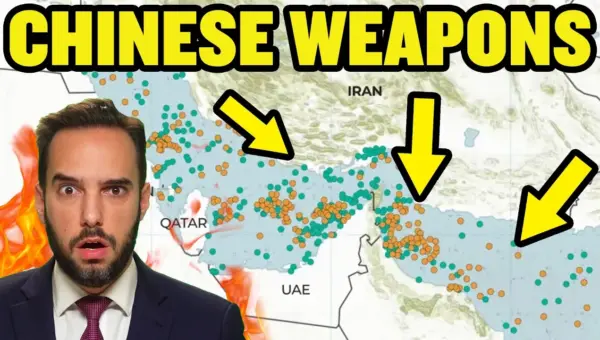
Recent intelligence suggests China is secretly supplying Iran with weapons like MANPADS and sharing critical intelligence, a significant escalation from its previous stance. This move, if confirmed, could deepen regional conflict and lead to severe US economic retaliation, while highlighting long-standing strategic ties between Beijing and Tehran.
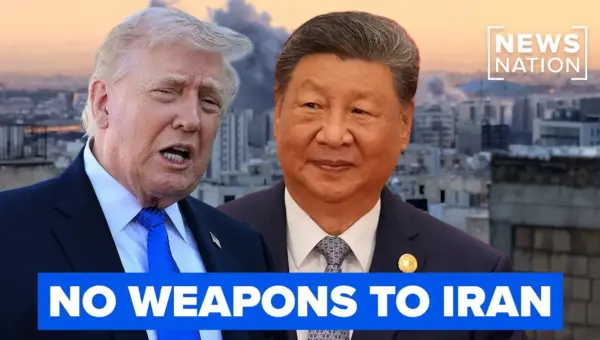
China Backs Strait of Hormuz Blockade, Halts Iran Arms
China has agreed not to supply weapons to Iran and is not opposing the U.S. naval blockade in the Strait of Hormuz. This significant development comes as President Trump prepares for a state visit to China and aims to pressure Iran by controlling vital shipping lanes. The move impacts global trade and reshapes regional power dynamics.