Air Travel Chaos Erupts as Gulf Conflict Shuts Skies
Tens of thousands of passengers are stranded as the conflict in the Persian Gulf forces widespread airspace closures, disrupting global air travel. A tourist in Israel described witnessing air strikes and the desperate search for escape routes amidst rapidly changing travel options.

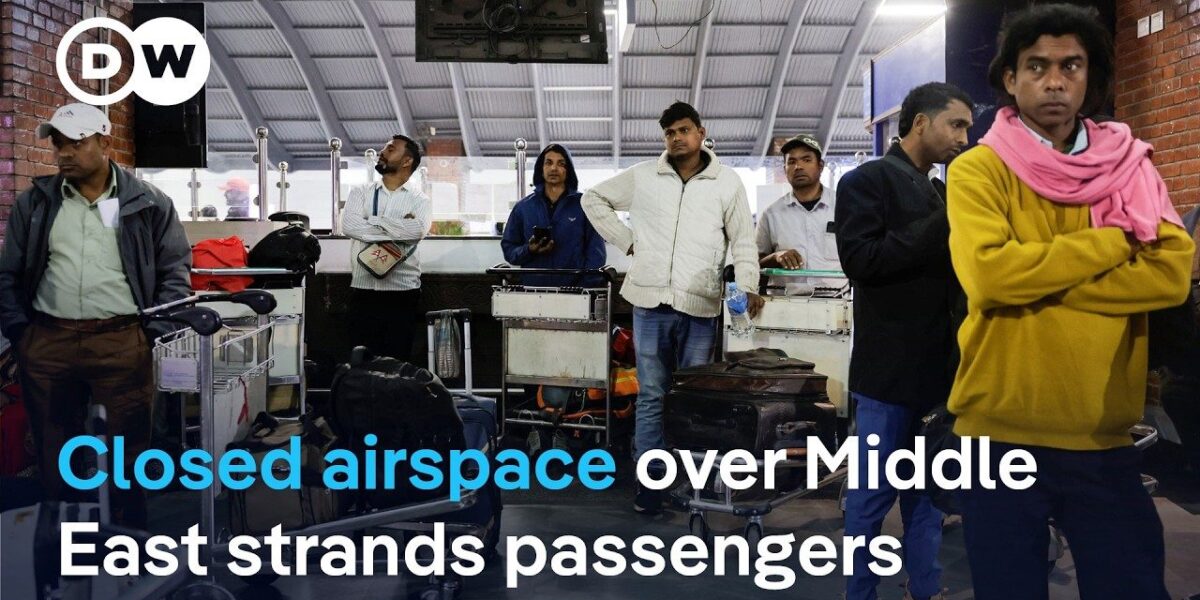
Middle East Airspace Closures Spark Global Travel Disruption
The escalating conflict in the Persian Gulf region has triggered a wave of airspace closures across multiple nations, leading to widespread travel chaos and stranding tens of thousands of passengers. Dubai International Airport, a global aviation hub, reported smoke near its facilities as Iran launched retaliatory strikes on Gulf Arab states and U.S. Military bases. The unprecedented disruption to air travel marks the most significant since the COVID-19 pandemic, as countries including Kuwait, Turkey, Jordan, Iraq, and Israel have shut down their skies to commercial and often military flights.
Witness to the Crisis: A Traveler’s Ordeal
Annette Steel, a tourist vacationing in Israel, shared her harrowing experience from Tel Aviv, describing a night of constant air strikes and the chilling reality of the conflict. “We had air strikes all night, alarms hourly,” Steel recounted.
“I witnessed one myself, and that was really, really scary.” She explained that all travelers and residents in Israel are alerted via a warning app about 10 minutes before an expected strike. “I got woken up in the middle of the night and looked out of the window and I literally saw the large golden ball coming towards me, and I heard and felt the impact which was quite nearby,” she said, describing the moment she witnessed an incoming strike.
Stranded and Seeking Escape Routes
The immediate aftermath of the strikes left Steel and thousands of others scrambling for ways to leave the region. Her original flight out of Israel, scheduled for the day of the interview, was canceled. The search for alternative routes has become increasingly challenging, with even land routes proving difficult.
“My experience really all day today was looking for ways out, which is increasingly difficult, even by the land route,” Steel stated. She is now exploring options to travel by land to Jordan or Egypt, but acknowledges the complexities involved.
Navigating a Shifting Landscape of Travel Options
The fluidity of the situation presents significant hurdles for stranded travelers. Airlines are issuing flight offers only to retract them shortly after, forcing passengers into a cycle of rebooking and uncertainty. “The airlines are offering flights and then cancel it; you have to rebook, take your chances, figure out which airlines might be able to fly,” Steel explained.
The need for flexibility extends to navigating international borders, as Steel must now consider visa requirements and entry clearances for potential destinations like Jordan and Egypt. The status of land borders themselves is subject to rapid change, with opening and closing times fluctuating by the hour.
Broader Implications for Global Aviation
The widespread closure of airspace in the Middle East has sent shockwaves through the global aviation industry. Major international airports, including Dubai, serve as critical transit points for countless flights connecting Europe, Asia, and Africa. The prolonged closure of this vital corridor is expected to cause significant delays, cancellations, and increased costs for airlines and passengers worldwide.
Beyond the immediate travel disruptions, the situation highlights the vulnerability of global supply chains and international travel to geopolitical instability in critical regions. The economic impact on tourism and trade for affected nations is also a growing concern.
Looking Ahead: Uncertainty and Resilience
As the geopolitical situation remains volatile, the immediate future of air travel in and out of the Middle East remains uncertain. Passengers like Annette Steel are anxiously awaiting clearer travel corridors and more stable flight options. Aviation authorities and airlines will be closely monitoring developments, working to reroute flights and mitigate the impact on global travel networks.
The resilience of the aviation sector, tested severely by the pandemic, now faces a new and formidable challenge stemming from regional conflict. The coming days will be critical in determining the duration and extent of this unprecedented disruption to the skies.
Source: World facing biggest disruption to air travel since Covid pandemic | DW News (YouTube)

Related Articles


Iran Missiles Strike Near Nuclear Site; Gas Prices Stay High
Iran launched missiles near Israel's main nuclear research center, injuring dozens and damaging buildings, marking a dangerous escalation in the four-week conflict. Meanwhile, U.S. gas prices are expected to stay high due to supply chain disruptions. The Senate is also debating the SAVE America Act, which would require proof of citizenship for voter registration.


Middle East Nuclear Sites Hit Amid Iran Conflict
Nuclear sites in the Middle East have become targets amid escalating conflict between Iran and Israel. Iran struck an Israeli nuclear facility in retaliation for an earlier air strike, prompting UN calls for restraint due to accident risks. The conflict also impacts US forces and has displaced over a million people in Lebanon.


Iran’s Nuclear Threat Looms Amidst War: Uranium Security Questioned
International concern is mounting over the security of Iran's nearly 1,000-pound stockpile of highly enriched uranium amidst the ongoing conflict. Experts warn the material could be enriched to weapons-grade levels within a week, potentially fueling up to 11 nuclear weapons. Intelligence suggests Iran may be able to access uranium buried after past airstrikes, raising fears of it falling into the wrong hands.