Physics Simulation Leaps Forward: 45x Faster, Real-Time Rendering
A new physics simulation technique drastically accelerates complex animations, achieving up to 45x speed improvements and enabling real-time rendering for hair, cloth, and structural dynamics. The open-source method bypasses traditional bottlenecks, offering unprecedented realism and efficiency for games, film, and scientific applications.

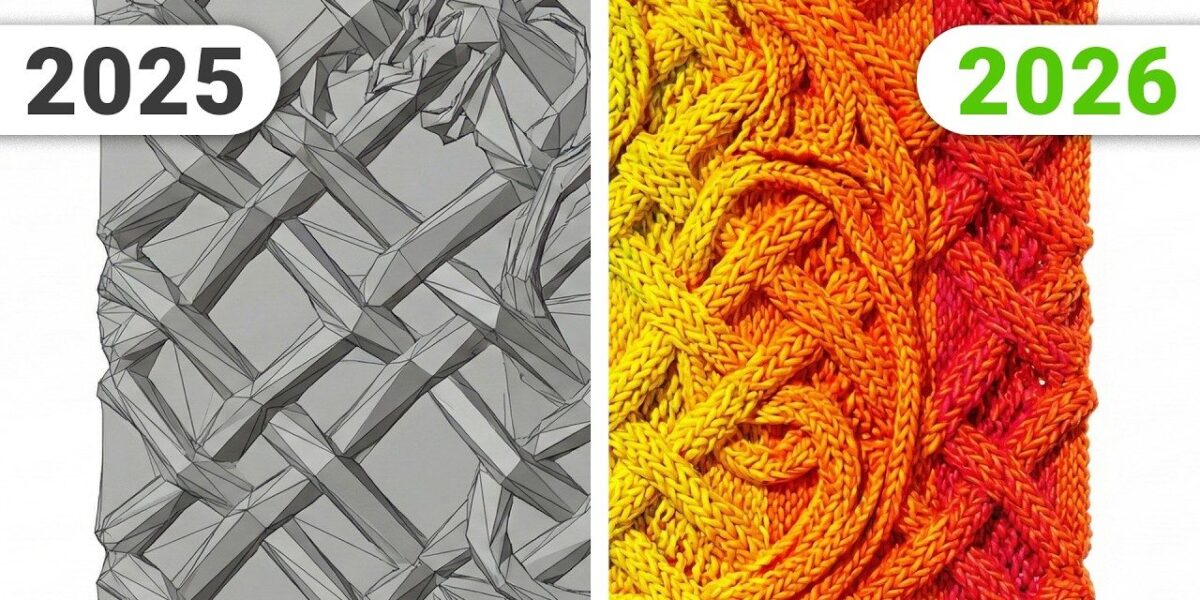
Physics Simulation Leaps Forward: 45x Faster, Real-Time Rendering
Digital artists creating movies and video games often spend weeks meticulously animating elements like character hair or flowing fabric. A significant bottleneck in this process has been the stability and speed of physics engines, which simulate how objects interact with each other.
When these engines falter, artists face the grueling and expensive task of manually correcting errors frame by frame. Now, a groundbreaking research paper introduces a new method that promises to dramatically accelerate and stabilize these simulations, allowing artists to focus on creativity rather than technical hurdles.
A New Era of Realistic Physics
This innovative technique, detailed in a new research paper, handles a wide array of complex physical simulations with unprecedented speed and robustness. From the intricate strands of hair and the rustling leaves of trees to the drape of fine cloth down to individual yarn level, and even large-scale structures like bridges, the system demonstrates remarkable stability.
The researchers even pushed the boundaries by simulating the destruction of a bridge under the force of a category 5 hurricane, a scenario that would typically cause older methods to fail catastrophically. The new technique, however, maintained numerical stability even during such extreme events.
Handling Hair, Cloth, and More with Ease
One of the most striking demonstrations of the technology’s capability is in simulating dense hair. The system can render nearly 1.5 million vertices of hair bouncing realistically around a character’s head. This complex simulation, involving a massive number of interactive elements, is achieved in mere milliseconds per frame, enabling real-time performance.
Unlike previous methods that often rely on simulating only a few ‘guide’ strands and interpolating the rest, this new approach computes the physics for the entire mass of hair simultaneously. Similarly, the simulation of knitted fabric, composed of a quarter-million individual vertices, showcases a high degree of realism, with each thread behaving naturally. While not always real-time, these simulations remain interactive, allowing users to manipulate elements and see immediate results – a feat that not long ago required supercomputing power, but is now achievable on a single GPU.
Breaking Speed Barriers
The paper highlights a dramatic speed improvement by comparing its new method to an older technique, Discrete Elastic Rods, developed eight years prior. In a challenging scenario involving a slinky, the new technique proved to be approximately 45 times faster.
While acknowledging that the older method might offer slightly higher accuracy in this specific instance, the researchers emphasize that the new technique achieves near-comparable results at a vastly accelerated pace. This speedup is crucial for real-time applications and interactive workflows.
Advanced Material Simulation
The system also excels at simulating objects with vastly different material properties. In a slingshot scene, the rubber band was over a thousand times more elastic than the handle.
Simulating such extreme disparities in stiffness typically causes many existing methods to break down. This new technique, however, handles these complex interactions without issue, demonstrating its versatility across a broad range of physical scenarios.
The Technical Breakthrough: Cosserat Rods and Split Optimization
The underlying innovation, developed by Dr. Károly Zsolnai-Fehér and his team, does not rely on artificial intelligence but on human ingenuity. The core of the advancement lies in the use of Cosserat Rods, a more sophisticated way to model deformable objects. Previous methods often struggled to solve position and rotation simultaneously, leading to instability and the need for very small time steps, which in turn resulted in slow simulations.
The new technique, by tracking every point along an object and its stretch, bend, and twist, allows for larger time steps without compromising stability. This is likened to building a brick wall: instead of laying one brick, adding mortar, and waiting for it to dry before proceeding (a slow, sequential process), the new method sprays the entire structure with an instant-drying foam. This ‘split position and rotation optimization scheme,’ employing a closed-form Gauss-Seidel quasi-static orientation update, enables robust numerical stability even with large time steps.
Trade-offs and Applications
While the ‘instant drying’ foam analogy highlights the speed, it does come with a minor caveat. In extremely specific and complex scenarios, such as a rapidly tightening knot or a rod being crushed from multiple directions, the assumption that positions and rotations don’t need to interact during the optimization step can lead to slight inaccuracies compared to older, slower methods. These older methods allow for iterative adjustments while the ‘mortar’ is still ‘wet.’ For most applications, including computer games and film, this difference is imperceptible.
However, for high-precision scientific engineering or surgical simulations where tiny deviations matter, the established, albeit slower, techniques might still be preferred. For all other use cases, the new, accelerated method is a major shift.
Open Source and Impact
Remarkably, the researchers have made this powerful technique and its source code freely available to the public for the benefit of humanity. This open-source approach fosters wider adoption and further innovation within the graphics and simulation communities. The creators express a desire to see such scientifically beautiful and impactful work gain more recognition, often struggling against algorithmic biases that favor more mainstream content.
Why This Matters
The implications of this breakthrough are far-reaching. For the entertainment industry, it means faster iteration times, more realistic visual effects, and potentially lower production costs. Games can feature more dynamic and complex environments, and films can achieve a new level of visual fidelity in simulations of natural phenomena and complex materials.
Beyond entertainment, the improved stability and speed could benefit fields like robotics, virtual reality training, and scientific visualization, where accurate and efficient real-time simulation is paramount. The accessibility of the technology, thanks to its open-source nature, democratizes advanced simulation capabilities, empowering a broader range of developers and researchers.
Source: This New Physics Engine Is 45x Faster! (YouTube)

Related Articles


Roger Rabbit: A Mad Masterpiece That Still Dazzles
Who Framed Roger Rabbit, the 1988 film that blended live-action and animation, remains a dazzling masterpiece. Starring Bob Hoskins and featuring iconic characters like Jessica and Roger Rabbit, it's a thrilling noir mystery with groundbreaking visual effects. The movie masterfully brought cartoons and humans together, proving that ambitious storytelling and technical innovation could create pure cinematic magic.


Spider-Verse 3 & More HUGE Sony Movie News!
Sony Pictures confirmed 'Spider-Verse 3' at CinemaCon, sending shockwaves of excitement through the fandom. The studio also teased future live-action projects within its Spider-Man universe, hinting at more crossovers and character explorations. Fans can expect a continued expansion of Sony's popular animated and live-action Spidey-related films.


Slash AI Costs: Run Open-Source Models for Pennies
High costs for AI agents like OpenClaw can be drastically reduced by using HPC AI's direct access to open-source models. This guide shows how to set up a VPS and configure OpenClaw to run on powerful GPUs for pennies, saving up to 70% on API costs.