Ghost Supernovae Haunt Milky Way: New Telescope Aims to Catch Next Blast
For centuries, astronomers have wondered why our Milky Way galaxy appears silent, with no confirmed supernovae observed since the 1600s, despite expectations of one every 50 years. New observatories like the Vera C. Rubin Observatory, combined with neutrino and gravitational wave detectors, are poised to change this, promising to catch the next stellar explosion in our cosmic neighborhood.

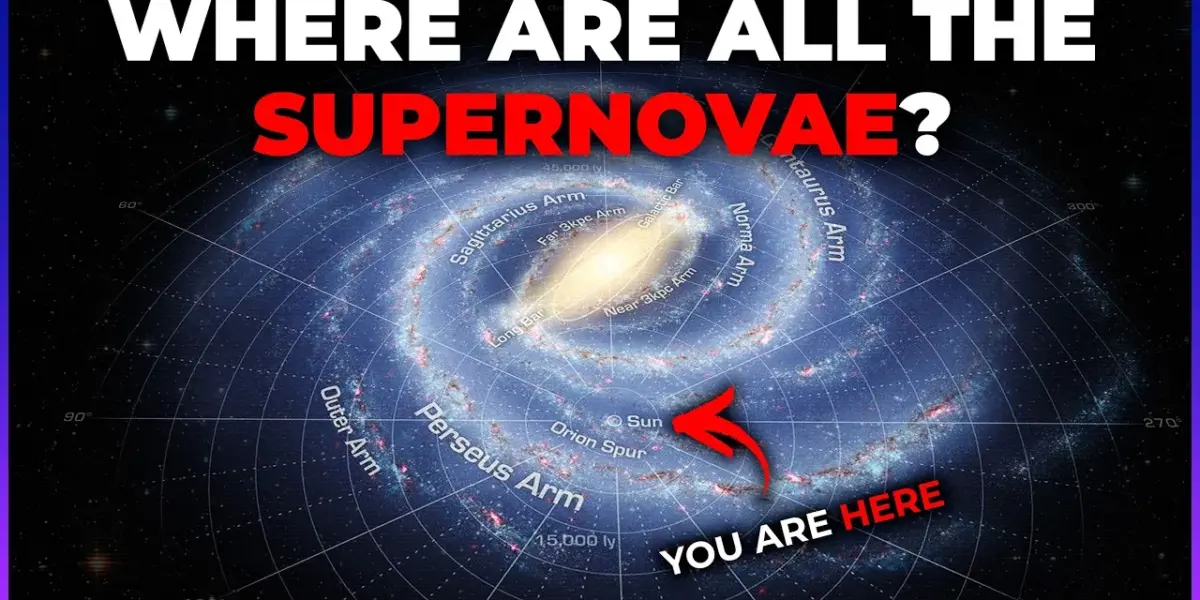
Silent Galaxy Hides Explosions: The Supernova Mystery
Astronomers expect a supernova, a star’s dramatic explosion, to occur in our Milky Way galaxy about once every 50 years. Watching other galaxies, this rate seems correct. Yet, here in our own cosmic neighborhood, the last confirmed supernova was observed in the 1600s.
This leaves scientists wondering: where are all the missing explosions? We are long overdue for such a cosmic event, and when the next one finally happens, we aim to be ready.
Modern astronomy now has tools beyond visible light telescopes. Neutrino detectors and gravitational wave observatories offer new ways to sense a supernova before it even brightens the sky. Dr. John Banovitz, a researcher at Lawrence Berkeley National Lab, is exploring how the upcoming Vera C.
Rubin Observatory can help pinpoint these hidden events. His work focuses on using Rubin to capture the earliest moments of a Milky Way supernova, catching the explosion as it begins.
Centuries of Silence: The Missing Supernovae
The last supernova clearly documented in the Milky Way was Kepler’s Supernova in the 1570s. Another event, known as Cassiopeia A, is thought to have exploded about 350 years ago.
However, this event is puzzling because only one observer recorded it. Typically, supernovae are witnessed by multiple astronomers across the globe, leaving clear records.
Based on observations of similar galaxies and our understanding of star formation, scientists estimate one to four supernovae should occur in the Milky Way each century. This number is often cited as two per century, or one every 50 years. However, considering our position on one side of the galaxy, much of which is obscured by dust, the practical rate we might observe could be closer to one per century.
Cosmic Dust and Distance: Why We Miss the Light
A significant reason for the lack of observed supernovae could be interstellar dust. This cosmic dust, concentrated in the Milky Way’s plane, acts like a veil, blocking light from reaching us. Events happening on the far side of our galaxy might be exploding, but their light is simply too faint for us to see through the dust.
Another factor is distance. The last supernova visible to us, SN 1987A, occurred in the Large Magellanic Cloud. While relatively close in cosmic terms, it was still too far away for us to gather the extremely detailed observations needed to understand such powerful events fully.
A Symphony of Signals: Gravitational Waves and Neutrinos
When a massive star runs out of fuel, its core collapses under its own gravity. This collapse can trigger a supernova explosion. Before the visible light erupts, the star emits gravitational waves and neutrinos.
Gravitational waves are ripples in spacetime caused by massive, accelerating objects. Neutrinos are tiny, nearly massless particles that interact very weakly with matter.
These signals travel at or near the speed of light. They escape the collapsing star much faster than the light from the explosion. Detecting these early signals is crucial.
It allows astronomers to prepare telescopes and focus on the exact location in the sky where the supernova will soon become visible. This is the core idea behind multi-messenger astronomy: using different types of cosmic signals to understand an event.
The Role of the Vera C. Rubin Observatory
The Vera C. Rubin Observatory, currently under construction in Chile, promises to be a powerful new tool.
Its large mirror and sensitive cameras will allow it to survey the sky quickly and deeply. Rubin will observe in infrared wavelengths, which can penetrate cosmic dust that blocks visible light.
Its ability to rapidly slew across the sky and take quick, deep images is key. If a neutrino or gravitational wave alert signals an impending supernova, Rubin can swiftly point to the predicted location. This allows astronomers to capture the crucial moments of the explosion, including the shock breakout – the very first burst of light.
Catching the First Light: Shock Breakout and Star Types
The shock breakout is a critical event. It marks the moment the shockwave from the star’s core reaches its surface and begins to expand outward.
The time delay between the neutrino signal and the shock breakout provides vital information about the exploding star. This delay can help determine the star’s size and type.
Massive, bloated stars called red supergiants have thick envelopes. Light takes longer to escape, resulting in delays of days between neutrino and light signals.
Smaller, denser stars, like Wolf-Rayet stars, allow light to escape more quickly, leading to delays of milliseconds to seconds. Rubin’s speed and sensitivity could capture these earliest moments, offering unprecedented insight into stellar death.
Future Prospects: A New Era of Discovery
The Vera C. Rubin Observatory is expected to begin its full survey in 2025.
Astronomers are developing sophisticated software to process the massive amount of data Rubin will generate. This includes systems to automatically identify and follow up on transient events like supernovae.
By combining alerts from neutrino detectors, gravitational wave observatories, and Rubin’s rapid sky surveys, scientists hope to fill the gap in our understanding of Milky Way supernovae. This new era of multi-messenger astronomy, powered by observatories like Rubin, will allow us to witness and study these cataclysmic events in unprecedented detail, even if they occur right in our galactic backyard.
Source: We Don't See Supernovae In The Milky Way. Nobody Knows Why (YouTube)

Related Articles

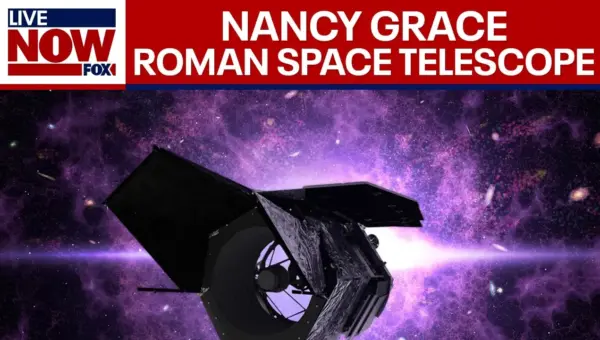
NASA’s Roman Telescope Set for Early September Launch
NASA's Nancy Grace Roman Space Telescope is fully assembled and set for an early September launch, eight months ahead of schedule and under budget. This powerful observatory will explore dark matter, dark energy, and search for potentially habitable exoplanets with unprecedented speed and detail. Roman's discoveries will complement existing telescopes like Hubble and James Webb, offering a more complete picture of the universe.
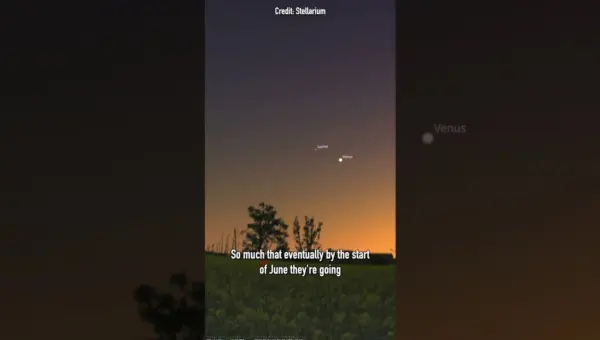
Venus, Jupiter Ignite Sky in Rare Cosmic Dance
Venus and Jupiter are set to put on a stunning celestial show as they align in the night sky. Appearing to draw closer each night, the two planets will reach their closest point in early June 2026. This rare conjunction offers a beautiful visual of planetary motion.
New Telescope Unlocks Deeper Views of the Cosmos
A new 8-inch Dobsonian telescope is set to enhance public stargazing experiences, while discussions delve into the "Great Filter" theory and our place in cosmic structures. The article also explores the reliability of space technology and upcoming astronomical events, including the potential discovery of Planet Nine.