DeFi Project Faces Backdoor Allegations, Investor Claims Freeze
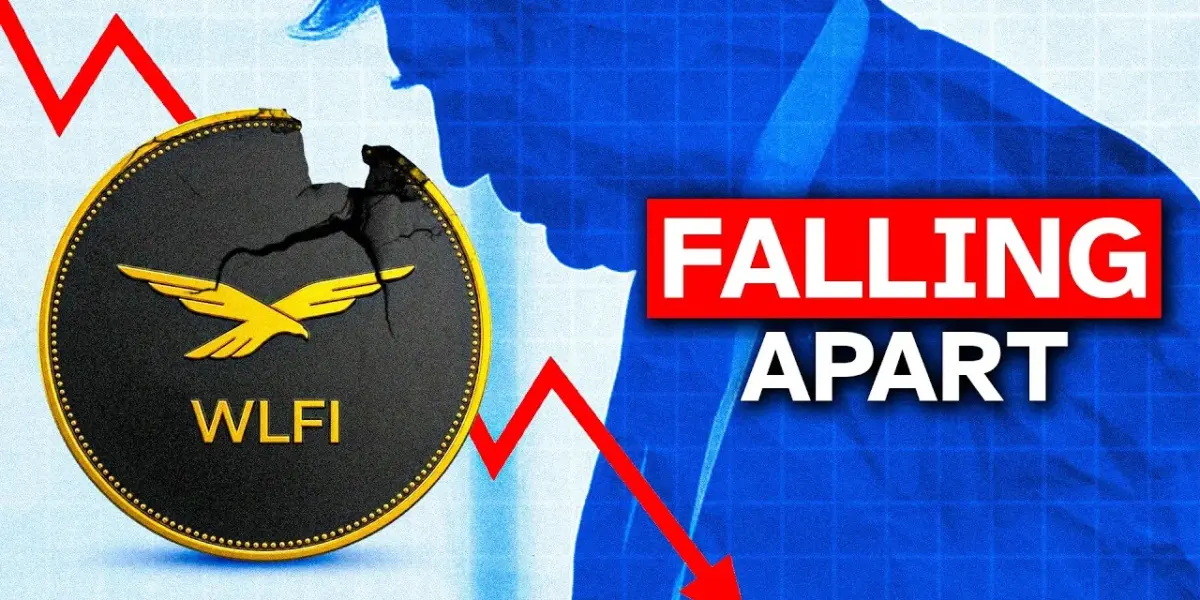
World Liberty Financial, a DeFi project with political ties, faces accusations of a hidden "backdoor" function allowing insiders to freeze assets. A major investor, Justin Sun, claims his 545 million tokens were frozen without notice. The situation has drawn comparisons to past crypto collapses and sparked calls for federal investigations.

DeFi Project Faces Backdoor Allegations, Investor Claims Freeze
A major decentralized finance (DeFi) project, World Liberty Financial, is facing serious accusations from one of its largest investors. The investor claims the project secretly embedded a hidden function, often called a “backdoor,” into its code.
This backdoor allegedly allowed project insiders to freeze over 545 million tokens belonging to the investor. The situation has drawn comparisons to the structural issues that led to the collapse of FTX and Alameda Research in 2022.
World Liberty Financial, which issues the WLFI governance token and the USD1 stablecoin, publicly received support from Donald Trump and his family. The project launched in October 2024 and raised about $590 million through its token pre-sale.
A document called the “gold paper” states that a Trump family-owned company, DT Marks Defi LLC, is entitled to 75% of the project’s net revenue after expenses. Donald Trump’s own financial disclosures reported over $57 million in income from World Liberty Financial token sales in late 2024.
Project Scale and Market Performance
By December 2025, the venture’s total revenue had surpassed $1 billion. The USD1 stablecoin has a circulating supply of around 4.4 billion tokens, with Binance holding nearly 87% of them as of February 2026.
This indicates World Liberty Financial is not a small, experimental project but a significant venture with institutional backing. It even has plans to apply for a national trust bank charter under the name World Liberty Trust Company.
Despite its scale and political connections, the WLFI token has seen a significant price drop. It currently trades around $0.08 per token, down about 76% from its September 2025 high of $0.33.
The token’s market capitalization stands at roughly $2.5 billion. In a concerning sign, on April 14th, Binance added WLFI to its monitoring list, indicating the token could be at risk of being removed from the exchange.
The Dolomite Lending Incident
The controversy gained traction following a transaction on the lending platform Dolomite in early April. World Liberty Financial’s treasury deposited about 5 billion WLFI tokens, representing 5% of the total supply, as collateral. The project then borrowed approximately $75 million in stablecoins, including $65.4 million in its own USD1 stablecoin and $10.3 million in USDC.
This borrowing action pushed the USD1 lending pool on Dolomite to over 93% utilization. This meant other users who had deposited funds into that pool could no longer withdraw them.
Over $40 million of the borrowed stablecoins were then sent to Coinbase Prime. Shortly after, on April 13th, the project minted an additional 25 million USD1 tokens while only burning 3 million.
Insider Conflict of Interest
A key point of concern is that Dolomite was co-founded by Cory Kaplan, who also serves as the technical advisor and de facto chief technology officer for World Liberty Financial. This means a project insider controlled the lending platform where the project deposited its own tokens as collateral. The project then borrowed stablecoins, some of which were its own, and used these funds to manage liquidity issues by minting more of its own stablecoin.
Analysts have pointed out that this situation mirrors the structure that led to the downfall of FTX and Alameda Research. In both cases, a project borrowed against its own less liquid token on a platform where insiders had significant control. If the price of the collateral token drops, it can trigger a cascade of liquidations on the lending platform, creating losses for all depositors.
Illiquidity Concerns and Project Response
Data shows that selling just $8.2 million worth of WLFI tokens on the market could cause a 72% price slippage. This suggests that the collateral backing a large portion of the borrowed funds cannot be easily sold without severely crashing its own price.
The project has dismissed these concerns as “FUD” (fear, uncertainty, and doubt). They claim to be an “anchor borrower” that generates yield for others and state they are not close to liquidation because they can add more collateral if needed.
However, the only additional collateral they can provide is more WLFI tokens. Critics argue this creates a circular problem where the collateral itself is not easily convertible to cover the debt, highlighting a fundamental structural weakness.
Investor’s Token Freeze and Allegations
Justin Sun, founder of the Tron Blockchain, invested about $75 million in World Liberty Financial during its pre-sale and held an advisory role. At the project’s peak in September 2025, his holdings were valued at nearly $700 million. On September 4th of last year, Sun’s wallet, containing approximately 545 million WLFI tokens, was reportedly frozen by an administrative function within the WLFI smart contract.
The freeze occurred after Sun attempted to transfer about 9 million tokens from his wallet. He claims he received no prior notice or explanation.
In April of this year, Sun publicly accused World Liberty Financial of secretly adding a backdoor blacklisting function to the WLFI token contract. He stated this function allows insiders to freeze, restrict, or seize any holder’s assets without warning.
Technical Details and Governance Structure
Sun described the control structure as a complex system involving a three-of-five anonymous multi-signature wallet and a single external account with unilateral banning authority. He called the project’s governance a “theater” and the structure “world tyranny,” identifying himself as the first and largest victim of this backdoor mechanism. His frozen tokens, once worth around $107 million, are now valued at about $42 million, representing a personal loss of over $80 million.
World Liberty Financial responded to Sun’s allegations by stating on X, “We have the contracts, we have the evidence, we have the truth. See you in court, pal.” While Sun is a controversial figure, having previously paid a $10 million fine to the SEC, the technical details of his allegations are reportedly verifiable on the blockchain. Analysts note that the same administrative wallet appears to be responsible for both treasury operations and the ability to freeze user assets, indicating a single point of control.
Governance Concentration and Vesting Proposal
The project’s governance system also faces scrutiny. Data from a March 2026 vote showed that just 10 wallets controlled 76% of the total voting power for WLFI tokens.
The identities behind these wallets are not disclosed. A proposal requiring WLFI tokens to be staked for 180 days before qualifying for governance passed with 99.12% approval.
Critics argue this level of concentrated control, combined with the overwhelming approval of proposals, is not true decentralization but rather resembles outcomes in authoritarian systems. On April 15th, the project introduced a new proposal that critics are calling a “$1.5 billion extraction scheme.” This proposal alters the vesting schedules for approximately 62.28 billion WLFI tokens held by insiders, founders, and advisors.
Vesting Changes and Regulatory Scrutiny
The new terms include a two-year lockup period followed by three years of gradual release, along with a burn of 4.52 billion tokens. Holders have only 10 days to opt into this new schedule; those who don’t remain under the original, potentially indefinite lockup terms. Justin Sun called this proposal an “absurd governance scam” and pointed out that his frozen tokens prevent him from voting on a proposal directly affecting his assets.
The two-year vesting cliff means insiders could start receiving liquidity around April 2028, still within the potential window of a Trump presidency ending in January 2029. This timing has been called “conspicuous.” Several senators, including Richard Blumenthal, Elizabeth Warren, and Sheldon Whitehouse, have called for federal investigations into World Liberty Financial. In November 2025, Senators Warren and Jack Reed sent a letter to Treasury Secretary Scott Bassant and Attorney General Pam Bondi, requesting an investigation into allegations that World Liberty sold tokens to entities linked to North Korea’s Lazarus Group and other sanctioned platforms.
Red Flags for Future Projects
Senator Warren also wrote to the Office of the Comptroller of the Currency (OCC) in January, urging them to halt the World Liberty Trust Company charter application until President Trump divests his financial interests. She warned the OCC could become an “accomplice to corruption” if the charter is approved. This situation highlights five key structural red flags that investors should watch for in future DeFi projects:
- Insider-Controlled Lending: A project deposits its own collateral into a lending platform run by its own staff, removing independent oversight.
- Circular Collateral Structures: Using a self-issued, illiquid token to borrow assets within the same closed system, creating a loop without external capital.
- Governance Concentration: A small group of anonymous wallets holding most of the voting power, making decentralization a mere facade.
- Backdoor Administrative Functions: Smart contracts with hidden powers to pause, blacklist, or freeze assets controlled by a few signers without community input or time locks.
- Vesting Restructures with Artificial Deadlines: Short opt-in windows and harsh default consequences signaling financial distress or insider exit pressure.
These red flags were all present in the World Liberty Financial case and are verifiable through on-chain data or public filings before any major failure occurs. While political branding draws attention, the underlying blockchain mechanics provide more reliable indicators of a project’s true stability and structure.
The unfolding events raise questions about potential regulatory responses, especially concerning stablecoin oversight and the implementation of new standards for tokenized financial products. The industry is watching to see if regulators will enforce stricter structural requirements to prevent similar situations in the future.
Source: World Liberty EXPOSED: The Trump DeFi 'Backdoor' Scandal (YouTube)

Related Articles


FDA Considers Loosening Peptides Rules Amid Hype
Peptides, popular in wellness and fitness for claimed benefits like anti-aging and muscle boosting, are under FDA review for potentially relaxed regulations. Despite user enthusiasm and endorsements, many doctors urge caution due to a lack of extensive human safety data. The FDA's planned July panel will weigh the growing popularity against critical safety concerns.

Fed Nominee Rejects CBDC; Military Calls Bitcoin Strategic
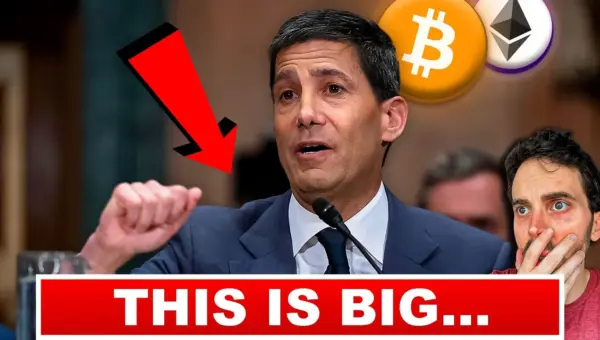
Potential Fed Chair Kevin Worsh rejected the concept of a U.S. central bank digital currency, while military officials testified to Bitcoin's national security value. Meanwhile, Arbitrum froze $71 million in Ethereum following a DeFi exploit, sparking decentralization debates.
Apple’s CEO Tim Cook Steps Down, Crypto Hopes Rise
Apple CEO Tim Cook is stepping down after 15 years, sparking optimism in the crypto community. Critics felt his tenure stifled innovation in digital assets, citing strict app store policies. The arrival of new CEO John Turnis brings cautious hope for greater openness to technologies like blockchain.