Behind Enemy Lines: Ukraine’s Daring Rescues, Robotic Warfare, and Shifting Global Support
Ukraine has demonstrated remarkable resilience and innovation, carrying out daring special operations to rescue soldiers behind enemy lines and pioneering the use of unmanned ground vehicles for prisoner transport. These tactical successes occur amidst intense fighting on key fronts and a significant shift in international aid, with a dramatic reduction in US support being offset by increased European contributions.

Behind Enemy Lines: Ukraine’s Daring Rescues, Robotic Warfare, and Shifting Global Support
In a conflict marked by relentless attrition and technological innovation, Ukraine continues to demonstrate remarkable ingenuity and resilience. Recent events highlight a series of audacious operations, from deep-penetration special forces rescues to the pioneering use of unmanned ground vehicles (UGVs) in prisoner transport. These tactical successes unfold against a backdrop of intense fighting on critical fronts and a significant, yet complex, shift in international military aid dynamics, particularly concerning the United States’ role.
A Daring Rescue: Omega Unit’s Deep Strike Operation
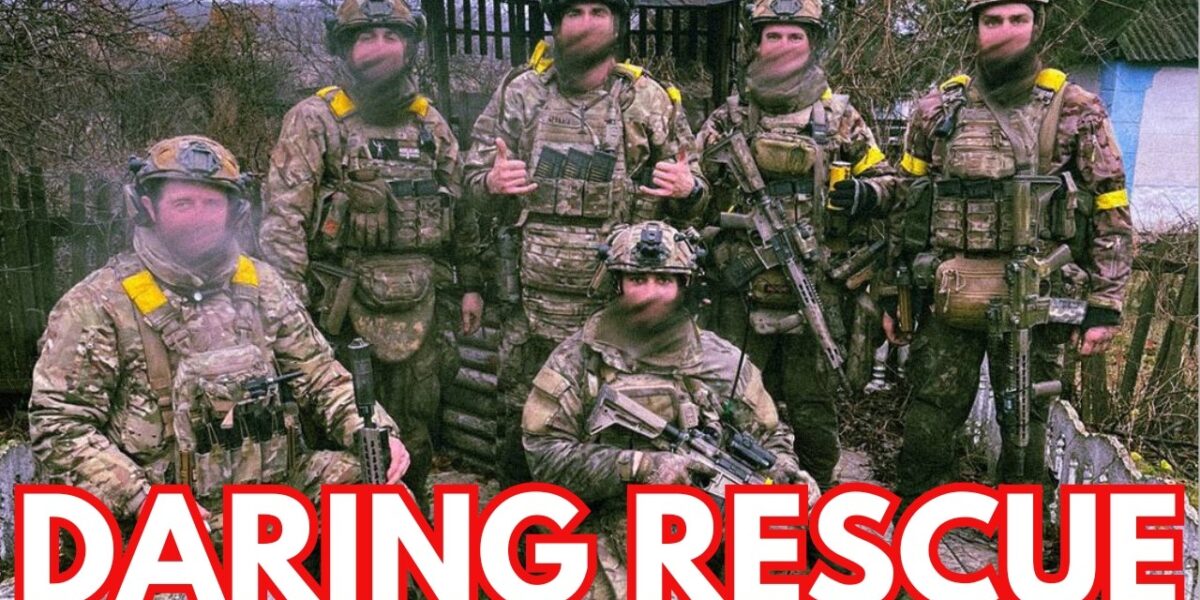
On February 14th, Ukraine’s National Guard announced a stunning operation: the Omega Special Operations Unit successfully rescued a wounded Ukrainian serviceman, identified by his callsign “Carrot,” from Russian captivity. Carrot, an officer in Omega, had been held for 27 days deep behind enemy lines near Picro. This mission, described by the National Guard as “unique,” underscores Ukraine’s unwavering commitment to its soldiers and its sophisticated intelligence capabilities.
The details surrounding the operation remain sparse, with Omega stating more information would be released soon. However, the mere fact of its execution sends a powerful message. “You are not forgotten.
We are going to come get you,” is a potent morale booster for Ukrainian forces, contrasting sharply with the often-reported abandonment of Russian soldiers. Such a high-risk extraction deep within enemy territory demands not only exceptional bravery and specialized training but also incredibly precise, real-time intelligence regarding the prisoner’s exact location and the surrounding enemy disposition.
The successful exfiltration back to Ukrainian territory speaks volumes about the unit’s planning, execution, and tactical prowess. During the operation, eight Russian soldiers were reportedly killed, further highlighting the combat intensity of the mission.
Historically, special operations forces are trained for such complex missions, which often involve elements of intelligence gathering, direct action, and unconventional warfare. The ability to project force and extract personnel from well-guarded enemy positions demonstrates a significant tactical advantage and a high level of operational security on the Ukrainian side. It also suggests a potential vulnerability in Russian rear-area security, which could have broader implications for their logistics and command structures if such operations become more frequent.
Robotics on the Frontline: UGV Prisoner Transport
Beyond human-led daring, Ukraine is pushing the boundaries of autonomous warfare. For the first time, a Ukrainian unit successfully employed an unmanned ground vehicle (UGV) to transport a captured Russian prisoner of war (POW) from the front lines to the rear. This innovative application was carried out by the K2 drone unit, working in conjunction with the 115th Motor Rifle Brigade in the Kupiansk-Lyman direction.
UGVs have become increasingly prevalent in modern conflicts, primarily for tasks such as reconnaissance, carrying supplies to the front, providing suppressing fire, or even detonating enemy dugouts. However, strapping a live prisoner to a UGV for transport marks a novel and significant development.
The operation began when Ukrainian forces observed a lone Russian soldier approaching their positions, seemingly disoriented. After he surrendered, following instructions delivered via what was likely a drone loudspeaker or ground infantry, a UGV, initially laden with supplies, was dispatched.
Upon reaching the infantry’s position, the supplies were offloaded, and the Russian POW was secured to the UGV for the return journey. A Ukrainian Mavic drone provided overhead surveillance, clearing the path and ensuring the UGV avoided mines. While the escorting drone was reportedly hit by a Russian FPV drone, disabling its camera, the Russian soldier was apparently unharmed and successfully handed off at the transition point.
This method significantly reduces the risk to Ukrainian personnel who would otherwise be exposed to enemy fire during the transport of a POW, especially in contested forward areas. It exemplifies the adaptive and innovative spirit of Ukrainian forces in leveraging technology to minimize casualties and optimize operations.
The captured Russian soldier claimed to be from Belarus, forced into military service after visiting family in Russia. This narrative, if true, highlights another dimension of the conflict: the alleged coercive conscription practices by Russia and its allies, which can be exploited for intelligence and propaganda purposes.
Sustaining the Fight: The Critical Role of Drone Battalions
The effective deployment of drones and UGVs highlights the critical role of aerial reconnaissance and robotic systems in the current conflict. Recognizing this, grassroots efforts continue to play a vital part in equipping Ukrainian forces.
A fundraiser, run by Car Ukraine, is currently underway to acquire eight vehicles for the 104th Territorial Defense Brigade’s drone battalion, known as Seraphim. This unit has proven so effective at the company level that it is being scaled up to a battalion, reflecting a broader trend across the Ukrainian military to integrate and expand drone capabilities.
The fundraiser, with a goal of €97,000, quickly raised €70,000, demonstrating robust international support. Equipping entire battalions with dedicated vehicle fleets is essential for mobility, rapid deployment, and sustained operations of these critical drone units.
Drones provide invaluable intelligence, target acquisition, and even direct strike capabilities, shaping the battlefield and often dictating the tempo of operations. The success of units like Seraphim highlights Ukraine’s commitment to modernizing its forces and adapting to the demands of contemporary warfare.
Battlefield Dynamics: A Shifting and Contested Landscape
The conflict’s front lines remain dynamic, with intense fighting across several key sectors, each presenting unique challenges and strategic implications.
Zaporizhzhia: Information Blackout and Contested Narratives
The Zaporizhzhia direction, particularly the northeast pocket, has seen significant Ukrainian operations in recent weeks, accompanied by a notable communications blackout. Ukrainian forces are maintaining strict operational security, releasing very little information. Simultaneously, Russian forces are experiencing their own communication issues, with Starlink outages and Telegram glitches hindering their ability to report from the front.
Russian media, such as Rybar, has claimed “large-scale offensive actions” by Ukrainian formations, attempting to break through defensive lines in areas like Stapov and Berzov. However, Ukrainian sources have countered this narrative, stating these are localized attacks rather than a broad counteroffensive.
The Russian side has also propagated claims of a “front collapse” in Zaporizhzhia, which, in retrospect, appears to have been an exaggeration or misreporting of their own positions. Ukraine’s movements in these areas often involved reclaiming territory that Russia had falsely claimed to hold, rather than a genuine collapse of an established defensive line.
The strategic importance of Zaporizhzhia is significant. It lies on a critical axis that could potentially sever Russia’s land bridge to Crimea, making any advances or defensive maneuvers in this sector highly consequential. The information vacuum, therefore, creates an environment ripe for propaganda and misdirection, with each side attempting to shape the narrative to its advantage.
Brutal Urban Warfare: The “Safari” in Contested Cities
In other heavily contested sectors, such as the area referred to as “Minagrad” (likely a localized reference to a fiercely fought urban area like Marinka or Avdiivka, which saw intense fighting around this time), the nature of combat remains exceptionally brutal. The 79th Separate Airborne Assault Brigade and the Seventh Rapid Response Corps continue what they grimly refer to as a “safari” – a relentless search and strike operation against Russian forces.
The enemy’s tactic of employing small infantry groups to bypass and encircle Ukrainian units from the north is a consistent feature of these battles. While these small-group tactics allow for some incremental progress, they come at a critical depletion of Russian human resources.
Attempts to break through with armored vehicles have also been detected and swiftly neutralized. These protracted urban battles, lasting months, result in heavily contested gray zones where neither side holds definitive control, epitomizing the attritional nature of the conflict.
Lyman Direction: Russian Creep and Supply Route Threats
Further east, in the Lyman direction, Russian forces have made discernible progress in recent months. The West group is reportedly conducting an offensive directly on Lyman, achieving local successes across a front approximately 17 km wide. While the territorial changes may appear modest on a map, a comparison of territorial control from early January to mid-February reveals a slow, steady creep inwards by Russian forces.
The most significant concern for Ukraine is the increasing proximity of Russian positions to the critical roadway connecting Izium to Sloviansk and Kramatorsk. As this road falls within closer range of Russian fire, its viability as a primary transport route for Ukrainian supplies diminishes, posing a substantial risk to the defense of these key Donbas cities.
Battles are developing on the northern and southern outskirts of Lyman, with Russian assault groups expanding their presence, particularly through forest areas south of the settlement. These forest environments offer some cover from Ukrainian drones, which are otherwise highly effective even in winter conditions.
Rybar suggests that the foundation for a “partial encirclement” of Lyman is being formed. However, Ukrainian defenses in this entire block, from Lyman down through Kostiantynivka, are heavily fortified. Any Russian advance in this sector comes at an extremely high cost, indicating a sustained and brutal fight ahead.
The Geopolitical Chessboard: Shifting Tides of International Support
Amidst the intense fighting, the international support landscape for Ukraine is undergoing a significant transformation, with profound implications for the war’s trajectory.
Munich Security Conference: A Glimpse into Strategic Realities
The recent Munich Security Conference served as a critical forum for global leaders to discuss the conflict. NATO Secretary General Mark Rutte offered a sobering assessment of Russian advances, noting their extreme slowness and high human cost.
He highlighted that Russia is “not winning this,” despite immense casualties (estimated at 65,000 in December and January alone). Rutte underscored the “crazy behavior” of a dictator willing to sacrifice so many of his own people for minimal gains, emphasizing the need for the West to take this determination seriously.
The conference provided a platform for Ukraine’s allies to reaffirm their commitment, but also brought into sharp focus the growing disparities in aid contributions.
The Alarming Decline of US Aid and Europe’s Surge
A study from the Kiel Institute for the World Economy paints a stark picture of the evolving aid landscape for 2025. It reveals a precipitous 99% drop in US aid to Ukraine.
Specifically, US humanitarian and financial aid plummeted to zero, with military aid limited to a single $500 million package delivered at the beginning of the year, likely the final installment of a previous commitment. Following this, the US administration effectively halted further direct military deliveries.
This dramatic withdrawal stands in stark contrast to Europe’s response. European nations have sharply increased their aid allocations for 2025, with a 59% rise in financial and humanitarian aid and a 67% increase in military aid compared to the 2022-2024 average. As a result, total international aid to Ukraine in 2025 has remained close to previous years, largely due to Europe compensating for the US shortfall.
The US has introduced a new initiative for 2025 called the Prioritized Ukraine Requirement List (PURL). This program does not involve direct US equipment deliveries or transfers from US stockpiles. Instead, it allows US allies to purchase specific military equipment from American factories, which they can then provide to Ukraine.
As of December 2025, 24 donors have confirmed participation, with total allocations amounting to at least 3.7 billion euros through PURL. While this mechanism facilitates aid, it fundamentally shifts the burden and direct involvement from the US government to its allies.
The data from the Kiel Institute is particularly jarring when viewed as a percentage of GDP, where the US no longer ranks among the top 20 donors. This withdrawal signals a significant shift in US foreign policy, moving from a primary provider of assistance to a more passive enabler.
Many observers, including the speaker in the transcript, view this as a strategic mistake, potentially undermining US national security interests and global influence. The concern is that if this trend continues, with zero US aid projected for 2026, it could severely impact Ukraine’s ability to defend itself and alter the geopolitical balance in unpredictable ways.
Conclusion: Resilience, Innovation, and the Global Stakes
The conflict in Ukraine continues to be a crucible of innovation, human endurance, and geopolitical realignment. Ukraine’s ability to execute daring special operations, like the rescue of “Carrot,” and to pioneer new applications of technology, such as UGV prisoner transport, demonstrates an adaptive and determined military. These tactical successes, strengthened by crucial grassroots support for initiatives like drone battalions, are vital in a war of attrition.
However, the shifting landscape of international aid, particularly the dramatic reduction in direct US assistance, presents a formidable challenge. While Europe has stepped up significantly, the long-term implications of this change for Ukraine’s defense and for the broader international order remain a critical concern. The war’s outcome hinges not only on the courage and ingenuity of Ukrainian forces on the ground but also on the sustained and coordinated commitment of its global partners in the face of evolving battlefield realities and geopolitical shifts.
Source: Ukraine Goes Behind Russian Lines (YouTube)

Related Articles


Ukraine Jails Ex-Official for Aiding Russian Forces
Former Ukrainian emergency service worker Nelya Chychota has been jailed for collaborating with Russian forces. Accused of spreading pro-Russian information and aiding the enemy, she denied the charges. The conviction highlights Ukraine's efforts to prosecute collaborators.
UK Pledges 120,000 Drones to Ukraine in Major Aid Package
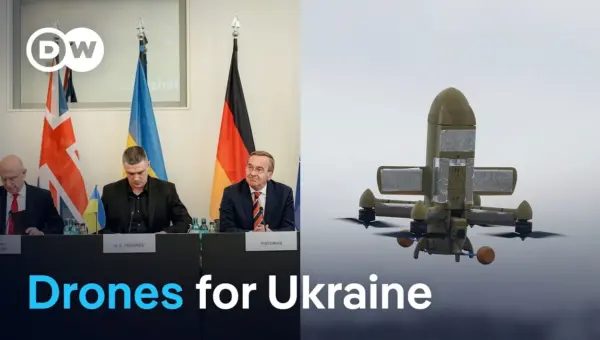
Britain has pledged 120,000 drones to Ukraine, marking its largest aid package of its kind, during a meeting of the Ukraine Defense Contact Group in Berlin. The meeting highlighted both strong international solidarity and ongoing challenges in aid delivery, as Germany also boosts its own defense capabilities.


Russia’s War Costs Strain Putin’s Elite Bargain
Russia's prolonged war in Ukraine is straining President Putin's grip on power. Declining oil revenues and escalating military costs are forcing internal power shifts, with intelligence services reportedly gaining influence. This financial pressure is creating significant discontent among the elite and risking broader instability within the Kremlin.