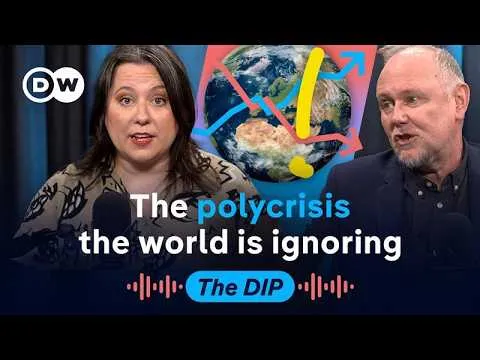
Global Economy Faces ‘Polycrisis’ of Overlapping Challenges
The world is grappling with a "polycrisis," where interconnected problems like the Iran conflict and a looming jobs gap feed into each other. Experts warn that emerging economies are hit hardest by rising energy prices and potential job losses, with 800 million fewer jobs expected than needed in the coming decade. The World Bank is offering financial and policy support to help countries navigate these complex challenges.

Global Economy Faces ‘Polycrisis’ of Overlapping Challenges
The world faces a complex web of interconnected crises, a situation experts are calling a “polycrisis.” This means that problems feed into each other, creating a spiral that is difficult to escape. Instead of solving one issue and moving to the next, leaders must now deal with multiple overlapping problems at once. This challenge was a major topic at the recent spring meetings of the International Monetary Fund (IMF) and the World Bank, where officials discussed not only current difficulties but also future threats.
The World Bank’s Managing Director has warned that the conflict in Iran is serious but should not distract from larger, long-term crises looming on the horizon. One of the most significant is a potential jobs crisis.
The World Bank estimates that in the next 10 to 15 years, about 1.2 billion young people in developing countries will enter the workforce. However, only about 400 million jobs are expected to be available, leaving a massive gap of 800 million potential workers without employment.
The Looming Jobs Gap
World Bank President Ajay Banga has sounded the alarm about this growing jobs gap. He highlighted that out of the 1.2 billion young men and women looking for work, only 400 million opportunities will be created through education and other employment avenues.
The World Bank Group, working with partner governments, aims to address the remaining 800 million needed opportunities. Banga stressed that creating enough jobs is a defining challenge and opportunity for the global economy, and the World Bank is committed to playing a strong role in this effort.
Beyond the Current Conflict
Even if the current conflict in Iran is resolved quickly, there will be no simple return to how things were before. Analysts at the IMF agree that the world will face a new normal.
However, they also point out that many economies have shown more resilience than expected in recent years, bouncing back from crises with growth rates higher than many predicted. This resilience offers a glimmer of hope amidst the challenges.
Despite this resilience, the World Bank warns of difficult scenarios ahead. They project that up to 15 million jobs could be affected.
Economic growth could be reduced by 0.4% to 1.4% in many emerging and developing economies. Inflation could rise significantly, adding an extra 2% to 4% to current rates.
Who is Hit Hardest?
Emerging and developing economies are experiencing the brunt of this economic turmoil. Many of these nations were already struggling to regain pre-COVID growth levels.
They are particularly vulnerable because they often rely heavily on imported energy. These countries also face significant employment challenges, making them more susceptible to economic shocks.
For example, many African and Asian economies, even large ones, are feeling the impact of rising energy prices. The World Bank is working closely with these nations through forums like the G20 meetings. Their focus is on supporting job creation and providing financing and policy advice to help these countries navigate this demanding period.
World Bank’s Practical Support
The World Bank is offering practical assistance to its client countries. This includes reprioritizing economic programs to provide short-term financial support.
Using funds from developed economies, the World Bank can deploy between $20 billion and $25 billion to assist countries facing these challenges. This financial aid is combined with policy advice on the best measures to make a difference in the short, medium, and long term.
Former finance ministers know how difficult it is to balance the immediate needs of a crisis with the opportunities and challenges of the future. Policymakers face pressure to act decisively without overreacting or underreacting, a delicate balance to strike.
Lessons from Past Crises
Dealing with current economic turmoil differs from past crises like Brexit, the COVID-19 pandemic, or the energy shock after Russia’s invasion of Ukraine. Two key differences stand out.
First, societal expectations about government intervention are high. Second, public debt levels and slow growth in some regions constrain governments’ ability to act.
However, there is reason for optimism. Governments are committed to finding solutions, and the World Bank aims to be a focused and determined partner. This commitment will be evident in discussions during the spring meetings in Washington.
Private Capital and Public Investment
Originally, the spring meetings were set to focus on debt recovery and attracting private investment. However, the Iran conflict and weaker growth outlook mean these issues must be addressed within a changed context.
The importance of these issues remains as high as ever. Creating an environment where private capital is willing to invest is crucial, especially with growing public debt.
Governments that can offer regulatory stability and certainty will reap significant benefits. This stability is an antidote to uncertainty and can boost job creation.
While public balance sheets will play a key role, the World Bank also advocates for foundational infrastructure investments that only the public sector can provide. The economic gains from creating a stable, business-friendly environment are substantial.
Energy Shocks and Inflation
The global energy market is experiencing its biggest shock ever, according to the International Energy Agency. The impact of the Iran war is expected to be long-lasting. This shock is hitting emerging markets particularly hard, with Southeast Asia (excluding China) identified as a potential hot zone for energy price increases.
Even China, with significant oil reserves, is seeing gas prices rise by 12%. These higher energy prices could become permanent, as they tend to rise quickly and fall slowly. The lingering effects of the pandemic have already kept prices higher than expected, and producers may be hesitant to lower them without competitive pressure.
Global Impact on Prices
The high cost of fuel affects everything from individual transportation to the movement of goods and food. In the US, the national average for gas is around $4 a gallon, with some areas experiencing even higher prices. This situation, coupled with ongoing global instability, feels like an unprecedented challenge.
This crisis affects everyone, even energy-independent nations like the US. Unlike previous oil shocks that were often focused on one cause, the current situation is part of a broader “polycrisis.” This complex interplay of factors makes forecasting and predicting outcomes extremely difficult, as events can change rapidly.
Looking Ahead
The World Bank is committed to working with partner countries to address these complex challenges. The focus remains on creating jobs and fostering economic stability.
While the path forward is complex, the organization aims to provide crucial financial and policy support. The upcoming engagements in Washington will be key to outlining these strategies and reinforcing global cooperation.
Source: The polycrisis the world is ignoring | The Dip Podcast (YouTube)

Related Articles


Stocks Hit Record High Amidst Global Turmoil
The stock market has reached a new record high despite ongoing global conflict and rising inflation. Analysts note that market performance can diverge from economic reality, with potential risks of stagflation. Investors are advised to focus on long-term strategies and avoid emotional decisions during market volatility.

Global Leaders Act on Soaring Oil Prices Amidst Crisis
Nations worldwide are implementing diverse strategies to combat soaring oil prices driven by the US-Israel war on Iran. From energy emergencies and tax suspensions in the Philippines to significant relief packages in Ireland and strategic stockpiling in China, governments are scrambling to cushion the economic blow for their citizens. Meanwhile, the U.S. is focusing on increasing domestic production and releasing strategic reserves.

Iran War Fuels Global Economic Fears: Experts Warn of Lasting Impact
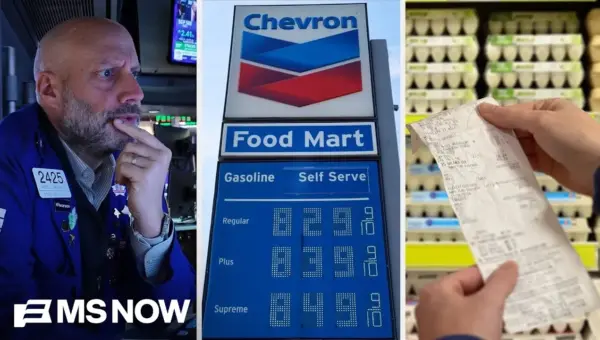
The conflict involving Iran is creating significant global economic concerns, with experts warning of lasting impacts. Disruptions near the Strait of Hormuz, a crucial oil shipping route, are raising fears of price spikes and supply chain instability. This situation adds considerable uncertainty to the international economic outlook.