Markets Brace for Uncertainty Amid Geopolitical Tensions, AI Boom
Geopolitical tensions surrounding Iran are creating market uncertainty, but a booming artificial intelligence sector and a stable labor market are providing significant economic support. Investors are watching closely as AI investment continues to drive growth and buffer against potential downturns.


Markets Brace for Uncertainty Amid Geopolitical Tensions, AI Boom
Recent market analysis suggests a complex interplay between geopolitical developments, particularly concerning Iran, and the sustained growth of artificial intelligence (AI), creating an environment of cautious optimism for investors. While international tensions and potential economic headwinds exist, strong performance in the AI sector and a stabilizing labor market are providing crucial support to the broader economy.
Iran Tensions and Market Doubts
Reports indicate ongoing confusion regarding the Strait of Hormuz, a vital shipping lane. Despite statements suggesting it is open, some analysts and news outlets, including the Wall Street Journal, have raised questions about whether Iran has truly eased restrictions. This uncertainty could impact global oil prices and shipping costs, although the market’s reaction has been muted so far.
The Wall Street Journal editorial board has voiced concerns that any perceived concessions from Iran might be misinterpreted as a victory, potentially leading to premature celebrations and weakening future negotiation power. The article highlights that Iran has not clearly approved passage for all ships, with specific concerns about vessels linked to hostile nations.
AI Investment Fuels Economic Resilience
In stark contrast to geopolitical uncertainties, the artificial intelligence sector continues its impressive growth trajectory. Investment in AI-related areas has surged significantly over the past year. This boom is a key factor preventing a wider economic downturn, according to market analysts.
Data shows that non-AI related private fixed investment has remained stagnant or even declined. This emphasizes the critical role AI is playing in driving overall economic activity and investment. Without this AI-driven growth, many economists believe the U.S. would already be experiencing a recession.
Consumer Spending and Labor Market Stability
Despite concerns about rising oil prices, consumer spending has shown resilience. While overall retail sales have been flat, and inflation-adjusted spending has seen a slight decline over the last four months, recent card spending data during periods of heightened geopolitical activity suggests the consumer has not been significantly impacted yet.
The labor market is showing signs of stabilization and firming up. Analysis of employment statistics indicates that the job market is not trending downwards as some feared. This stability is crucial, as a strong labor market supports consumer spending and overall economic health.
Institutional Analysis and Market Expectations
Financial institutions like Bank of America are analyzing the market through a game theory lens, suggesting that the stock market has largely priced in expected government responses to geopolitical events. The expectation that markets will be supported, often through deescalation or stimulus measures, appears to be a dominant factor.
This anticipation of market support, often referred to as a ‘taco’ (a colloquial term for a market bounce or recovery), has historically prevented sharp sell-offs. Investors seem to be betting that authorities will act to prevent significant market declines, especially with upcoming political events.
What Investors Should Know
The current market environment is characterized by a dual narrative: ongoing geopolitical risks that could potentially disrupt supply chains and impact commodity prices, and the powerful, sustained growth of the artificial intelligence sector. AI investment is acting as a significant buffer against recessionary pressures.
Investors should monitor the developments in the Strait of Hormuz for potential impacts on oil prices. However, the underlying strength in AI and a stable labor market provide a foundation for continued economic activity. The market’s ability to absorb geopolitical shocks appears to be linked to the expectation of continued support and the ongoing AI boom.
While short-term volatility is possible due to geopolitical events, the long-term outlook may be heavily influenced by the continued expansion of AI technologies and their integration across various industries. The resilience of the consumer, supported by a stable job market, also plays a vital role in maintaining economic momentum.
Looking Ahead
The market appears to be navigating these complex factors, with a notable focus on the AI sector’s performance. Upcoming economic data releases and geopolitical updates will be crucial in shaping market sentiment in the near future. The potential for AI to continue driving investment and economic growth remains a key theme for the remainder of the year.
Source: So WTF now… (YouTube)

Related Articles
US Blockade Tightens Grip on Iran’s Ports
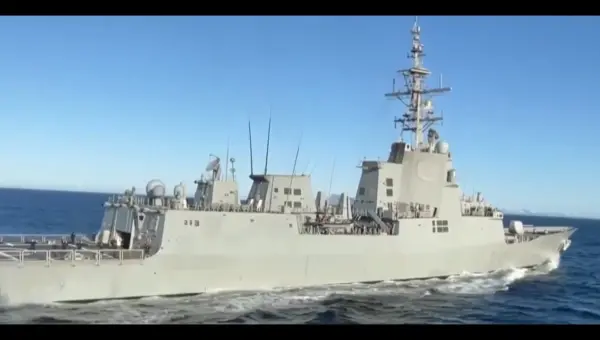
The US military is maintaining a naval blockade on Iranian ports, even as Iran lifts its own blockade in the Strait of Hormuz. This operation restricts ships heading to or from Iranian ports, impacting the country's trade. Meanwhile, increased traffic is seen in the Strait of Hormuz following a US-brokered ceasefire between Israel and Lebanon.
US Threatens China Banks Over Iran Business Deal
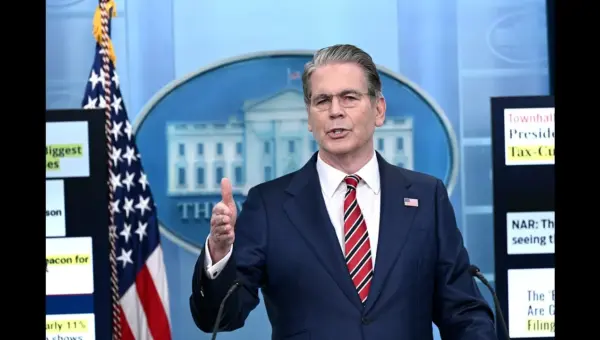
The US is warning Chinese banks against doing business with Iran, threatening "secondary sanctions" if Iranian money flows through their accounts. This move is part of the US "maximum pressure" campaign on Tehran. The strategy aims to isolate Iran economically, with China's oil purchases previously serving as a key lifeline.
Japan Ships Warship Through Taiwan Strait, Eyes Global Arms Market
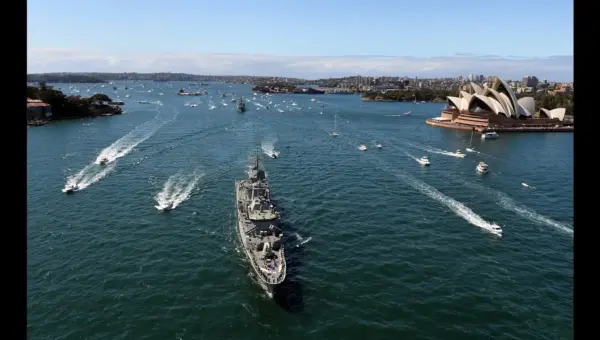
Japan is taking a more assertive defense role, relaxing weapons export rules and sending a warship through the Taiwan Strait. This marks a significant shift from its post-WWII pacifist stance and could reshape regional security dynamics, especially with potential deals like the one with Australia.