President’s Iran Stance Sparks Global Debate with Pope
The President detailed his strong opposition to Iran obtaining nuclear weapons, citing a powerful blockade and ongoing negotiations as key strategies. He also expressed optimism about a potential peace deal between Lebanon and Israel, highlighting diplomatic efforts in the Middle East.

President’s Iran Stance Sparks Global Debate with Pope
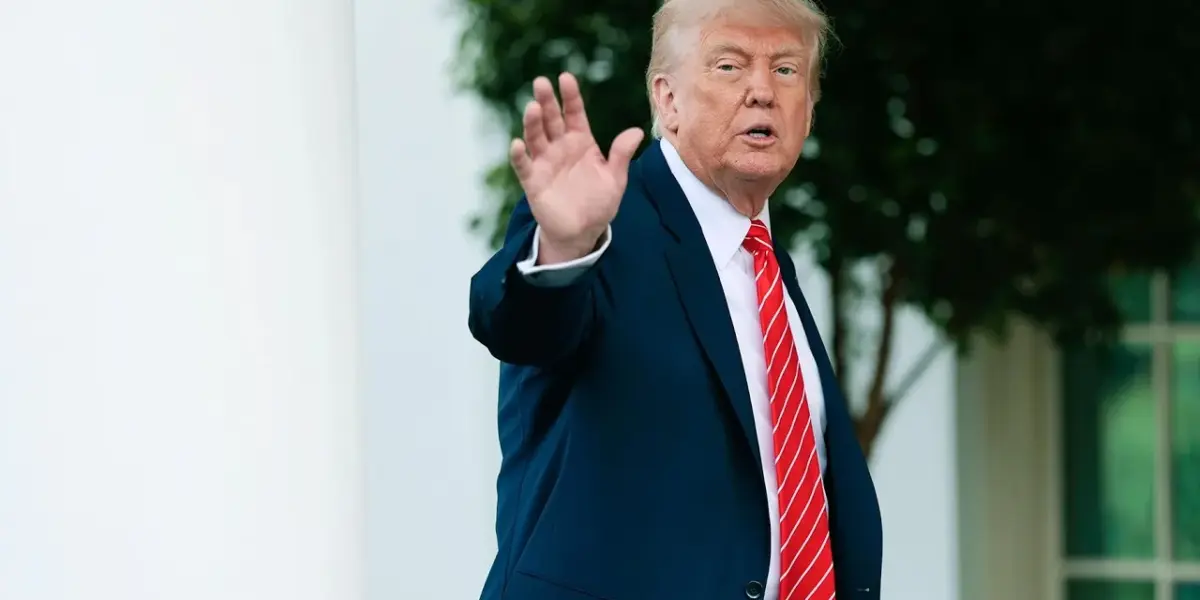
In a recent exchange before departing the White House, the President addressed reporters on a range of pressing global issues, with a significant focus on Iran’s nuclear ambitions and its human rights record. His remarks touched upon ongoing diplomatic efforts, international relations, and domestic economic concerns, painting a picture of a complex and active foreign policy agenda.
A central theme of the President’s comments was his strong opposition to Iran obtaining nuclear weapons. He repeatedly stated that Iran cannot and must not have a nuclear weapon, emphasizing the grave danger this would pose to the entire world.
This stance was directly contrasted with a statement attributed to the Pope, which the President interpreted as suggesting Iran could possess nuclear capabilities. The President made it clear he disagreed fundamentally with this perceived position, highlighting Iran’s alleged killing of over 42,000 unarmed protesters as a critical reason why such a country should not be trusted with nuclear arms.
Diplomatic Pressure and Blockade on Iran
The President detailed the administration’s strategy to prevent Iran from developing nuclear weapons, pointing to a strong and effective blockade as a key tool. He described the blockade as holding up powerfully, preventing Iran from conducting business.
This pressure, combined with military actions like the use of B2 bombers, has, according to the President, brought Iran to the negotiating table with a willingness to make concessions they previously resisted. He suggested that Iran has agreed not to pursue nuclear weapons and has even offered to return nuclear material, signaling significant progress in negotiations.
The President also touched upon potential peace agreements in the Middle East, specifically mentioning a developing ceasefire involving Lebanon and Israel. He expressed optimism that a meeting between the leaders of Lebanon and Israel, potentially at the White House, could occur soon, marking a significant step toward peace after decades of tension. This diplomatic effort, he noted, would include addressing the role of Hezbollah, with the expectation that agreements could be reached within the coming weeks.
International Relations and Domestic Economy
Beyond the Middle East, the President commented on his recent conversation with Indian Prime Minister Modi, describing it as a very good talk between friends. He also briefly addressed the situation in Ukraine, expressing a wish for the conflict to end and noting that efforts were being made to achieve peace. However, he reiterated that the primary focus remained on securing a deal with Iran.
On the domestic front, the President highlighted positive economic indicators, such as a rising stock market and falling oil prices. He attributed these improvements partly to his administration’s policies and negotiations, suggesting that a deal with Iran would further stabilize prices and boost the economy. He also touched upon campaign finance issues in New York, expressing support for Bruce Blakeman and criticizing what he termed partisan actions by Democrats.
Why This Matters
The President’s direct engagement with reporters on these critical issues provides a candid look into his administration’s foreign policy priorities and perceived successes. His willingness to openly debate a figure like the Pope on matters of international security and human rights highlights the gravity with which he views the threat of a nuclear-armed Iran. The emphasis on a blockade and diplomatic pressure as tools of foreign policy reflects a strategic approach to managing international conflicts and preventing proliferation.
The President’s framing of economic progress in relation to his foreign policy achievements suggests an integrated strategy where international stability is seen as a prerequisite for domestic prosperity. His comments also offer insight into his views on alliances and international cooperation, particularly in contrast to his criticisms of European allies regarding defense spending and their involvement in regional conflicts. The ongoing efforts to broker peace in the Middle East, especially between Lebanon and Israel, represent a potentially significant diplomatic win if successful.
Implications, Trends, and Future Outlook
The President’s firm stance against Iran’s nuclear program, coupled with his assertive diplomatic approach, sets a clear direction for US foreign policy in the region. The success of the blockade and the ongoing negotiations will be crucial in determining the future stability of the Middle East. If a deal is reached that prevents Iran from acquiring nuclear weapons, it could significantly de-escalate regional tensions and reshape international relations.
The ongoing discussions about potential peace between Lebanon and Israel could also mark a turning point, potentially leading to broader regional reconciliation. The President’s emphasis on economic benefits tied to foreign policy outcomes suggests a trend towards viewing these areas as interconnected. His administration’s focus on achieving tangible results, such as lower oil prices and a stable economy, aligns with a broader political strategy aimed at demonstrating effective leadership on multiple fronts.
Historical Context and Background
The issue of Iran’s nuclear program has been a long-standing concern for the international community, leading to years of sanctions and diplomatic efforts. Previous administrations have engaged in complex negotiations, including the Joint Comprehensive Plan of Action (JCPOA), which aimed to curb Iran’s nuclear activities in exchange for sanctions relief. The President’s current approach, emphasizing a powerful blockade and direct negotiation, represents a distinct strategy in this ongoing diplomatic challenge.
Similarly, the conflict between Israel and Lebanon, particularly concerning Hezbollah, has a deep historical root, marked by periods of intense fighting and fragile ceasefires. Efforts to mediate peace and establish stable relations in the region have been a persistent goal for many international actors. The potential for a new agreement, facilitated by the current administration, could build upon or diverge from past attempts to foster lasting peace in this volatile area.
The President’s comments about his brother Lewis and the Pope’s brother being ‘MAGA all the way’ inject a personal and political dimension into the discussion, highlighting a perceived alignment with certain conservative viewpoints even within religious leadership. This narrative attempts to frame his disagreement with the Pope not as an attack on faith, but as a practical, real-world concern for global security.
Looking ahead, the outcomes of the negotiations with Iran and the proposed peace deal between Lebanon and Israel will be closely watched. The President’s administration appears poised to continue its assertive foreign policy, aiming to secure its objectives through a combination of pressure and diplomacy. The effectiveness of these strategies in achieving lasting peace and security will be a key measure of its success.
The President is scheduled to depart for Las Vegas, continuing his public engagements and outreach.
Source: REPLAY: Trump Speaks to Reporters Before Departing White House for Las Vegas (YouTube)

Related Articles

Voters Boo Republicans Over War, Trump’s Influence
Voters at a Republican town hall in New York loudly booed Congressman Mike Lawler, expressing anger over the ongoing war and its economic impact. This event highlights growing constituent frustration with Republican leadership and Donald Trump's influence, potentially signaling shifts in voter sentiment ahead of future elections.

Vance Blasted for Challenging Pope on War Theology
Senator JD Vance's recent warning to Pope Francis about discussing theology has sparked a significant backlash from the Vatican and Catholic officials. The Pope responded by quoting scripture against manipulating religion for political gain, a message widely seen as directed at Donald Trump's foreign policy. This clash highlights a deep theological debate rooted in centuries of Catholic teaching on 'just war' and raises questions about the intersection of faith and politics.
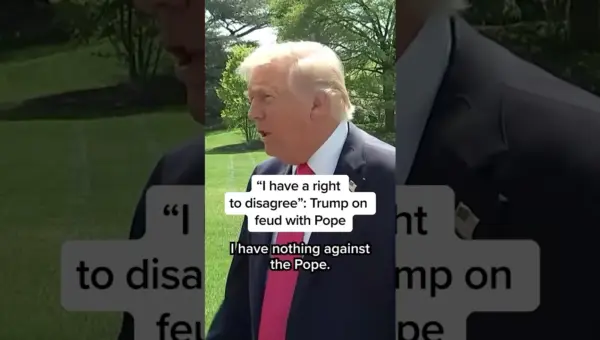
Trump Defends Right to Disagree with Pope Francis
Former President Donald Trump stated he has the right to disagree with Pope Francis, particularly on issues of war and nuclear weapons. Trump alleged the Pope believes in a nation possessing nuclear arms, a claim contradicted by the Pope's consistent advocacy for disarmament. This exchange highlights the intersection of faith and politics on the global stage.