Johnson Rejects Senate DHS Funding, Pushes Clean Resolution
House Speaker Mike Johnson announced that House Republicans will reject the Senate's proposed Department of Homeland Security funding deal. Instead, the House will pursue a clean continuing resolution to extend current funding levels for critical security agencies until May 22nd. This move aims to ensure uninterrupted operations for 10 DHS agencies.

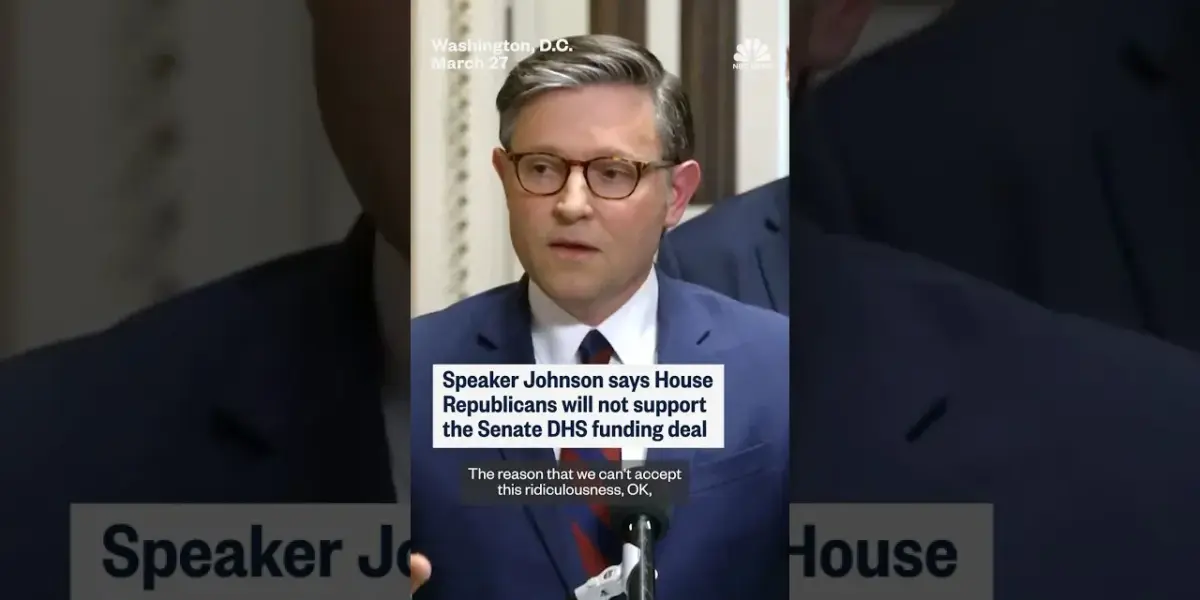
House Republicans Reject Senate DHS Funding Deal
House Speaker Mike Johnson announced Tuesday that House Republicans will not support the funding deal for the Department of Homeland Security (DHS) agreed upon by the Senate. Johnson stated the current proposal is unacceptable and that the House will instead pursue a clean continuing resolution. This move aims to ensure continued funding for critical agencies without compromising national security priorities.
Push for a Clean Continuing Resolution
Speaker Johnson explained the rationale behind rejecting the Senate’s plan. He emphasized that the primary concern is to avoid jeopardizing the operations of agencies that protect Americans.
The proposed solution is a simple continuing resolution that would extend current funding levels for several weeks. This short-term measure would provide stability for the Department of Homeland Security and its various components.
The continuing resolution would keep 10 agencies within DHS funded at their current levels. This approach ensures that essential services continue without interruption.
Johnson expressed hope that the Senate would accept this straightforward proposal. He believes it can be passed quickly with unanimous consent, similar to how other legislative measures are often approved.
Concerns Over Current DHS Funding Deal
While the transcript does not detail specific objections to the Senate’s DHS funding deal, Speaker Johnson characterized it as “ridiculousness.” This suggests significant disagreements over the terms or scope of the proposed funding. The House Republicans’ stance indicates a desire for a more streamlined and perhaps more targeted approach to agency funding. They want to ensure that taxpayer money is used effectively and that national security is not put at risk by complex or contentious legislative packages.
The decision to push for a clean resolution highlights a potential division in funding priorities between the House and the Senate. By opting for a simple extension, the House aims to bypass what it views as problematic elements in the Senate’s proposal. This strategy prioritizes the immediate operational needs of security agencies over broader legislative negotiations that may be causing the impasse.
Ensuring Agency Operations
The core of Speaker Johnson’s argument rests on the need to maintain current funding for agencies that serve the country. He specifically mentioned “all these agencies, 10 agencies under the Department of Homeland Security.” These agencies are vital for national security, border protection, and disaster response. Keeping them funded ensures their personnel and resources remain available to perform their duties effectively.
The continuing resolution would provide a predictable funding stream until May 22nd. This timeframe offers a short but crucial period for the House and Senate to potentially negotiate a more comprehensive and long-term funding solution.
The focus remains on preventing any lapse in services that could impact public safety or national security. It’s a way to keep the lights on for essential government functions during ongoing budget discussions.
Next Steps and Senate Response
The House will send its proposed continuing resolution to the Senate for consideration. Speaker Johnson expressed optimism that the Senate would be willing to pass it swiftly.
The ability to pass such a resolution quickly often relies on the agreement of all senators, a process known as unanimous consent. If the Senate agrees, the funding for DHS agencies will be extended without further delay.
The ball is now in the Senate’s court. Their response to the House’s clean continuing resolution will determine the immediate future of DHS funding.
This legislative maneuver highlights the ongoing negotiations and potential conflicts in Congress over budget priorities. The outcome will affect the operational capacity of numerous federal agencies tasked with protecting the nation.
Source: Speaker Johnson says House Republicans will not support the Senate DHS funding deal (YouTube)

Related Articles


Congress Funds DHS, Iran Tensions Rise, Farmer Aid Looms
Congress has reached a deal to fund the Department of Homeland Security, though ICE funding remains separate. Meanwhile, escalating tensions with Iran see Israel intensifying strikes, while the U.S. faces farmer aid and anti-fraud task force initiatives. Concerns also rise over Chinese influence on U.S. campuses.

TSA Faces Shutdown Chaos: Acting Chief Warns of Security Risks
The acting head of the TSA warned of significant security risks due to an unprecedented funding lapse, with the agency having missed 50% of its operational days this fiscal year. TSA officers are working without pay, leading to operational challenges like consolidated security lanes and the potential closure of smaller airports. The administrator urged Congress to fully fund the Department of Homeland Security to prevent future disruptions.


Trump Reveals Congressman’s Terminal Diagnosis Amid Health Plea
Former President Donald Trump revealed that U.S. Representative Neal Dunn has a "terminal" heart condition. Trump stated he and Speaker Mike Johnson urged Dunn to stay in Congress despite the diagnosis. Dunn had previously announced he would not seek re-election, without specifying his health issues.