Interstellar Visitor 3I/ATLAS Reveals Cosmic Secrets
Interstellar visitor 3I/ATLAS has revealed surprising details about its composition and behavior. Passing near the Sun, it exhibited intense outgassing and color changes, and was confirmed by radio telescopes to be a water-rich comet, not an artificial object. Its unique chemistry suggests it has been "cooked" by cosmic rays over billions of years.


Interstellar Visitor 3I/ATLAS Reveals Cosmic Secrets
For months, astronomers and space enthusiasts have been captivated by the passage of 3I/ATLAS, an object from beyond our solar system, as it traversed the inner reaches of our cosmic neighborhood. First detected in July, this interstellar visitor offered a rare glimpse into worlds beyond our own.
However, as 3I/ATLAS approached a critical phase in its journey – its closest approach to Earth and the Sun – a celestial obstruction, our own Sun, temporarily blinded ground-based telescopes. This blackout occurred at the most frustrating of times, just as scientists were beginning to unravel the object’s peculiar molecular composition, observe its color shifts, and even note an unusual sunward-facing “tail,” sparking speculation about its origins.
A Fiery Passage Through the Inner Solar System
As 3I/ATLAS hurtled through space at a staggering 68 kilometers per second, subjected to the Sun’s intense radiation, its survival was uncertain. Would it disintegrate in the solar inferno, or emerge to continue its cosmic voyage? Fortunately, a network of spacecraft positioned throughout the solar system, including probes near Mars, maintained a vigilant watch.
Early Warnings of Unusual Behavior
Even before disappearing behind the Sun, 3I/ATLAS exhibited behavior far from that of a typical comet. In late August and September, NASA’s Swift Observatory, primarily designed to detect gamma-ray bursts, utilized its ultraviolet capabilities to observe the object. Swift detected a significant surge in hydroxyl (OH) radicals – fragments of water molecules broken apart by sunlight.
At a distance of 2.9 Astronomical Units (AU) – nearly three times the Earth-Sun distance – 3I/ATLAS was expelling water at an astonishing rate of 40 kilograms per second. This rate, far exceeding expectations for an object at such frigid temperatures, suggested that 3I/ATLAS wasn’t merely sublimating surface ice but was actively ejecting icy grains that then melted, dramatically increasing its surface area.
Spacecraft Witness a Solar Metamorphosis
Throughout October, while Earth-bound telescopes were rendered useless, a constellation of spacecraft provided crucial data. The STEREO-A, SOHO, and GOES-19 satellites, equipped with coronagraphs that create artificial eclipses to observe the Sun’s corona, were repurposed to track 3I/ATLAS. These instruments revealed a dramatic transformation.
Before October, the object’s brightness increased with distance from the Sun at a rate of approximately r-3.8, a typical behavior for an active comet. However, as it passed within 2 AU of the Sun, this rate steepened dramatically to r-7.5, indicating an immense loss of mass inconsistent with standard cometary models.
Color Changes Hint at Inner Composition
The visual changes observed were equally striking. For months, 3I/ATLAS appeared reddish, characteristic of dusty, organic-rich surfaces. It then shifted to a green hue as seen from Earth.
However, observations from the solar observatories revealed a distinctly blue color relative to the Sun. This blue coloration is a signature of specific gas emissions, particularly fluorescence from carbon monoxide (CO) and amide radicals (NH2). This indicated that as 3I/ATLAS approached perihelion, its dusty outer layer was shed, exposing a volatile, icy interior that violently outgassed under intense solar heat.
Mars Orbiters and Rovers Join the Observation Effort
Adding to the observational network, 3I/ATLAS made a close flyby of Mars, passing within 28 million kilometers. This proximity allowed NASA’s Mars Reconnaissance Orbiter (MRO) to capture images with its powerful HiRISE camera. Despite its capabilities, the resulting images showed only an unresolved blob, obscured by a coma of gas and dust extending 1,500 kilometers.
This non-detection of a distinct nucleus, combined with Hubble Space Telescope estimates suggesting a maximum width of 2.8 kilometers, helped constrain its size. ESA’s Mars Express and ExoMars orbiters, along with NASA’s MAVEN orbiter, also contributed data, with MAVEN’s ultraviolet spectrograph revealing a vast hydrogen envelope.
Perhaps most remarkably, NASA’s Perseverance rover, situated in Jezero Crater, pointed its Mastcam-Z camera skyward. The resulting long-exposure images captured 3I/ATLAS as a faint smudge among the stars – marking the first time an interstellar object has ever been imaged from the surface of another world.
Debunking Extraterrestrial Hypotheses
As 3I/ATLAS emerged from behind the Sun in November, concerns arose that it might have fragmented due to its intense mass loss. Professor Avi Loeb of Harvard University proposed that the object had broken into multiple pieces, citing its sunward jet and non-gravitational acceleration as potential indicators of artificial propulsion. However, subsequent observations from the Lowell Observatory and the Virtual Telescope Project confirmed the comet remained intact, albeit highly active.
The “sunward jet” phenomenon is a known cometary behavior, where gases escaping from a heated weak spot on the sun-facing side can appear to point towards the Sun before being swept back by the solar wind. Similarly, the “non-gravitational acceleration” is consistent with the substantial outgassing observed, as modeled by recent dynamical studies. These natural explanations, supported by the detection of water and carbon dioxide, strongly suggest 3I/ATLAS is a natural celestial body.
MeerKAT Confirms Cometary Nature
The debate was definitively settled by the MeerKAT radio telescope array in South Africa. It detected a faint but distinct radio absorption line of hydroxyl radicals.
This crucial radio detection, capable of penetrating dust clouds, confirmed the presence of abundant water vapor. This marks the first time radio emissions have been detected from an interstellar object, demonstrating that 3I/ATLAS is chemically similar to comets within our own solar system – a wet, icy body venting water vapor, not a dry, rocky alien artifact.
A “Cooked” Interstellar Visitor
Further analysis, including data from the James Webb Space Telescope and the SPHEREx mission, revealed an extreme abundance of carbon dioxide (CO2) relative to water – a ratio nearly sixty times higher than in typical solar system comets. This suggests 3I/ATLAS is not a pristine relic but a “cooked” object. Billions of years of bombardment by galactic cosmic rays (GCRs) are believed to have converted its surface ice into CO2 and complex organic solids, forming a processed crust.
Unexpected Metals and Cryovolcanism
Intriguingly, spectral analysis of 3I/ATLAS has shown similarities to CR carbonaceous chondrite meteorites, suggesting the presence of metals like nickel and iron. This is unusual for comets, even other interstellar visitors like 2I/Borisov. The high nickel-to-iron ratio observed by the VLT in Chile, which decreased as the comet approached the Sun, hints at a unique composition.
Scientists theorize that the interaction of melting ice with these metal grains, catalyzed by heat from solar radiation or internal pressure, could trigger exothermic Fischer-Tropsch reactions. This process, releasing more heat and pressure, may explain the intense bursts of activity, jets, and massive material release observed – a phenomenon akin to “cryovolcanism.”
The Journey Continues
As of November 2025, 3I/ATLAS is continuing its outward trajectory, carrying the indelible marks of its solar passage. Its closest approach to Earth has passed, and on March 16, 2026, it will make a close flyby of Jupiter, passing within its gravitational sphere of influence.
While it will not be captured, Jupiter’s gravity will provide one final gravitational nudge before it departs our solar system. This flyby offers a potential observation window for the Juno spacecraft, which might provide a final, distant glimpse of this extraordinary visitor from the outer solar system.
A Window into the Interstellar Medium
The journey of 3I/ATLAS has already yielded profound insights, challenging our understanding of interstellar objects. It has revealed the space between stars not as a void, but as a transformative environment.
It has shown that even seemingly simple celestial bodies can harbor complex chemical engines capable of driving spectacular phenomena. While not an alien spaceship, 3I/ATLAS, a rock carrying the ancient scars of its journey across the galaxy, represents a profound and equally miraculous testament to the universe’s wonders.
Source: 3I/ATLAS Just Answered the Question Everyone Was Asking (YouTube)

Related Articles

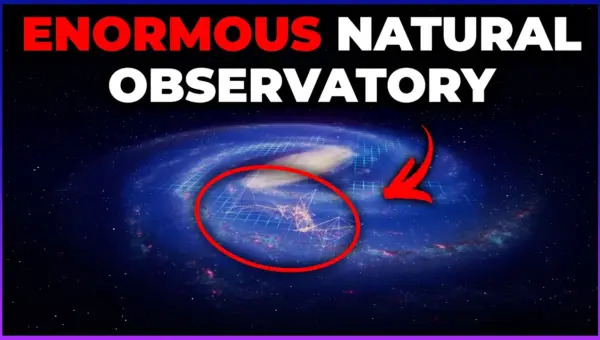
Cosmic Hum Hints at Gigantic Black Hole Mergers
Astronomers are using networks of rapidly spinning pulsars, nature's precise cosmic clocks, to detect the faint hum of merging supermassive black holes. New research is now focusing on pinpointing individual merger events, moving beyond the general background noise to understand these colossal cosmic collisions.

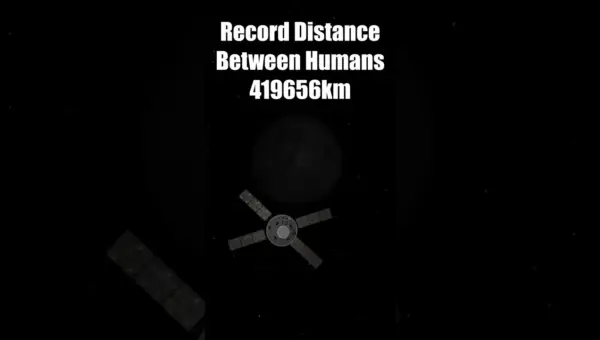
Artemis II Astronauts Set New Human Distance Record
The Artemis II mission set a new human distance record, reaching 413,145 km from Earth. The mission also established a record for the greatest distance between two groups of humans, with astronauts on China's Tiangong space station being 419,656 km away from the Artemis II crew.


Astrophysicist Shares Breast Cancer Journey & Science Insights
Astrophysicist Dr. Becky Smethurst shares her breast cancer diagnosis journey and emphasizes the importance of evidence-based medicine over unproven treatments. She also discusses her passion for space and scientific discovery.