Space Missions Vie for Top Honors in 2025 Awards
The 2025 Astro Awards are set to honor the most inspirational, innovative, and important space mission. Nominees range from commercial lunar landings and unprecedented human polar orbits to cost-effective Mars missions and ongoing scientific discoveries.


Space Missions Vie for Top Honors in 2025 Awards
The annual Astro Awards, hosted by Tim Dodd of Everyday Astronaut, is once again opening the floor to public vote, seeking to crown the most inspirational, innovative, and important space mission of 2025. This year’s nominations highlight a diverse range of achievements, from groundbreaking lunar landings to unprecedented human voyages and crucial scientific discoveries, highlighting the accelerating pace and commercialization of space exploration.
The Contenders for Mission of the Year
Firefly Aerospace’s Blue Ghost Lunar Lander
Leading the charge is Firefly Aerospace’s Blue Ghost, the first commercial lunar lander to successfully touch down on the Moon. Launched in January and landing on March 2nd, 2025, this mission achieved a monumental feat for the Commercial Lunar Payload Services (CLPS) initiative.
At a cost of approximately $93 million, Blue Ghost represents a significant reduction in lunar mission expenses compared to historical endeavors, showcasing the growing potential of private spaceflight companies. Its success marks a key moment in the commercialization of space, demonstrating that smaller, agile teams can achieve ambitious goals at a fraction of traditional costs.
Viasat’s Polar Orbit Mission
Another strong contender is Viasat’s groundbreaking mission that, for the first time in history, sent humans on a polar orbit around Earth. Launched in April 2025, this mission utilized SpaceX’s Falcon 9 from Vandenberg, a feat previously thought impossible without specialized launch sites and vehicles. The ability to achieve a polar orbit from Florida, employing a dogleg maneuver, highlights the increasing performance capabilities of modern launch systems.
Beyond the technical achievement, the mission offers a unique perspective of Earth from a vantage point never before seen by human eyes, promising to inspire future generations and deepen our understanding of our planet. The mission’s cinematic footage, captured by cinematographer Yanuka, is set to premiere at the Astro Awards, offering a never-before-seen glimpse of Earth from the poles.
Escapade and New Glenn Launch & Landing
This year’s awards also feature a combined nomination for United Launch Alliance’s (ULA) New Glenn rocket and the Escapade mission. The second launch of the New Glenn rocket, which occurred in November 2024, marked a significant milestone with the successful booster landing, following in the footsteps of SpaceX’s Falcon 9 and Starship. This heavy-lift rocket’s ability to land its booster positions ULA as a key player in reusable rocket technology.
Crucially, this launch also carried the Escapade spacecraft, a mission designed to study Mars’s moons, Phobos and Deimos. The Escapade mission, with an estimated cost between $75-90 million, represents one of the most cost-effective ways to send spacecraft to Mars, further emphasizing the trend of commercialization and cost reduction in space exploration.
Perseverance and OSIRIS-REx: Science from the Past
The nominations also include a unique consideration for missions whose scientific discoveries are still yielding significant results. NASA’s Perseverance rover, which landed on Mars in 2021, has provided crucial data, including the discovery of a rock with ‘leopard spots’ – considered a prime marker for potential ancient microbial life. Simultaneously, the OSIRIS-REx mission, which returned samples from the asteroid Bennu in 2023, has revealed the presence of organic molecules, including sugars, identified as potential building blocks of life.
While these missions are not new launches from 2025, their ongoing scientific revelations raise a pertinent question: should missions that continue to deliver groundbreaking science be recognized in the current year’s awards? This nomination prompts a broader discussion about how we celebrate space exploration – focusing solely on launch and operational milestones or acknowledging the long-term scientific impact of missions.
The Evolution of Space Exploration and the Astro Awards
The Astro Awards, now in its third year of in-person ceremonies held in Austin, Texas, on January 17th and 18th, aims to simplify the recognition process. Instead of multiple categories, the focus is on a single award for the most outstanding mission that embodies inspiration, innovation, and importance. This approach reflects a desire to celebrate singular, significant achievements in spaceflight.
The exclusion of SpaceX’s Starship from the main nominations is notable. While Starship’s test flights and prototype development are acknowledged as entertaining and potentially game-changing for the future, they are not considered to have met the criteria for ‘inspirational, innovative, or important’ in 2025, with 2024 being the year of its major milestones like booster catch and soft splashdown. Future missions, including orbital refueling, are anticipated to make Starship a strong contender in subsequent years, possibly as early as 2026.
Looking Ahead: The Future of Space Exploration
The diverse nominations for the 2025 Astro Awards underscore a transformative era in space exploration. The rise of commercial players like Firefly Aerospace and ULA, coupled with the increasing capability and cost-effectiveness of launch systems like SpaceX’s Falcon 9, are democratizing access to space.
Missions like Blue Ghost and Escapade demonstrate that ambitious scientific and exploratory goals are now achievable for a wider range of organizations and at significantly lower costs. The ongoing scientific returns from missions like Perseverance and OSIRIS-REx highlight the enduring value of long-term space exploration, pushing the boundaries of our understanding of life in the universe and our place within it.
The public vote for the Astro Awards not only engages the community but also is a barometer for what aspects of space exploration resonate most with the public – be it the engineering marvels of new rockets, the daring journeys of human spaceflight, or the profound scientific discoveries that reshape our cosmic perspective. The outcomes of this vote will undoubtedly influence how we perceive and celebrate the monumental efforts shaping humanity’s future in space.
Source: VOTE NOW! Biggest mission of 2025! (YouTube)

Related Articles


Alien Life Could Travel Between Stars, Scientists Say
Scientists are exploring the scientific concept of panspermia, where life could travel between star systems on asteroids or comets. Evidence shows life's resilience and the movement of material between planets, making this a credible hypothesis. The search for extraterrestrial life is now focusing on when and where we might find it.

Artemis II Astronauts Set New Human Distance Record
The Artemis II mission set a new human distance record, reaching 413,145 km from Earth. The mission also established a record for the greatest distance between two groups of humans, with astronauts on China's Tiangong space station being 419,656 km away from the Artemis II crew.

Mars Rover Detects Mysterious Lightning Signals
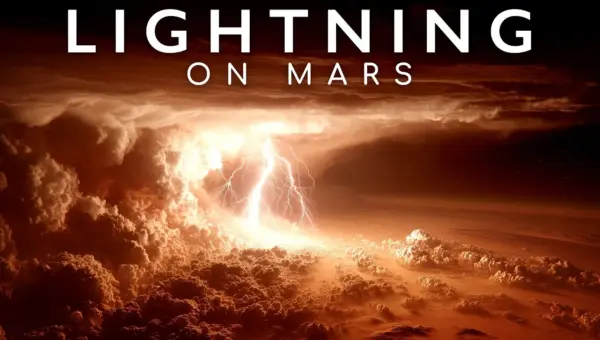
NASA's Perseverance rover has detected mysterious crackling sounds, providing the first tantalizing evidence of lightning on Mars. This discovery, along with a faint whistler wave detected by the MAVEN spacecraft, suggests that electrical discharges occur in Martian dust storms, impacting atmospheric chemistry and posing new challenges for future human exploration.