Apple II: The First Personal Computer in Orbit
In 1983, an Apple II microcomputer, stripped of its casing and painstakingly modified, became the first personal computer to fly in space aboard the Space Shuttle's STS-9 mission. This pioneering device supported a plant growth experiment, paving the way for modern spaceborne computing.

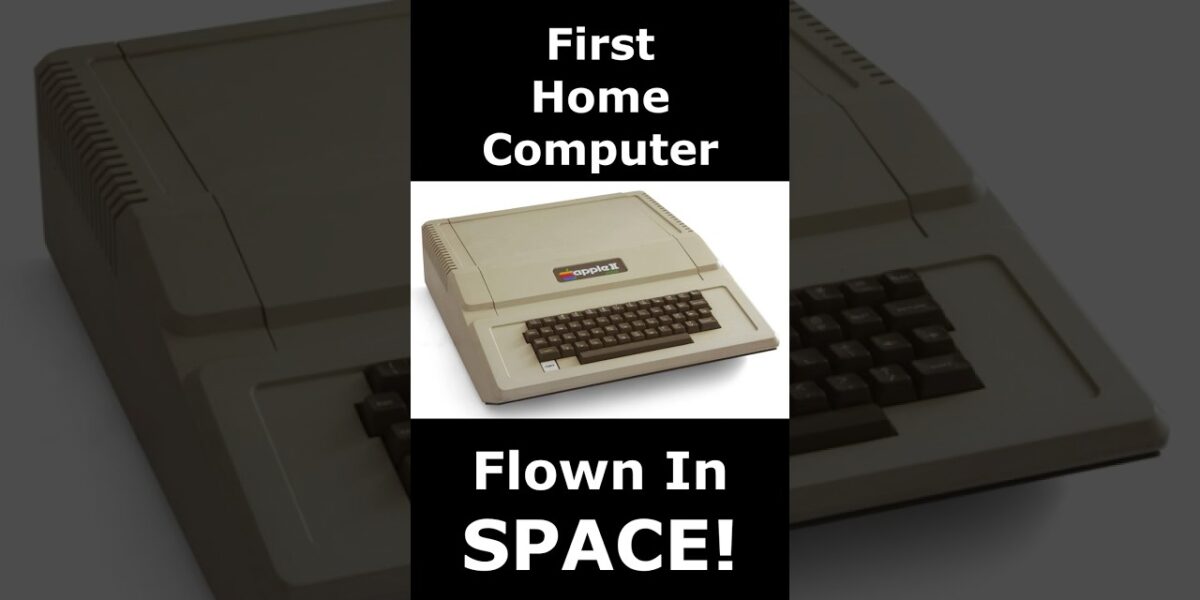
Apple II Makes History as First Personal Computer in Space
In the annals of space exploration, the journey of computing has been as transformative as the rockets that carried it. While images of astronauts using modern laptops and tablets in orbit are now commonplace, the pioneering spirit of early spaceflight saw the humble Apple II personal computer become the first of its kind to venture beyond Earth’s atmosphere. This remarkable feat occurred not on a flashy, dedicated mission, but as part of a scientific experiment aboard the Space Shuttle Columbia during the STS-9 mission in 1983.
A Botanical Experiment Takes Flight
The STS-9 mission, also known as Spacelab 1, carried a significant payload of scientific experiments into orbit. Among these was a critical plant growth experiment designed to observe and document the effects of microgravity on vegetation over several days.
To ensure the experiment ran smoothly and efficiently, the scientists involved recognized the need for automation. Their solution was to integrate a commercially available Apple II microcomputer into the experimental setup.
From Off-the-Shelf to Space-Ready
The journey of this Apple II from a consumer product to a space-hardened instrument was far from simple. Initially, the computer was designed to be housed within a rack aboard the Spacelab module.
However, its original consumer casing and keyboard were deemed unsuitable for the rigors of spaceflight. The computer was removed from its protective shell, and the keyboard was detached.
But the modifications did not stop there. NASA engineers, ever vigilant about mission safety and hardware reliability, conducted a thorough inspection. They discovered that many of the crucial chips on the Apple II’s motherboard were socketed.
This presented a significant risk. The intense vibrations experienced during a rocket launch could potentially dislodge these chips, leading to system failure.
To mitigate this risk, the engineers overseeing the experiment had to undertake a painstaking process: de-soldering each chip, meticulously cleaning the contacts, and then re-soldering them directly onto the motherboard. This extensive modification ensured the Apple II met NASA’s stringent flight standards, transforming it from an ordinary personal computer into a robust piece of space-faring technology.
A Precursor to Modern Space Computing
The STS-9 mission and its embedded Apple II were a resounding success. The experiment yielded valuable data, and the computer performed admirably in the harsh environment of space.
This early integration of a personal computer into a scientific payload proved the viability of using such devices for complex tasks in orbit. It laid the groundwork for the increasingly sophisticated computing power that would follow.
Evolution of Computing in Space
Since the groundbreaking flight of the Apple II, the presence of computers in space has evolved dramatically. The International Space Station (ISS) is now equipped with multiple HP laptops and Apple iPads, serving a variety of functions from scientific data analysis to crew communication and daily operations.
The evolution continues, with NASA announcing that smartphones are set to become standard equipment for all future missions. This move reflects the increasing reliability and capability of consumer-grade electronics, adapted for the demands of space travel.
Looking Ahead: The Future of Spaceborne Computing
The journey from an off-the-shelf Apple II, painstakingly modified for space, to the advanced devices used today highlights a crucial trend in space exploration: the leveraging of commercial off-the-shelf (COTS) technology. This approach can significantly reduce costs and accelerate development cycles, allowing missions to incorporate more powerful and versatile computing capabilities.
As we push the boundaries of exploration to the Moon, Mars, and beyond, reliable and powerful computing will remain an indispensable tool. The lessons learned from adapting that first Apple II continue to inform the development of the next generation of spaceborne computers, ensuring that humanity’s reach into the cosmos is supported by increasingly intelligent and capable systems.
Source: The First Personal Computer In Space (YouTube)

Related Articles


Teacher’s Resilience: Two Disasters, One Spaceflight
Elementary school teacher Barbara Morgan witnessed the Challenger and Columbia shuttle disasters but persevered to achieve her dream of flying to space, joining the ISS in 2007.


Gravitational Waves Reveal Universe’s Deepest Secrets
Humanity's ability to detect gravitational waves has advanced dramatically, with observatories now capturing nearly one black hole merger daily. These cosmic events are not only spectacular but also crucial for testing Einstein's theories and understanding the universe's fundamental nature. Future upgrades promise even greater insights.


Alien Life Could Travel Between Stars, Scientists Say
Scientists are exploring the scientific concept of panspermia, where life could travel between star systems on asteroids or comets. Evidence shows life's resilience and the movement of material between planets, making this a credible hypothesis. The search for extraterrestrial life is now focusing on when and where we might find it.