China’s Tech Leap: Robots, Flying Cars & Battery Breakthroughs
China is rapidly advancing in robotics, flying cars, and battery technology. Breakthroughs in humanoid robots and eVTOLs are becoming a reality, while sodium-ion batteries promise cheaper, more accessible energy storage.


Tech in China: A Glimpse into the Future
The world of automotive and technology is evolving at breakneck speed, and China is at the forefront of many of these transformative developments. From the intricate dance of humanoid robots to the ambitious dream of electric vertical takeoff and landing (eVTOL) aircraft, and the crucial advancements in battery technology, the landscape is shifting dramatically. This article digs into the exciting innovations emerging from China, exploring their potential impact and offering a perspective on what the future holds.
Humanoid Robots: From Sci-Fi to Reality
Once confined to the realm of science fiction, humanoid robots are rapidly becoming a tangible reality, thanks to significant progress in artificial intelligence and engineering. Companies like Unitree and XPeng are showcasing robots with remarkable agility and capabilities. XPeng even demonstrated a humanoid robot on stage, silencing doubters by revealing its mechanical nature.
While the sight of a bipedal robot can evoke a sense of unease for some, with concerns about stability and the sheer computational power required for balance, the advancements are undeniable. Videos show these robots performing complex movements, mirroring human actions, and even participating in synchronized routines.
The speed of development is astounding; robots that once took nearly an hour to complete an obstacle course now do so in under a minute. This rapid evolution, achieved in mere years, starkly contrasts with the millennia of human physical development.
The Use Case Conundrum
Despite the technological marvel, questions linger about the practical applications of these advanced robots. While the ability to dance or mimic human movements garners attention, the true value may lie in more functional roles. The potential to assist the elderly, perform strenuous tasks in factories, or aid in domestic chores is immense.
Imagine a robot capable of helping an individual with mobility issues, providing physical support and companionship. While the current focus might be on flashy demonstrations, the underlying technology holds the promise of addressing real-world challenges.
Affordability and Availability
What is perhaps most surprising is the emerging affordability of these robots. With prices estimated around AUD $100,000 (approximately USD $66,000 or £50,000), they are entering the realm of consumer purchase, comparable to the cost of a mid-range car.
This accessibility, combined with the rapid technological strides, suggests a future where advanced robotics could become commonplace. Some predict that within five years, automakers might even offer robots as an incentive with vehicle purchases.
The Rise of the “Low Altitude Economy” and Flying Cars
China is also aggressively pursuing the development of the “low altitude economy,” focusing on aircraft that operate below 1,000 meters. This includes eVTOLs, or “flying cars,” which are poised to revolutionize transportation. Companies like Autoflight, a subsidiary of CATL, are at the forefront of this movement.
The vision extends beyond personal transport, encompassing applications such as rapid response for forest fires, search and rescue operations, and efficient cargo delivery. Traditional helicopters, known for their high costs, complexity, and inherent risks, could soon be replaced by these quieter, more efficient electric alternatives.
Innovation in Air and Ground Integration
The integration of air and ground transportation is also a key area of innovation. XPeng’s “AeroHT” division is developing an electric, six-wheeled ground vehicle with an integrated eVTOL that can take off and land from the vehicle itself. This concept, once seemingly far-fetched, is slated for mass production this year.
While the noise generated by these eVTOLs is a consideration, their potential to bypass traditional infrastructure and offer unparalleled mobility is undeniable. The possibility of deploying these vehicles for emergency services, offering faster response times and greater reach, presents a compelling use case.
Battery Breakthroughs: The Foundation of Future Tech
Underpinning all these advancements is the critical field of battery technology. While solid-state batteries remain a highly anticipated but elusive goal, significant progress is being made with sodium-ion batteries. CATL, a leading battery manufacturer, is expected to launch mass-produced commercial sodium-ion batteries this year.
This development is groundbreaking for several reasons. Sodium-ion batteries utilize abundant and inexpensive materials, significantly reducing costs and eliminating reliance on lithium.
Estimates suggest a cost as low as $10-$20 per kilowatt-hour, a fraction of current lithium-ion prices. Such affordability could revolutionize energy storage, making large-scale battery installations for homes and solar farms economically viable.
The Sodium-Ion Advantage
The shift towards sodium-ion technology is not just about cost; it’s about accessibility and sustainability. With widespread availability of salt, the raw material for these batteries, the potential for global adoption is immense.
While the UK’s news of salt mine depletion might seem counterintuitive, the overall abundance of sodium globally ensures this technology’s scalability. This breakthrough promises to accelerate the transition to renewable energy and electrify a wider range of applications, from vehicles to grid-scale storage.
Looking Ahead: A New Era of Innovation
The innovations emerging from China in robotics, aviation, and battery technology signal a profound shift in the global technological landscape. While challenges and questions remain, particularly regarding the practical implementation and societal integration of these technologies, the pace of development is undeniable.
The convergence of these advancements promises a future that is more automated, more mobile, and more sustainable. As these technologies mature and become more accessible, they are poised to reshape industries and redefine our daily lives.
Source: Humanoid Robots, Flying Cars & the Battery Breakthroughs of 2026 (YouTube)

Related Articles
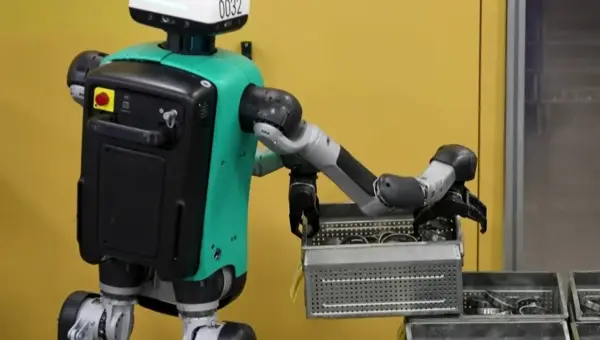
Humanoid Robots Enter Auto Plant, Reshaping Manual Labor
Humanoid robots are now taking on manual jobs in U.S. factories, with Schaeffler in South Carolina employing a robot named Digit for auto parts handling. While the company reskills human workers for higher-tech roles, experts warn of potential job displacement for lower-skilled workers. Safety and cost remain key factors as the technology continues to advance.
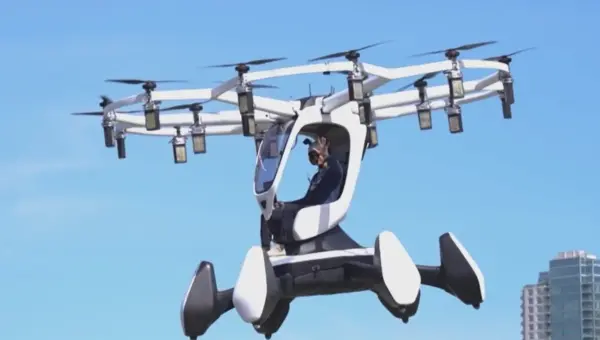
FAA Clears Skies for ‘Flying Cars’ Pilot Program
The FAA has launched a nationwide pilot program to test electric vertical takeoff and landing vehicles (eVTOLs), bringing the concept of flying cars closer to reality. This initiative aims to develop regulations and explore applications in emergency response and urban transport.
Flying Cars Take Flight: Doroni Unveils $400K Electric VTOL
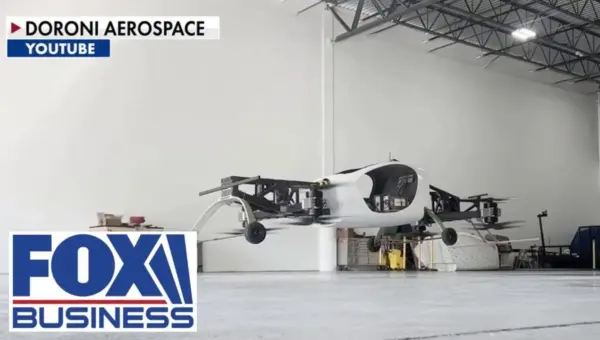
Doroni Aerospace has unveiled its all-electric, two-seat H1-X 'flying car' at the FII Conference in Miami. Priced at $400,000, the aircraft is expected to begin market delivery in 2028. The company is working with the FAA for certification and sees potential for personal use, emergency services, and military applications.