2026 Toyota Corolla Cross: Capable Crossover or All-Wheel Assist?
The 2026 Toyota Corolla Cross hybrid was put to the test on slip surfaces and a moderate off-road trail. While it offers a comfortable interior and impressive fuel economy, its e-AWD system showed significant limitations under demanding conditions, raising questions about its true crossover capability.

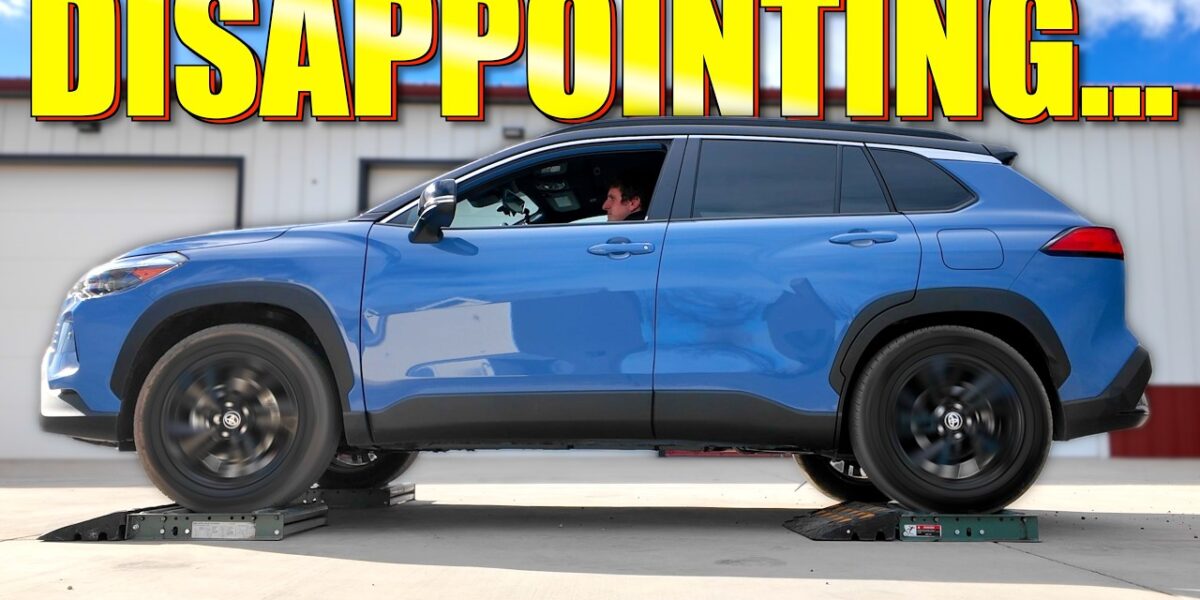
2026 Toyota Corolla Cross: Capable Crossover or All-Wheel Assist?
The Toyota Corolla nameplate is legendary, a global benchmark for reliability and practicality. But what happens when you equip this ubiquitous sedan with hiking boots and a desire to explore beyond the pavement?
The refreshed 2026 Toyota Corolla Cross aims to answer that question, offering a blend of familiar Corolla DNA with the added capability of a small crossover. We took the latest iteration, specifically the hybrid model with its e-AWD system, to task on a challenging slip test and a moderate off-road trail to see if it truly lives up to the crossover promise.
The e-AWD System Under Scrutiny
Central to the Corolla Cross’s all-wheel-drive capability is its e-AWD system. Unlike traditional setups, this hybrid configuration eschews a driveshaft to the rear axle. Instead, the rear wheels are powered exclusively by an electric motor.
This design, while efficient, raises questions about its effectiveness in demanding situations. To put it to the test, we employed the TFL Slip Test, a rigorous evaluation where wheels are deliberately placed on rollers to simulate low-traction scenarios.
Slip Test Results: A Mixed Bag
The front-wheel slip test, simulating a common scenario of front wheels stuck in snow, proved challenging. The electric rear axle struggled to provide sufficient torque to propel the vehicle forward, requiring significant throttle input and prolonged effort. While it eventually managed to disengage, the performance was far from impressive, suggesting the rear motor’s contribution is more assistive than primary.
The diagonal slip test, mimicking a situation like driving up a snowy curb, yielded similar results. Even with traction control engaged, the Corolla Cross exhibited considerable wheel spin and hesitation.
Turning traction control off exacerbated the issue, leaving the vehicle even more entrenched. While Sport mode offered a slight improvement, it was evident that the system heavily relies on the front wheels for propulsion.
The three-wheel slip test, arguably the most demanding, where only one front wheel has grip, pushed the e-AWD system to its limits. In one instance, the vehicle eventually gained traction, but it was a slow, hesitant process with noticeable torque distribution. The subsequent attempt, with only a rear wheel on the roller, was even more telling.
Despite sustained full throttle for an extended period, the rear motor lacked the necessary power to free the vehicle. This leg of the test highlighted a significant weakness, forcing a reliance on the front wheels for any chance of escape.
Real-World Off-Roading: Cautious Exploration
Translating these slip test results to a real-world off-road environment, we took the Corolla Cross to a moderate trail in the Colorado Rockies. With approximately 8 inches of ground clearance and all-season tires, the vehicle’s limitations were immediately apparent. Crossing a ditch required significant throttle, and a subsequent trench proved to be a formidable obstacle, with the Corolla Cross struggling to find purchase even at full throttle.
The lack of low-end torque was a recurring theme, and the vehicle’s inability to handle significant articulation was evident. While the tires, Goodyear Assurance all-seasons, and 18-inch rims were not ideal for off-road excursions, the reviewer noted that even with better tires, the underlying system’s limitations would likely persist. The absence of underbody protection also necessitated a cautious approach, preventing the use of speed to overcome obstacles.
Despite these challenges, the Corolla Cross managed to navigate some sections of the trail, showcasing moments where the hybrid system, particularly in electric-only mode, provided a surprisingly smooth ride. However, the need for careful tire placement, liberal use of the throttle, and a good deal of patience were prerequisites for progress. The reviewer emphasized that while the Corolla Cross could potentially reach easier campsites with careful driving, it’s a far cry from a dedicated off-road vehicle.
Interior and Value Proposition
Stepping inside the 2026 Corolla Cross XSE, the cabin offers a comfortable and well-equipped experience for its class. The seats, a highlight of the interior, are exceptionally supportive and comfortable, surpassing those found in many competitors.
Features like heated seats, a heated steering wheel, and dual-zone automatic climate control add a premium feel. The inclusion of Toyota’s Safety Suite, with adaptive cruise control and lane centering, further enhances its appeal.
The rear seating area is surprisingly spacious, offering good legroom and headroom for passengers. However, the interior design leans towards functional rather than flashy, with a prevalence of black plastics and faux leather. A notable omission for some will be the lack of a physical volume knob, replaced by toggle switches.
Priced at $37,449 for the XSE trim, the Corolla Cross sits at the higher end of the small crossover segment. While it offers a generous list of features and excellent fuel economy (169 horsepower, 42 MPG combined), its off-road prowess, or lack thereof, raises questions about its value for buyers seeking true adventurous capability. The absence of a spare tire is also a consideration for those planning extended trips or venturing into remote areas.
Verdict: A Capable Commuter, Not a Trail Blazer
The 2026 Toyota Corolla Cross hybrid presents a compelling package as a comfortable, fuel-efficient, and well-equipped compact crossover for daily driving and light adventures. Its e-AWD system offers a basic level of all-wheel-drive capability, providing a modest advantage over front-wheel-drive models in slippery conditions. The comfortable interior and impressive fuel economy are undeniable strengths.
However, when pushed beyond its intended scope, the limitations of the e-AWD system become apparent. The struggles in the slip tests and the hesitant performance on the off-road trail suggest that its all-wheel-drive capability is more of an ‘assist’ than a robust system designed for challenging terrain. While it can reach easier campsites with patience, it falls short of the expectations set by its crossover classification for those seeking genuine off-road exploration.
For the buyer prioritizing fuel efficiency, comfort, and the basic reassurance of all-wheel drive for inclement weather, the Corolla Cross is a solid choice. However, those looking for a vehicle that can confidently tackle more demanding trails or embrace a more adventurous lifestyle might be better served by looking at competitors with more robust all-wheel-drive systems and greater ground clearance, such as a RAV4 Woodland Edition or even a more traditionally built SUV.
Key Specifications:
- Horsepower: 196 hp (hybrid)
- Torque: Not specified in transcript
- Range: Not specified in transcript (fuel economy 42 MPG combined)
- 0-60 Time: Not specified in transcript
- Pricing: Starting around $37,449 (XSE trim tested)
Source: The 2026 Toyota Corolla Cross Struggles… | Slip Test & Off-Road (YouTube)

Related Articles

Lexus NX350h AWD: Does Hybrid Power Conquer Snow?
The 2026 Lexus NX350h AWD hybrid SUV was put to the test in extreme winter conditions. While it excels in comfort and fuel efficiency, its all-wheel-drive system showed limitations in severe traction scenarios, though it performed well on a challenging real-world course.


Nissan Rogue Hybrid Electrifies Family Travel: A Game Changer Arrives
Nissan electrifies its popular Rogue SUV with the new e-POWER hybrid system, offering a smooth, EV-like driving experience without plugging in. The 2027 Rogue Hybrid aims for accessible electrification with advanced e-4ORCE all-wheel drive and ProPILOT Assist for enhanced comfort and safety.

Land Cruiser vs. GX: Toyota’s Off-Road Siblings Face Off
The Toyota Land Cruiser and Lexus GX share a platform but offer distinct experiences. The Land Cruiser prioritizes honest off-road capability with a hybrid powertrain, starting under $60,000. The more luxurious Lexus GX boasts a potent V6, advanced suspension, and a higher starting price of $67,000. Your choice depends on budget and desired refinement.