Pixel 10A: Google’s Re-Release Strategy Baffles
Google's Pixel 10A arrives as a near-identical twin to the Pixel 9A, raising questions about the necessity of annual hardware refreshes. While minor display and charging upgrades exist, the core hardware and design remain unchanged, baffling tech observers.

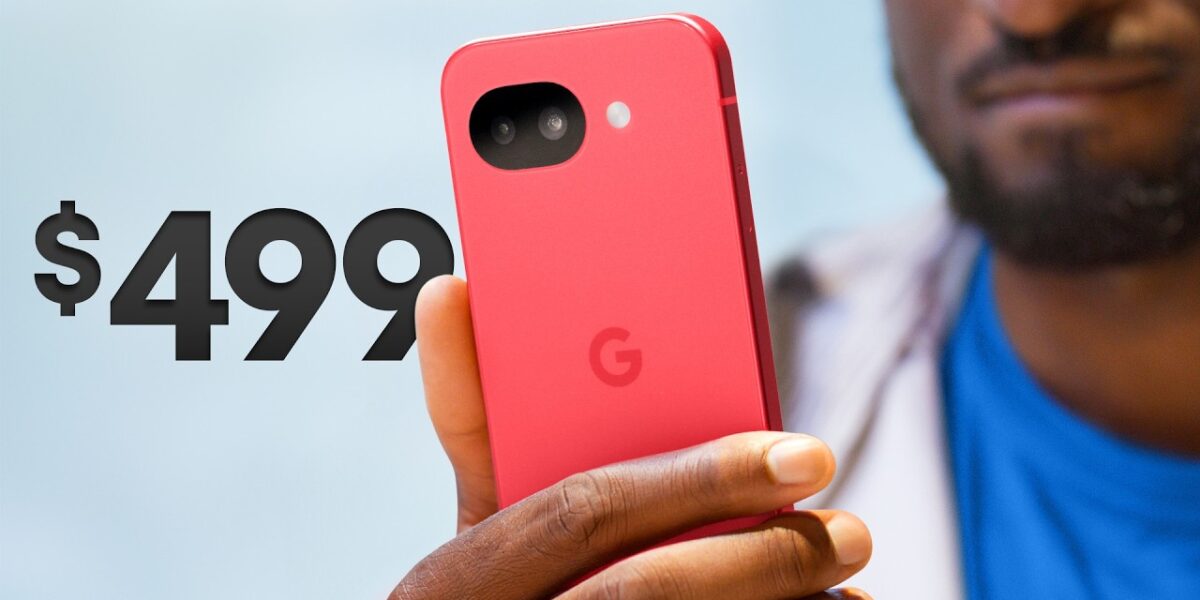
Pixel 10A: Google’s Re-Release Strategy Baffles
In a move that has left tech enthusiasts scratching their heads, Google has launched the Pixel 10A, a device that is, for all intents and purposes, virtually identical to its predecessor, the Pixel 9A. This marks an unprecedented level of product stagnation in the smartphone market, with the company seemingly opting for a ‘if it ain’t broke, don’t fix it’ philosophy taken to its absolute extreme.
A Design Unchanged
From the moment you lay eyes on the Pixel 10A, it’s impossible to distinguish it from the Pixel 9A. The dimensions, shape, and overall aesthetic remain the same. The phone sports a durable aluminum frame complemented by a plastic back – a practical choice that contributes to its affordability.
Google has continued its clever design choice of slightly increasing the phone’s thickness, which not only accommodates a larger battery but also ingeniously eliminates the camera bump. This results in a completely flush rear camera system, housing the same reliable dual-camera setup: a 48-megapixel main sensor and a 13-megapixel ultrawide lens.
The button placement, antenna lines, speaker grilles, and USB-C port are all in their familiar positions. The device also retains its IP68 water and dust resistance rating. Even the display is a carbon copy on paper: a 6.3-inch panel with well-rounded corners, noticeable but not excessive bezels, and a central hole-punch cutout for the selfie camera.
The fingerprint sensor is still embedded beneath the display, and the screen supports a 60Hz to 120Hz adaptive refresh rate, though it defaults to 60Hz out of the box. The resolution and pixel density remain unchanged.
Subtle, Almost Imperceptible Differences
While the exterior might be a mirror image, Google has managed to introduce a handful of minor updates. The color options have been refreshed, now available in Fog, Obsidian, Berry, and Lavender. More substantively, the display is now approximately 10% brighter, boasting a peak brightness of up to 30,000 nits.
It’s also protected by the newer Gorilla Glass 7i, an upgrade from the Gorilla Glass 3 found on the 9A. Google claims the bezels are marginally thinner, though this is difficult to discern without direct side-by-side comparison.
Charging speeds see a slight bump, with the peak wired charging rate increasing from 23W to 30W. Wireless charging also gets a modest boost, from 7.5W to 10W. The company also highlighted an increased amount of recycled content used in the construction of the 10A.
Perhaps the most significant new feature for some users, depending on their region, is the addition of Satellite SOS. This allows users to contact emergency services via satellite connectivity when cellular service is unavailable.
The Same Heart, Slightly Older
Under the hood, the Pixel 10A is powered by the same Tensor G4 chip found in the Pixel 9A. This means there’s no performance upgrade to speak of.
It’s paired with 8GB of RAM and starts with 128GB of internal storage, identical to the previous generation. This lack of internal upgrade is particularly surprising given that the Tensor G4 is no longer Google’s latest flagship silicon; the Tensor G5 is now powering the newer Pixel models.
This decision to reuse the Tensor G4, coupled with the minimal hardware changes, leads to the most striking aspect of the Pixel 10A: its price. It launches at the exact same starting price as the Pixel 9A: $499. It’s as if Google looked at the previous model, found it perfectly acceptable, and simply decided to rebrand it with a new number.
What’s Missing? A Lot, Apparently.
Despite the ‘if it ain’t broke’ mantra, there are several glaring omissions that Pixel A-series buyers would have likely appreciated. The most notable is the lack of magnets for accessory attachment, akin to Apple’s MagSafe. At a time when magnetic ecosystems are becoming increasingly common, Google’s decision to omit this feature across its entire Pixel 10 range, including the 10A, is perplexing.
Another missed opportunity is the base storage. In 2026, offering only 128GB as the starting point feels dated.
An upgrade to 256GB would have been a welcome statement. The decision to stick with the Tensor G4, when the Tensor G5 is available, is a departure from the A-series’ past practice of adopting the previous year’s flagship chip.
Software is Still King
Google’s strategy here appears to be an unwavering commitment to its software-defined product approach. The Pixel experience has always been heavily reliant on its unique software features, and the 10A is no exception. It inherits the latest AI-powered camera capabilities, such as ‘Best Take,’ which intelligently merges faces from multiple shots into a single perfect group photo, and ‘Camera Coach,’ which guides users on improving their photography skills.
These advanced features are layered on top of the established Pixel staples like Call Screening, Hold for Me, Clear Calling, and Now Playing. These intelligent software functionalities are often cited as reasons why users miss their Pixels when switching to other brands.
Adding to the software appeal is the promise of seven years of software and security updates, a class-leading commitment. The inclusion of ‘Quick Share,’ now natively integrated and working seamlessly with Apple devices for file sharing, is another compelling software advantage.
The Question of Relevance
This brings us to the fundamental question: why release a new phone at all if the hardware is largely unchanged and the focus is purely on software? It seems to fly in the face of industry trends, with some manufacturers like Nothing opting to move away from annual hardware churn.
Google’s decision feels less like innovation and more like adhering to a well-worn routine. The launch felt, to many observers, like an afterthought, a box to be ticked in the yearly product cycle.
While not everyone needs to upgrade their phone annually, there will always be a segment of the market whose two-to-four-year upgrade cycle aligns with a new model’s release. For Google, this means ensuring there’s a ‘new’ device on the shelf each year. The Pixel 10A, despite its uncanny resemblance to its predecessor, does manage to offer a decent package at its $499 price point, especially for those who prioritize Google’s software ecosystem and AI capabilities.
Specs & Key Features
- Display: 6.3-inch OLED, 1080 x 2400 resolution, 120Hz adaptive refresh rate (default 60Hz), up to 30,000 nits peak brightness, Gorilla Glass 7i
- Processor: Google Tensor G4
- RAM: 8GB
- Storage: 128GB (starting)
- Rear Cameras: 48MP (wide), 13MP (ultrawide)
- Front Camera: 13MP
- Battery: 5100 mAh, 30W wired charging, 10W wireless charging
- Durability: IP68 water and dust resistant
- Software: Android (latest version), 7 years of software and security updates
- Connectivity: Wi-Fi, Bluetooth, NFC, Satellite SOS (in select regions)
- Dimensions: Identical to Pixel 9A
- Materials: Aluminum frame, Plastic back
- Price: Starting at $499
- Colors: Fog, Obsidian, Berry, Lavender
Source: Google Pixel 10A Impressions: (Never) Seen This Before (YouTube)

Related Articles


DualSense Dominates: PS5 Controller Crowned King
Sony's PlayStation 5 DualSense controller has been crowned the best of all time, surpassing even iconic predecessors. Its innovative haptic feedback and adaptive triggers offer unparalleled immersion, setting a new standard for gaming interaction. This advanced controller is a must-have for PS5 owners seeking a deeper connection to their games.


Lenovo’s Yoga 9i: The Future of Laptops is Here
Lenovo's Yoga 9i 2-in-1 Aura Edition arrives with Intel's Core Ultra Series 3 chips, boasting a 120Hz OLED display and zero pen latency. This versatile laptop seamlessly blends power and portability for students and creatives alike.

Stop Buying the Wrong SSDs: The DRAM Cache Secret
Many SSDs hide whether they contain a crucial DRAM cache, impacting performance and reliability. This guide explains why this chip matters, how to identify it, and which brands are transparent.