Market Volatility Persists Amidst Economic Uncertainty
Financial markets are experiencing heightened volatility due to economic uncertainties. Investors face challenges in deciphering complex data and navigating sectoral divergences, underscoring the need for discipline and a long-term perspective.


Market Volatility Persists Amidst Economic Uncertainty
The financial markets are currently navigating a complex landscape characterized by persistent volatility and an undercurrent of economic uncertainty. Investors are grappling with a multitude of factors, from evolving inflation data to geopolitical tensions, making strategic decision-making increasingly challenging.
While the provided transcript is brief and introspective, it touches upon a fundamental human experience: the search for answers amidst difficulty. In the financial realm, this translates to the ongoing effort to decipher market signals and economic indicators that often present themselves in a complex and sometimes opaque manner. The need to “breathe” can be seen as a metaphor for the discipline and patience required by investors to avoid impulsive reactions to short-term market fluctuations.
Navigating the Data Deluge
The current economic environment is a constant barrage of data points. Inflation figures, employment statistics, central bank commentary, and corporate earnings reports are released with regularity, each carrying the potential to sway market sentiment.
For instance, recent inflation reports have shown a mixed picture, with some indicators suggesting a cooling trend while others point to persistent price pressures. This ambiguity makes it difficult for analysts and investors alike to form a clear consensus on the future trajectory of monetary policy and its impact on asset prices.
Similarly, employment data, a key barometer of economic health, has also presented a nuanced narrative. While unemployment rates may remain historically low in some regions, wage growth and labor force participation rates offer further layers of complexity. Understanding how these disparate pieces of information connect and influence each other is akin to “figuring out” the harder answers mentioned in the transcript.
Sectoral Performance and Divergence
The broader market indices, such as the S&P 500 or the Dow Jones Industrial Average, often mask significant divergences in performance across different sectors. Technology stocks, for example, have experienced periods of intense volatility, influenced by interest rate expectations and regulatory scrutiny.
Conversely, sectors such as energy or consumer staples may exhibit more defensive characteristics, offering a degree of stability during uncertain times. Investors are tasked with identifying which sectors are best positioned to weather economic headwinds and capitalize on emerging opportunities.
The current market environment demands a granular approach, moving beyond headline index movements to understand the underlying drivers of performance within specific industries. This requires a deep dive into company fundamentals, competitive landscapes, and macroeconomic trends that disproportionately affect different parts of the economy.
What Investors Should Know
- Inflationary Pressures: Investors must remain vigilant about inflation data. Persistent high inflation could lead to prolonged periods of tighter monetary policy, impacting corporate profitability and consumer spending.
- Interest Rate Sensitivity: Markets are highly sensitive to changes in interest rates. Higher rates generally increase borrowing costs for companies and can reduce the present value of future earnings, potentially pressuring stock valuations.
- Geopolitical Risks: Ongoing geopolitical events can create supply chain disruptions, impact commodity prices, and dampen global economic growth, leading to increased market uncertainty.
- Diversification is Key: In volatile times, a well-diversified portfolio across different asset classes, sectors, and geographies can help mitigate risk.
- Long-Term Perspective: It is crucial for investors to maintain a long-term perspective and avoid making emotional decisions based on short-term market noise.
Long-Term Implications
The current economic climate, with its inherent uncertainties, may usher in a period of recalibration for many investment strategies. Companies that can demonstrate resilience, adaptability, and strong balance sheets are likely to emerge as leaders. Investors seeking long-term growth may need to focus on companies with sustainable competitive advantages and those benefiting from secular trends, such as digitalization, renewable energy, and healthcare innovation.
The need to “breathe” and “figure out” the answers suggests that patience and thorough analysis are paramount. The markets will eventually find their equilibrium, but the path to that point is likely to be characterized by periods of adjustment and opportunity for those who are well-prepared and disciplined.
Source: The Front Bottoms – Backflip – 1/18/14 (YouTube)

Related Articles


Powell Stays Fed Chair If No Successor Named
Federal Reserve Chairman Jerome Powell confirmed he will continue leading the central bank as Chair pro tem if no successor is confirmed by May 15th. He also stated he will not leave the board until an ongoing investigation concludes with transparency. His remarks aim to ensure leadership stability at the Fed.


Powell Vows to Stay as Fed Chair Amid Investigation
Federal Reserve Chair Jerome Powell has announced he will remain in his post if a successor is not confirmed by the end of his term on May 15th. He also stated his intention to stay on the Board of Governors until an ongoing investigation into Fed officials' trading activities is fully resolved. Powell's commitment provides stability as the central bank navigates these challenges.

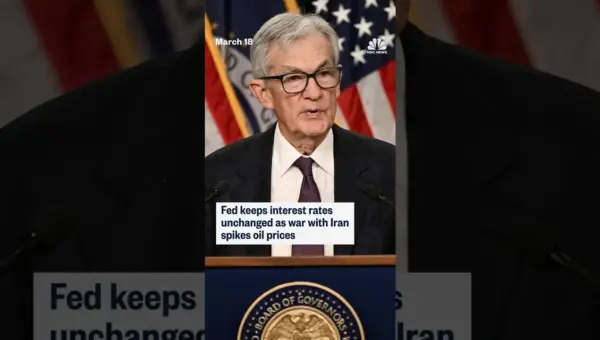
Fed Holds Rates Steady Amidst Oil Price Surge and Tariff Uncertainty
The Federal Reserve has held interest rates steady for a second consecutive meeting, citing economic uncertainty. Soaring oil prices due to the conflict with Iran and the recent Supreme Court ruling on tariffs are key factors influencing the decision. The Fed is carefully balancing inflation concerns with the need to support economic growth.