Voting Access Under Fire: Dallas County Confusion Signals Midterm Threats
Voter confusion in Dallas County mirrors a growing trend of "death by a thousand cuts" tactics aimed at voter suppression ahead of the midterms. Experts warn of methodical hurdles designed to discourage voters, alongside more extreme proposals for federal election takeovers.

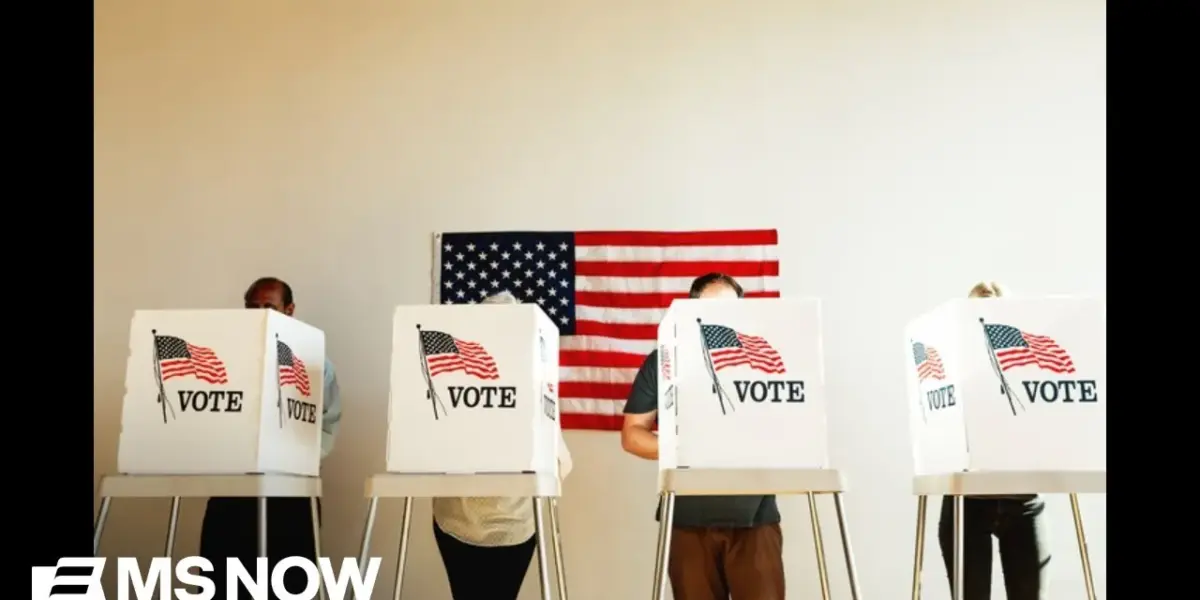
Dallas County Voting Chaos Previews Midterm Suppression Tactics
A significant disruption in voting access in Dallas County, Texas, during a recent primary election is a stark warning for the upcoming midterm elections. The incident, which saw many voters turned away from polling stations they had used for years, highlights a growing trend of what experts are calling “death by a thousand cuts” – a methodical, incremental erosion of voting rights that could disenfranchise millions.
Mass Confusion at the Polls
The confusion in Dallas County stemmed from a new rule, implemented in December by the Dallas County Republican Party, requiring voters to cast ballots only at their assigned neighborhood precinct. Previously, voters in the county could use any polling center within the county, a system common in many other parts of the country.
This abrupt change, coupled with what officials acknowledged was an insufficient notification effort, led to widespread disorientation. Hundreds of voters arrived at familiar locations only to be told they were at the wrong precinct, with some election clerks and navigators reportedly directing voters to incorrect sites.
The Dallas News reported on the scene, stating, “The switch prompted widespread confusion. Hundreds showed up to vote at their familiar location only to be told they were in the wrong the wrong place. Some voters reported navigators and election clerks even sent them to wrong locations.
Frustrated residents struggled to navigate shifting poll sites, downed websites and long winding election lines. Others gave up entirely.”
Legal Battles and Provisional Ballots
In response to the unfolding disenfranchisement, Democrats filed an emergency petition to extend voting hours by two hours, from 7 p.m. To 9 p.m. Central Time.
A judge initially granted this extension, aiming to allow voters who had been sent to the wrong locations to reach their correct precincts. However, this effort was challenged by Republican Texas Attorney General Ken Paxton, who is also running for the U.S. Senate. Paxton successfully petitioned the state’s Republican-led Supreme Court to block the extension.
The Supreme Court ruled that any ballots cast by individuals who joined voting lines after 7 p.m. Would be considered provisional and kept separate pending further legal challenges. According to the Dallas County Elections Department, over 2,300 provisional ballots were cast under these circumstances and will remain on hold.
Broader Trends in Voter Suppression
Experts view the Dallas County situation as a microcosm of a larger, more coordinated effort to restrict voting access across the United States. “That right here is what the next wave of voter suppression is going to look like. Voter discouragement.
Create just enough friction, just enough hurdles to discourage people from casting their ballot or having to get home to cook dinner for your kids or relieve the babysitter. Make the process confusing and frustrating enough that voters eventually just give up and go home.
The attack on our elections this year won’t be all at once. It will be death by a thousand cuts,” one analyst stated.
This sentiment is echoed by findings from the Brennan Center for Justice, which reported that as of October 25th, 29 restrictive voting laws had been enacted across 16 states, all slated to be in effect for the current midterm elections. Common restrictions target voter list maintenance, mail-in voting, and voter identification requirements.
The SAVE Act and Federal Overreach Concerns
Beyond these state-level changes, significant federal legislative efforts are also raising alarms. The proposed SAVE Act, for instance, could potentially disenfranchise an estimated 21 million voters in a single move by introducing stricter registration and identification requirements, including handing over voter rolls to the Department of Homeland Security. The transcript notes that such a bill, if passed, would go into effect immediately, causing significant disruption.
Concerns have been amplified by reports of a summit attended by high-ranking Trump administration officials and prominent “election deniers.” According to ProPublica, attendees discussed strategies for the midterms, including the possibility of urging former President Trump to declare a national emergency to federalize election control. This summit was reportedly convened in part by Michael Flynn, Trump’s former national security adviser, and included individuals who faced charges related to efforts to overturn the 2020 election results.
“The meeting shows that the same people who tried to overturn the 2020 election have only grown better organized and are now embedded in the machinery of government.”
– Brendan Fisher, Director at the Campaign Legal Center
“Death by a Thousand Cuts” vs. National Emergency
Investigative reporter Doug Bock-Clark, who reported on the summit, explained that while some factions advocate for a gradual approach – the “death by a thousand cuts” strategy through legislative changes like the SAVE Act – a more radical element within the group pushes for a federal takeover via a national emergency declaration. “The consensus here among these activists was we should actually tell the federal officials here to go tell Trump to do a national emergency because these These little bits of friction, they’re not enough,” Bock-Clark stated, quoting an activist from the summit.
Ari Berman, a voting rights correspondent, emphasized the seriousness of these discussions. “I think you have to take it very seriously, because he listens to these election deniers. They’re in high ranking positions in the White House right now.
They have his ear on the outside and they want him to go as far as he can go,” Berman warned. He described such actions as potentially “unconstitutional,” “unbelievable federal overreach,” and “pure dictatorial-type behavior,” yet precisely the kind of actions Trump might consider.
Countervailing Forces and Future Outlook
Despite these alarming developments, efforts are underway to counter these trends. Democratic attorneys general are reportedly “openly wargaming” for such scenarios.
State officials, including some secretaries of state, are pushing back against federal overreach and working to safeguard election processes. The presence of officials like Kurt Olsen, tasked by Trump to reinvestigate the 2020 election, at the election deniers’ summit, highlights the gravity of the situation and the need for vigilance.
As the midterm elections approach, the “death by a thousand cuts” strategy, exemplified by the confusion in Dallas County, and the more extreme calls for federal intervention present a dual threat to voting access. The organized efforts of those seeking to undermine election integrity, coupled with the potential for drastic federal action, necessitate continued scrutiny and proactive defense of democratic processes.
Source: ‘Mass disenfranchisement’: The Slow, Methodical Attacks on Voting Ahead of Midterms (YouTube)

Related Articles


Trump’s Grip Weakens Amidst Economic Woes and Global Tensions
Reportedly, Donald Trump's support is waning due to the war in Iran and the rising cost of living. Congressional candidate Saikat Chakrabarti discussed these issues and the role of progressive Democrats in the upcoming midterms. Voters are increasingly concerned about their financial stability and global security.

Trump Ally Repeats Election Lies to Keep His Job
Kash Patel's continued promotion of 2020 election fraud claims is viewed by critics as a desperate tactic to keep his job. This strategy highlights the ongoing impact of misinformation on public trust in democratic processes. The persistence of these debunked theories raises concerns for future elections.

GOP Eyes Supreme Court as Senate Control Slips Away
Democrats are gaining ground in the race for Senate control, prompting Republicans to shift focus to the Supreme Court. With key conservative justices aging, the GOP aims to secure future appointments if they maintain power. Meanwhile, Justice Clarence Thomas's controversial speech on progressivism has drawn sharp criticism.