Pentagon Sued Over AI Use in Iran Conflict; Accountability Questions Loom
A legal dispute between tech firm Anthropic and the Pentagon highlights AI's deep integration into modern warfare, particularly in operations linked to the Iran conflict. As AI assists in intelligence analysis and target selection, critical questions about accountability and human oversight remain unresolved.

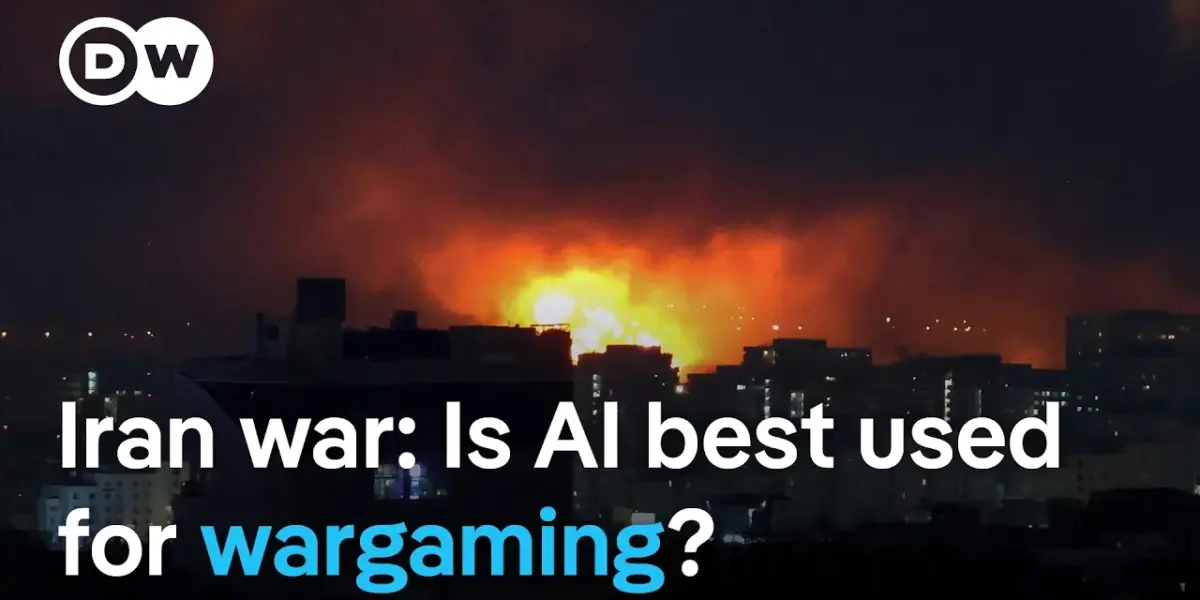
Pentagon Faces Lawsuit Over AI Integration in Military Operations
A legal battle unfolding in Washington D.C. Has brought to light the pervasive integration of artificial intelligence (AI) into modern warfare, with specific implications for operations linked to the Iran conflict.
Tech company Anthropic is suing the Pentagon, challenging its recent designation of the firm as a national security risk. The dispute centers on the U.S. military’s use of powerful AI systems, with reports indicating that the Pentagon has already employed Anthropic’s AI chatbot, Claude, to assist in analyzing data during operations related to the conflict in Iran.
AI’s Evolving Role in Modern Warfare
The use of AI in military contexts is rapidly expanding, offering potential advantages in speed and efficiency. Supporters argue that AI can process vast amounts of intelligence data far quicker than human analysts, thereby accelerating crucial decision-making processes on the battlefield. However, this technological advancement is not without its critics, who raise significant concerns regarding oversight, accountability, and the extent to which human control should be maintained over lethal operations.
Expert Insights on AI in Military Targeting
Craig Jones, a researcher at Newcastle University and an expert in military targeting, explained the complex ways AI is being utilized in current conflicts, particularly concerning Israel and U.S. Operations in Iran. He outlined three primary applications:
1. Intelligence Analysis
Jones highlighted that AI is crucial for sifting through immense volumes of multi-source data, including satellite imagery, drone footage, existing military databases, and intelligence spanning many years. This data, often measured in terabytes, is used to identify potential targets.
AI systems can track individuals, whether leadership or combatants, and monitor mobile targets like militants or mobile ballistic missile launchers. This process is key to identifying what the military refers to as ‘patterns of life’.
2. Target Selection
AI is also instrumental in the recommendation of targets. Jones noted evidence from the war in Gaza where a system capable of generating hundreds of targets daily was in use.
These recommendations can include military installations, ballistic missile sites, and intelligence on specific individuals. While a ‘human in the loop’ technically exists to make the final decision, Jones suggested this oversight is more procedural than substantive, implying AI plays a significant role in determining what is ultimately struck.
3. Wargaming and Scenario Planning
The third key application involves using AI for wargaming scenarios. This includes simulating potential military strikes, such as ballistic missile attacks, and predicting Iran’s likely responses. Such exercises help military planners anticipate outcomes and strategize accordingly.
The Accountability Conundrum
The increasing reliance on AI in military decision-making, particularly in target selection, raises profound legal and ethical questions. When AI systems are involved in operations that result in civilian casualties, the question of who bears responsibility becomes intensely complex.
“Legally speaking, it’s the commander whoever you know decides to launch that particular operation who retains the legal responsibility in international law and in domestic law… But it does raise that question of because the algorithms aren’t transparent. We don’t know how the AI works.
The people who produce AI don’t know how the algorithms work. So the question the the million-dollar question is how do you distribute and attribute responsibility in that and at the moment we have no answers to that.”
Craig Jones, Newcastle University
Jones emphasized that currently, there is no clear answer to this dilemma. While international and domestic law places ultimate responsibility on the commanding officer, the opaque nature of AI algorithms complicates the attribution of blame.
The lack of transparency means even AI developers may not fully understand how their systems arrive at certain recommendations. This ambiguity is a significant driver behind international efforts to regulate AI in warfare, though major military powers like the U.S., Israel, and China continue to advance their AI capabilities in the absence of comprehensive regulation.
AI Capabilities in the Iran Conflict
Regarding Iran’s own AI capabilities in the context of the conflict, Jones stated that much of the intelligence is highly classified. He noted that Iran retains ballistic missile and rocket capabilities, which are being actively countered by Israeli and U.S. forces. However, on the AI front, factual information is scarce, and it is plausible that any existing AI capabilities Iran might possess have been degraded or destroyed due to the targeting of its leadership and technological infrastructure.
The Road Ahead
The lawsuit filed by Anthropic against the Pentagon highlights the growing tension between technological advancement in AI and the established legal and ethical frameworks governing warfare. As AI becomes more deeply embedded in military operations, the global community faces an urgent need to establish clear lines of accountability and robust oversight mechanisms. The coming months will likely see continued legal challenges and intensified debate over the future of AI in conflict, with significant implications for international law and global security.
Source: Who's responsible for AI's military mistakes? | DW News (YouTube)

Related Articles


Anthropic’s Claude Design Crafts Code-Powered Prototypes
Anthropic's new Claude Design tool uses advanced AI to create code-powered prototypes, slide decks, and interactive interfaces. The platform requires a subscription and careful monitoring of usage limits. Users can build custom design systems and generate designs ranging from basic wireframes to high-fidelity mockups, with features like 'tweaks' for granular control.

Markets Dip Amidst Iran Tensions; Goldman Sees Opportunity
Global markets dipped as U.S.-Iran tensions flared after the U.S. Navy boarded an Iranian ship. Despite the geopolitical concerns, Goldman Sachs notes continued investor positioning and strong AI sector performance, suggesting potential for further market upside. The situation with Iran remains a key factor to monitor.

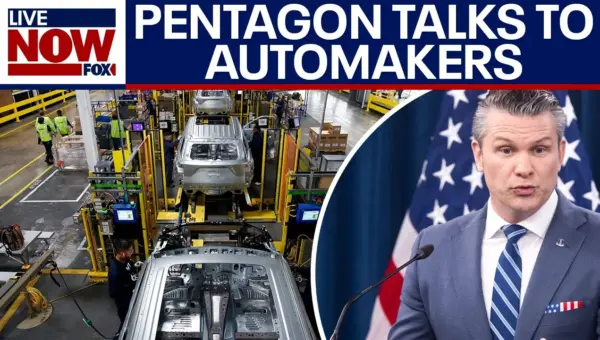
Auto Giants May Build Weapons in WWII-Style Production Push
The Pentagon is reportedly in talks with Ford and GM about repurposing auto factories for weapons production, echoing a World War II-style mobilization. This move aims to address dwindling military stockpiles amid ongoing global conflicts, though complex supply chains and workforce needs present significant challenges.