Holy War Justification: GOP Allies Reveal Disturbing Iran War Rationale
Republican allies of the Trump administration are reportedly framing the conflict with Iran as a 'holy war.' This disturbing justification, moving beyond previous explanations, raises serious concerns about the role of religious nationalism in foreign policy and its potential to undermine diplomatic solutions and the separation of church and state.

Holy War Justification: GOP Allies Reveal Disturbing Iran War Rationale
In a startling shift of rhetoric, a concerning justification for military action against Iran has emerged from allies of the Republican party, centering on the notion of a ‘holy war.’ This framing, particularly prominent among certain Republican figures, raises profound questions about the motivations behind escalating tensions in the Middle East and the potential consequences for international relations and domestic policy.
Shifting Justifications and Escalating Rhetoric
The initial justifications for military engagement with Iran appear to have rapidly dissolved, leaving a vacuum that has been filled by a more religiously-tinged rationale. Early explanations, such as freeing the Iranian people or the threat of nuclear weapons, seem to have been sidelined.
The claim that Iran’s nuclear weapons program posed an imminent threat was particularly undermined by previous statements suggesting such programs had already been dismantled. Another explanation, posited by Senator Marco Rubio, suggested a preemptive strike was necessary because Israel was poised to act first, a notion widely dismissed as nonsensical.
Amidst this evolving narrative, Senator Lindsey Graham has become a vocal proponent of the ‘holy war’ framing. Graham’s past comments, including suggestions that Gaza should be ‘flattened,’ hint at an extreme stance on Middle Eastern conflicts. However, his characterization of the current conflict with Iran as a ‘religious war’ has drawn particular attention, especially given the lack of domestic legal approval or international consensus for such an engagement.
“This is a religious war. Who wins it at the end of the day? To the radical Islamic terrorists who want to kill all the Jews because God told them to, who want to kill me because I’m an infidel, who want to purify Islam, uh, to reject moderation and make everybody a jihadist. This is a big deal.”
This perspective suggests a Manichean worldview where the conflict is framed as an existential battle against radical Islamic extremism, implying divine endorsement for the actions taken.
The Perils of Christian Nationalism in Foreign Policy
The invocation of religious fervor in justifying war is deeply troubling, particularly when it intersects with the concept of Christian nationalism. The idea that American taxpayers’ money should be used to shape the Middle East according to the religious or political interpretations of individuals like Lindsey Graham is met with considerable skepticism.
The principle of religious freedom, a cornerstone of American democracy, dictates that individuals have the right to practice their faith as they see fit, without external interference. The notion of any nation dictating the ‘correct’ way to practice religion is antithetical to this principle.
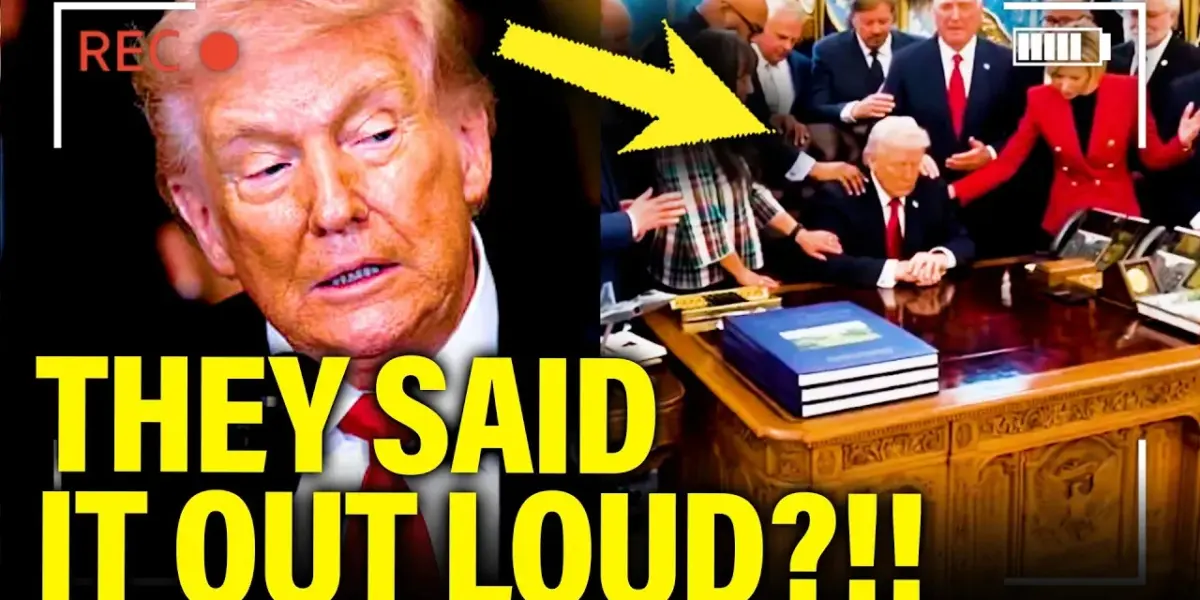
The embrace of Christian nationalism by some political figures, including the prayer offered for President Trump invoking divine guidance for military actions, highlights a dangerous conflation of faith and state. The transcript points to prayers seeking God’s blessing and strength for the President during ‘challenging times,’ implicitly aligning divine will with military objectives. This is further underscored by the reported prayer that God wants the US to ‘kill 170 children, girls’ due to a failure to use a ‘corrupt map,’ a chilling juxtaposition of divine intent and tragic human cost.
Echoes in the Military and the Erosion of Separation of Church and State
The disturbing trend extends into the military, with reports from the Military Religious Freedom Foundation detailing over 200 complaints regarding commanders framing the conflict in religious terms. One commander allegedly told troops that the war was part of ‘God’s divine plan,’ referencing the Book of Revelation and the imminent return of Jesus Christ. The claim that President Trump was ‘anointed by Jesus to light the signal fire in Iran to cause Armageddon’ is particularly alarming, suggesting that military policy and preparedness are being influenced by apocalyptic prophecies.
This phenomenon directly challenges the constitutional principle of the separation of church and state. When religious ideology begins to inform military strategy and operational briefings, it creates an environment where religious minorities or those with differing beliefs could feel marginalized or coerced. The belief that the conflict is an opportunity to fulfill religious prophecies, as suggested by some figures like Mike Huckabee who reportedly expressed support for Israel taking over parts of the Middle East based on biblical entitlement, indicates a potential disregard for established geopolitical norms and international law.
The Absence of Diplomatic Solutions
When foreign policy becomes entangled with religious doctrine, the pathways to diplomatic resolution become significantly narrowed, if not entirely blocked. If the underlying rationale for conflict is perceived as a religious imperative, it becomes exceedingly difficult to find common ground or negotiate terms. For adversaries in the Middle East, the prospect of engaging in meaningful dialogue with a nation whose actions are perceived as driven by divine mandate, rather than rational diplomacy, diminishes the possibility of de-escalation and peace.
The argument that religion is being used as a crutch when intellectual justifications fail is compelling. Figures like Sarah Huckabee Sanders, Marco Rubio, and Mike Johnson, by leaning into the ‘holy war’ or ‘Christian nationalism’ narrative, may be attempting to legitimize an action that lacks robust secular or international backing. The invocation of religious belief in such contexts can serve to obscure the complex geopolitical realities and the potential human cost of military engagement.
Historical Context and Future Outlook
Historically, the entanglement of religion and state has often led to conflict and oppression. The concept of ‘holy war’ has been invoked throughout history to justify violence and conquest, often with devastating consequences. The current rhetoric echoes these historical patterns, raising concerns about a potential resurgence of religiously motivated warfare in the 21st century.
The implications of this ‘holy war’ framing are far-reaching. It risks alienating allies who do not share these religious interpretations, further isolating the United States on the global stage.
Domestically, it exacerbates existing societal divisions and challenges the fundamental principles of secular governance. The future outlook suggests a continued struggle to maintain the separation of church and state, especially in foreign policy, and a persistent need to scrutinize the motivations behind military actions, ensuring they are grounded in rational diplomacy and international law, rather than religious fervor or apocalyptic prophecy.
Why This Matters
The emergence of a ‘holy war’ justification for military action against Iran is not merely a rhetorical shift; it represents a dangerous precedent that could redefine the parameters of international conflict. It suggests a willingness to engage in warfare based on theological interpretations rather than geopolitical necessity or established legal frameworks. This approach undermines the principles of secular governance, erodes the separation of church and state, and severely complicates diplomatic solutions.
The potential for such religiously charged rhetoric to influence military decision-making, as evidenced by reports from within the armed forces, is a grave concern for democratic societies that value religious freedom and reasoned policy. The long-term consequences could include increased global instability, a deepening of international divides, and a dangerous precedent for future conflicts.
Source: Trump Allies LET IT SLIP with DANGEROUS Reason For WAR (YouTube)

Related Articles
US Takes Tough Stance on Iran, Shifts Global Aid Focus
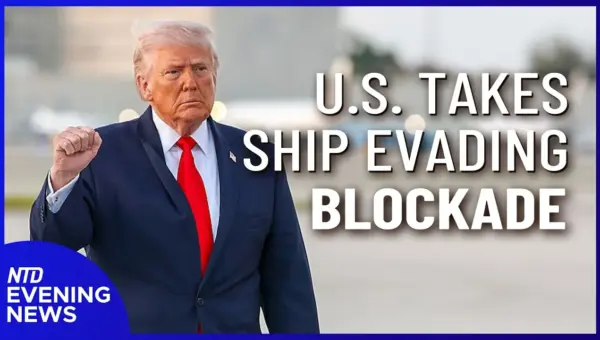
The U.S. has seized an Iranian cargo ship and is preparing for new peace talks with Iran, signaling a tougher stance. Simultaneously, the Trump administration is promoting a "trade over aid" initiative, shifting global economic policy. The broadcast also covered a tragic shooting in Louisiana and a debate over city-run grocery stores in New York City.

Harris: Trump Started Iran War Americans Don’t Want
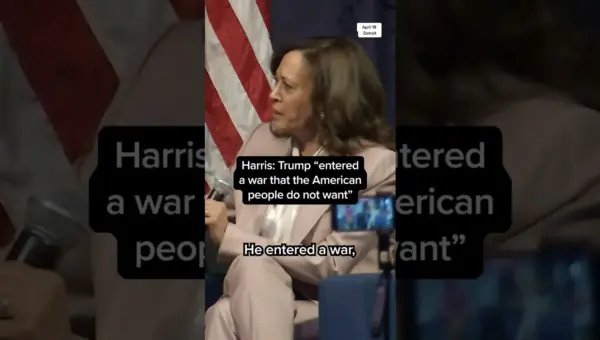
Vice President Kamala Harris criticized former President Donald Trump's approach to Iran, stating he "entered a war that the American people do not want." Speaking in Michigan, Harris alleged that Trump was influenced by Israeli Prime Minister Benjamin Netanyahu. She warned that this policy strained alliances and increased costs for Americans.

Trump’s Grip Weakens Amidst Economic Woes and Global Tensions
Reportedly, Donald Trump's support is waning due to the war in Iran and the rising cost of living. Congressional candidate Saikat Chakrabarti discussed these issues and the role of progressive Democrats in the upcoming midterms. Voters are increasingly concerned about their financial stability and global security.