Russia’s Failed Armored Assaults Reveal Shifting War Dynamics
Russia's return to large-scale armored assaults has been met with devastating Ukrainian drone and artillery fire, resulting in heavy losses. This shift signals a potential change in Russian strategy driven by unsustainable personnel attrition, while Ukraine solidifies its defensive gains and expands its role in regional security.

Russia’s Failed Armored Assaults Reveal Shifting War Dynamics
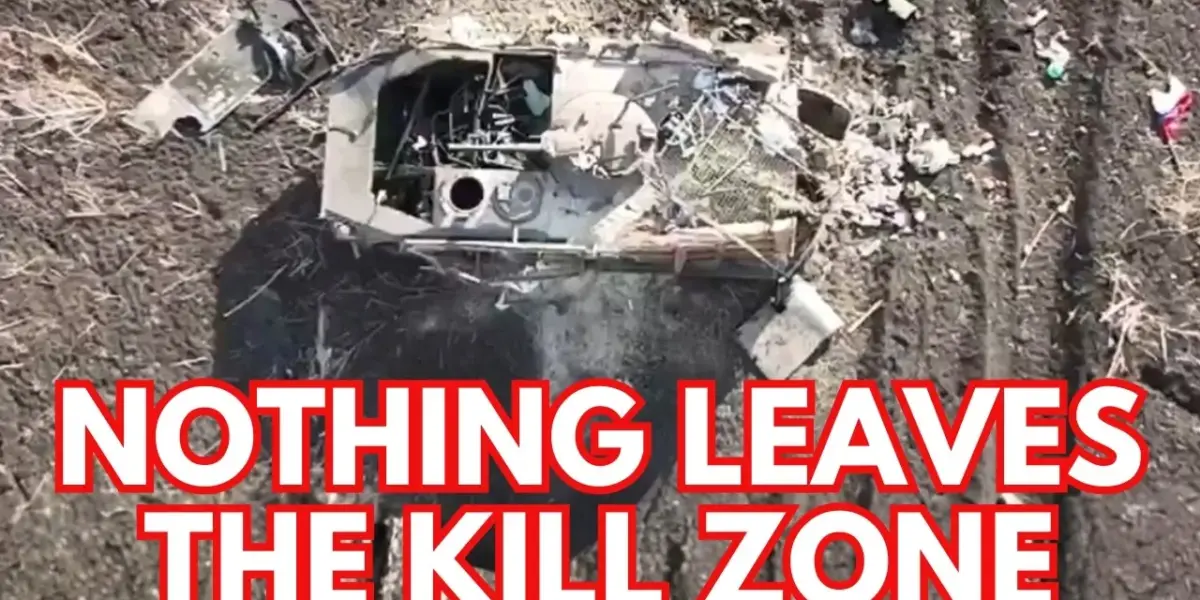
Recent footage emerging from the front lines in Ukraine showcases a stark and costly shift in Russian military tactics. For the first time in months, Russian forces have attempted significant armored assaults, a departure from the dismounted infantry and light vehicle tactics that have largely characterized their operations. The results, however, have been disastrous, with Ukrainian units reporting the complete destruction of armored columns within their “kill zones.” This resurgence of mechanized warfare, albeit unsuccessful, signals a potential evolution in Russia’s strategy as spring and summer approach, driven by unsustainable human casualties.
The “Kill Zone” Re-emerges
Footage released by Ukraine’s Third Assault Brigade and 225th Separate Assault Brigade paints a grim picture of these recent Russian attempts. In the Lemon direction, the Third Assault Brigade reported detecting an enemy column of armored vehicles. Ukrainian drone pilots, utilizing swarms of FPV drones and artillery, targeted the advancing forces.
Their objective was not only to destroy the armored vehicles but critically, to prevent Russian infantry from dismounting. The operation, a coordinated effort involving multiple Ukrainian units, successfully destroyed a tank and three BMPs, along with all their crews. Similarly, the 225th Separate Assault Brigade captured footage near Iulipole in the Zaporizhzhia direction, documenting the destruction of a Russian mechanized assault group attempting to breach Ukrainian positions.
These incidents are significant because they represent a deviation from recent Russian operational patterns. For an extended period, Russia has primarily relied on infantry assaults, often utilizing pickup trucks, ATVs, or motorcycles for mobility.
This approach, while resulting in heavy personnel losses, was seen as a way to conserve dwindling armored assets and avoid the highly effective drone and artillery defenses that have turned open ground into a “kill zone” for larger formations. The return to mechanized assaults suggests a recalculation by Russian command, possibly an attempt to regain initiative or overcome the attritional costs of purely infantry-based attacks.
A Costly Reassessment
The Ukrainian military’s consistent message is clear: anything entering their designated “kill zones” is destroyed. The “kill zone” is a concept referring to an area where defensive forces have concentrated their firepower, often utilizing surveillance drones to detect and track enemy movements, making it exceptionally dangerous for advancing forces. The recent armored assaults demonstrate Russia’s willingness to test these defenses, a gamble that has proven extremely expensive.
An analyst on X, known as JPY, who tracks Russian armored vehicle production and attrition, had presciently predicted this shift. JPY suggested that by summer, Russia might be forced back to mechanized attacks due to mounting human casualties, Ukrainian disruptions to Russian air defense and industry, a faltering economy, and a lack of significant territorial gains.
The analyst hypothesized that Russia would realize the unsustainability of continuing to expend human lives at current rates and might seek to leverage its remaining armored assets, even if it meant higher equipment losses. The recent events appear to validate this analysis.
The Scale of Attrition and Drone Warfare
The transcript highlights the immense human cost of the conflict, particularly for Russia. The Ukrainian Defense Minister has reportedly set a goal of eliminating 50,000 Russian soldiers (killed or wounded to the point of incapacity) per month, a target Ukraine appears to be meeting. One unit, the 414th “Mayak Birds” unit, part of the unmanned systems battalion, reported eliminating over 30,000 Russian soldiers during the winter months alone (December, January, February).
This figure, confirmed by video evidence, represents the equivalent of 12 Russian brigades or 60 battalions of infantry. While the “Mayak Birds” are noted as a highly successful and well-equipped unit, their reported numbers highlight the devastating effectiveness of Ukrainian drone warfare against Russian personnel.
The shift in tactics—from massed infantry to mechanized assaults—represents a trade-off for Russia. Pushing infantry forward is costly in terms of personnel but conserves armored vehicles.
Conversely, pushing armored vehicles forward conserves infantry but incurs significant equipment losses. The recent failures suggest that Russia’s current approach to mechanized warfare is not yet adapted to Ukraine’s advanced drone and artillery capabilities, which can effectively neutralize armored columns before they reach their objectives.
Battlefield Dynamics in Zaporizhzhia
Beyond the failed armored assaults, the transcript provides an update on the situation in the Zaporizhzhia direction. Ukrainian forces have reportedly recaptured or contested approximately 200 square kilometers of territory in recent weeks, though much of this remains “gray zone” – contested areas not definitively controlled by either side.
Reports from Ukrainian military bloggers and analysts indicate stabilization in some sections of the front near Iulipole, with Ukrainian forces successfully preventing Russian bridgeheads on the western bank of the Hnizdka River. However, active combat operations continue, particularly in areas like Berzov, where Ukrainian forces are attempting to clear Russian infantry, though facing stiff resistance.
Meanwhile, Russian sources like Rybar acknowledge intense fighting in the western Zaporizhzhia direction, particularly around the village of Robotyne. They describe a “layer cake” scenario where Russian assault groups operate in close proximity to Ukrainian positions, complicating logistics and urban combat.
Despite Ukrainian counterattacks in early February, Russian units have reportedly managed to hold ground and are now attempting to push towards the northern outskirts of Robotyne. The situation remains fluid, with both sides vying for control in a complex and heavily contested environment.
Ukraine’s Growing Diplomatic and Military Role
In an unexpected development, Ukraine is emerging as a key player in regional security dynamics, particularly concerning Iranian drone and missile attacks. Following recent strikes on civilian targets in the Middle East, Ukraine has offered its expertise in intercepting Iranian-made Shahed drones.
President Zelenskyy stated that partners in the Middle East and Europe have sought Ukraine’s experience, and Ukrainian experts are reportedly en route to the region to provide consulting. This offer stems from Ukraine’s extensive experience in countering Russian drone attacks.
The potential for Ukraine to supply drone interception technology or expertise to its partners, including the United States and Gulf nations, is a significant development. While Ukraine acknowledges its own shortages of advanced air defense munitions like Patriot missiles, it possesses a wealth of practical experience and potentially effective, albeit less sophisticated, interceptor systems.
The transcript mentions systems like the “Wild Hornet Sting,” which has reportedly been utilized effectively. This situation presents an interesting dynamic where Ukraine, a nation at war and in need of advanced weaponry, could become a provider of critical defense solutions to allies facing similar threats.
Why This Matters
The attempted Russian armored assaults, despite their failure, signify a critical juncture in the war. They suggest Russia is reassessing its costly infantry-centric tactics, potentially in response to unsustainable casualty rates and the strategic advantage Ukraine has gained through drone warfare and sophisticated defenses. The high attrition rates reported by Ukrainian units, particularly the “Mayak Birds,” demonstrate the effectiveness of their integrated drone and artillery systems in creating lethal “kill zones” for advancing Russian forces, whether infantry or mechanized.
The ongoing battles in Zaporizhzhia highlight the persistent, grinding nature of the conflict, characterized by localized advances, heavy fighting in contested “gray zones,” and the strategic importance of holding key terrain. Ukraine’s expanding role in regional security, particularly its offer to share expertise and technology for countering Iranian drones, underscores its growing military sophistication and diplomatic influence. This potential exchange of expertise and technology could offer mutual benefits, strengthening Ukraine’s resources while enhancing the defensive capabilities of its partners.
Implications and Future Outlook
If Russia continues to pursue mechanized assaults, it will likely face continued heavy losses of armored equipment unless it can develop more effective counter-strategies against Ukraine’s integrated air and drone defenses. This could further strain Russia’s industrial capacity and remaining armored reserves. Conversely, if Ukraine can maintain its high rate of attrition against Russian forces and continue to expand its capabilities, it could further degrade Russia’s offensive potential.
The potential involvement of Ukrainian expertise and technology in countering Iranian drones in the Middle East could have significant geopolitical implications. It demonstrates Ukraine’s resilience and its ability to contribute to broader security interests, potentially strengthening its relationships with key allies and securing much-needed military aid. The evolving nature of warfare, with drones playing an increasingly central role, is clearly evident, and Ukraine’s experience positions it as a valuable player in this new landscape.
Historical Context
The concept of mechanized assaults is not new, having been a hallmark of warfare since World War II, particularly with the development of combined arms tactics. However, the current conflict in Ukraine has seen an unprecedented integration of drone technology into both offensive and defensive operations. The “kill zone” concept, while not new in military doctrine, has been dramatically amplified by ubiquitous drone surveillance and precision-guided munitions.
Russia’s recent attempts to revert to larger mechanized formations appear to be a response to the limitations of its previous infantry-heavy approach, which proved unsustainable in terms of human cost. The conflict is thus a testing ground for evolving military doctrines, where traditional mechanized warfare clashes with the pervasive influence of modern drone technology.
Fundraiser Update
The transcript also includes an update on a fundraising campaign for the 104th Territorial Defense Brigade’s “Sarapin” battalion, a new drone unit. The campaign has raised €112,000 out of a €430,000 goal, and the first truck has been delivered to the unit. The effort is part of a year-long initiative aimed at outfitting the battalion with a fleet of vehicles, demonstrating the key role of civilian support and private donations in strengthening Ukraine’s military capabilities.
Source: Russian Armored Attack Hits a Drone Wall (YouTube)

Related Articles


Russia’s Economy Faces Deep Deficits
Russia's economy is facing severe deficits, with 83% of its regions in financial trouble by the end of 2025. Ukraine's targeted strikes on critical infrastructure are exacerbating these issues, disrupting oil revenues and increasing costs. Senior Kremlin officials are beginning to acknowledge the economic decline, indicating a difficult path ahead for the nation.


Ukraine Fights On Amid Shifting US Support
Ukraine demonstrates growing self-reliance amidst shifting U.S. support, bolstered by EU aid and its own emerging military tech exports. Russia's demands remain firm, while Iran leverages control of the Strait of Hormuz. President Trump faces domestic and foreign policy challenges.
Russia Mimics Ukraine’s Drone Tactics, Falls Short
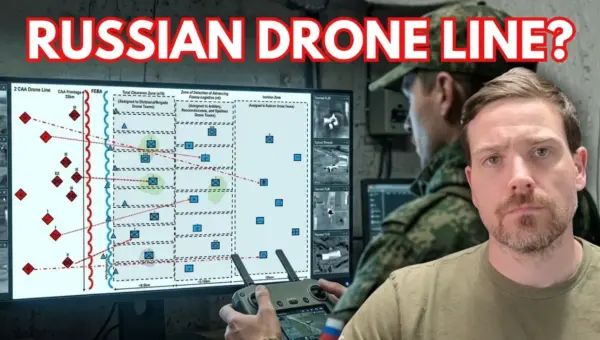
Russia has attempted to replicate Ukraine's successful drone warfare tactics by creating its own "drone wall." However, analysis suggests these efforts have fallen short, with Ukraine maintaining a technological and tactical edge. The conflict highlights the rapid evolution of drone warfare and the ongoing race for innovation.