Trump Predicts Cuba’s Fall, Hints at Rubio’s Role
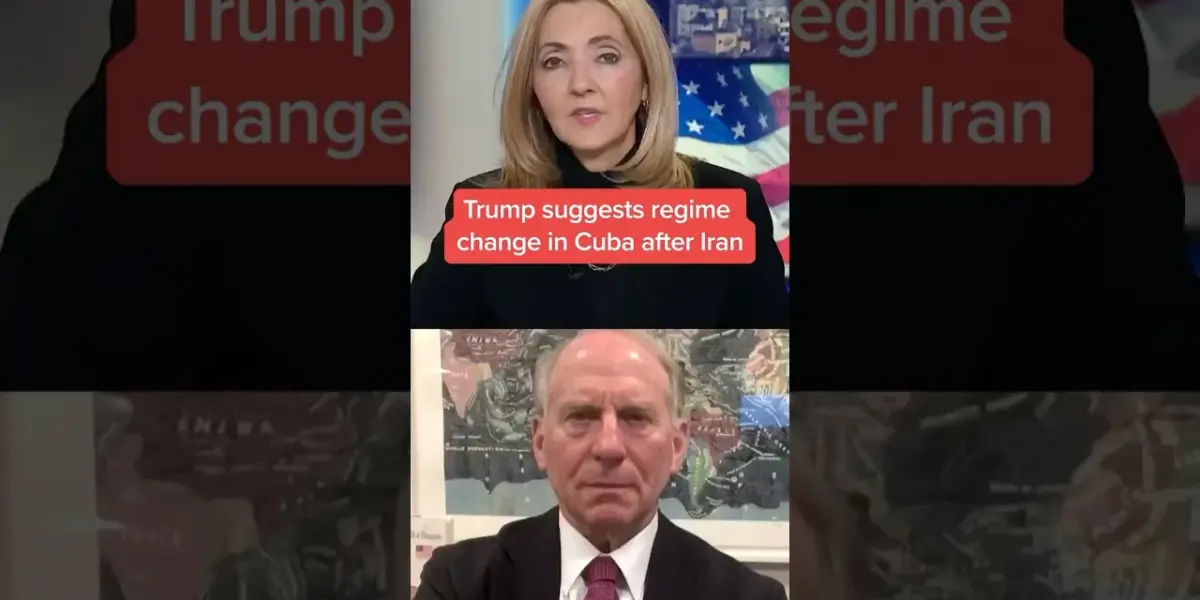
President Donald Trump has predicted the imminent collapse of the Cuban government, stating "Cuba is gonna fall pretty soon." He also hinted at a potential role for Secretary of State Marco Rubio in assessing the situation.

Trump Predicts Cuba’s Fall, Hints at Rubio’s Role
Washington D.C. – In a striking declaration, President Donald Trump has predicted the imminent collapse of the Cuban government, suggesting a significant shift in U.S. Foreign policy towards the island nation. Speaking to CNN, the President stated his belief that Cuba “is gonna fall pretty soon,” signaling a potential acceleration of U.S. Pressure on the communist regime. Adding a layer of intrigue to his remarks, Trump also floated the idea of sending Secretary of State Marco Rubio to Cuba to assess the situation, a move that could signify a more assertive diplomatic or political strategy.
A Shift in Rhetoric and Policy?
The President’s comments come amidst a broader pattern of increased U.S. Scrutiny and pressure on governments considered adversaries. While the specific context linking Cuba to Iran in his remarks is not fully detailed in the provided transcript, the juxtaposition suggests an administration considering a more aggressive stance across multiple geopolitical fronts. Trump’s assertion about Cuba’s impending downfall is a strong indicator of his administration’s confidence in its current policies, or perhaps a signal of intended future actions designed to hasten such an outcome.
“Cuba is gonna fall pretty soon,” President Trump told CNN.
The mention of Secretary of State Marco Rubio is particularly noteworthy. Rubio, a prominent Republican senator before his current role, has a well-documented history of advocating for a hardline approach to the Cuban government, stemming from his Cuban-American heritage.
His potential involvement, as suggested by the President, could mean a more direct U.S. Engagement aimed at fostering political change within Cuba. The exact nature of Rubio’s potential mission remains unclear – whether it would involve diplomatic overtures, intelligence gathering, or a signal of increased U.S. Support for opposition movements within the island.
Broader Geopolitical Context
President Trump’s comments on Cuba should be viewed within the wider context of his administration’s foreign policy objectives. His “America First” agenda has often involved challenging long-standing international norms and relationships, particularly with nations perceived as hostile or uncooperative.
The administration has previously implemented sanctions and travel restrictions targeting Cuba, aimed at pressuring the government over its human rights record and its support for the Maduro regime in Venezuela. Trump’s latest remarks suggest a potential escalation of these efforts, moving beyond economic and diplomatic isolation to potentially predicting or even encouraging regime change.
The comparison, however brief, to Iran is significant. The U.S. has engaged in a period of heightened tension with Iran, marked by sanctions, military posturing, and diplomatic isolation.
If Trump sees parallels between the situations in Cuba and Iran, it could imply a unified strategy of applying maximum pressure on perceived adversaries, irrespective of their geographical location or specific political systems. This approach signifies a willingness to confront and potentially destabilize governments that the U.S. Deems problematic.
Implications for Cuba and the Region
Should the U.S. Pursue a more aggressive policy towards Cuba, the implications could be far-reaching. For the Cuban people, it could mean increased hardship due to tighter sanctions, but also potentially renewed hope for political freedoms if U.S. Support for internal opposition grows. For the broader Caribbean and Latin American region, a more assertive U.S. policy could lead to increased regional instability or, conversely, a stronger push towards democratic reforms, depending on the specific actions taken by the U.S. and the reaction of other regional powers.
The suggestion of sending Secretary Rubio is likely to be interpreted by the Cuban government as a provocative move. Rubio’s strong anti-Castro stance is well known, and his involvement could be seen as a direct challenge to Cuban sovereignty. The Cuban government’s response to such a potential move would be critical in shaping the future trajectory of U.S.-Cuba relations.
What’s Next?
The coming weeks and months will be crucial in determining the substance behind President Trump’s bold prediction. Whether the administration follows through on the suggestion of deploying Secretary Rubio to Cuba, and what specific mandate such a mission would entail, remains to be seen.
Investors, policymakers, and the Cuban diaspora will be closely watching for any concrete actions or policy shifts that signal a more aggressive U.S. Approach. The President’s words, however, have undoubtedly set a new tone, suggesting that the status quo in U.S.-Cuba relations may be on the verge of significant change.
Source: Trump suggests regime change in Cuba after Iran (YouTube)

Related Articles

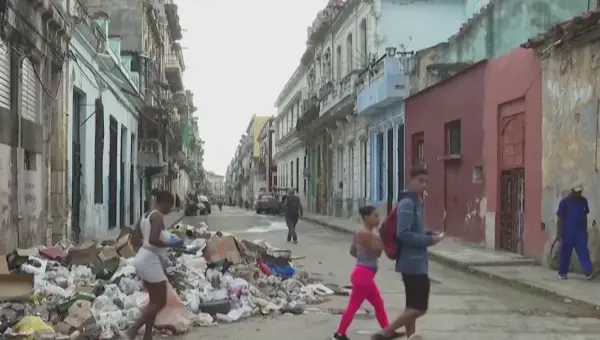
US Weighs Cuba Invasion Amidst Economic Crisis
The U.S. is reportedly weighing military options for Cuba amidst a severe economic crisis. Reports suggest the Pentagon is preparing for potential operations, while Cuba urges its citizens to prepare for conflict. Experts question the timing of U.S. intervention.
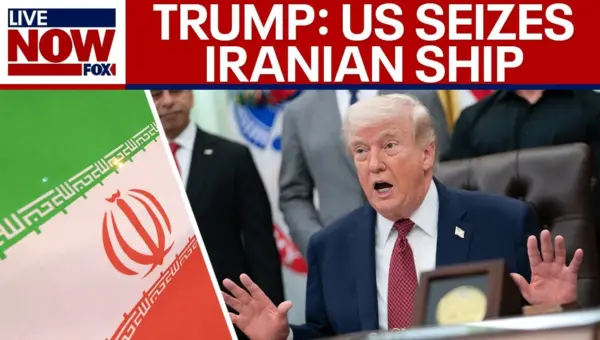
US Navy Seizes Iranian Ship After Refusal to Stop
The U.S. Navy has seized an Iranian cargo ship in the Gulf of Oman after it refused to stop, according to President Trump. This action escalates tensions as a regional ceasefire deadline approaches. High-stakes negotiations are planned in Pakistan, though Iran has expressed rejection.
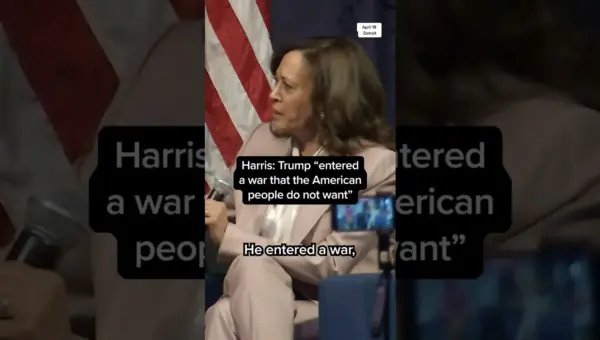
Harris: Trump Started Iran War Americans Don’t Want
Vice President Kamala Harris criticized former President Donald Trump's approach to Iran, stating he "entered a war that the American people do not want." Speaking in Michigan, Harris alleged that Trump was influenced by Israeli Prime Minister Benjamin Netanyahu. She warned that this policy strained alliances and increased costs for Americans.