Holy War? US Military Hijacked by Prophecy, Not Policy
An analysis of alleged religious motivations behind U.S. foreign policy towards Iran suggests a dangerous fusion of military strategy and apocalyptic prophecy. This piece explores the implications of a 'theocratic' military and its impact on secular governance and global stability.

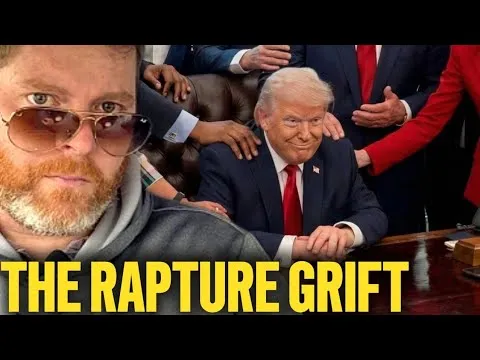
Holy War? US Military Hijacked by Prophecy, Not Policy
The United States, a nation ostensibly founded on secular principles, appears to be at a critical juncture where its foreign policy, particularly concerning Iran, is allegedly being driven by apocalyptic prophecy rather than geopolitical strategy. This seismic shift, if accurate, suggests a dangerous departure from the separation of church and state, transforming the American military into a quasi-theocracy with devastating implications for both domestic and international stability.
The Unraveling of Secularism
The core assertion is that the U.S. military has been “hijacked,” its strategic objectives no longer focused on conventional warfare but on fulfilling religious prophecies, specifically those from the Book of Revelation. This narrative paints a grim picture of an administration actively seeking to “usher in the end of the world,” a claim that, while sounding hyperbolic, is presented as a stark reality. The once-sacrosanct separation of church and state is described as not merely breached, but “absolutely abandoned,” leaving the nation with a military described as a “rogue mega church with nuclear launch codes.”
This alleged violation of the social contract is said to manifest in an undeclared war with Iran, where the working class is purportedly being positioned for sacrifice while American wealth is extracted. The justification for this conflict, according to the analysis, is a “divine mandate,” a concept that allows for the circumvention of accountability for the wealthy and powerful.
Divine Mandates and Military Briefings
Evidence cited includes over 200 complaints filed by the Military Religious Freedom Foundation from more than 50 bases since the conflict with Iran began. One particularly alarming allegation details a commander telling non-commissioned officers in a briefing that President Donald J. Trump was “anointed by Jesus to light the signal fire in Iran to cause Armageddon and mark his return to earth.” Such language is characterized as belonging to “zealots” and provides a justification for war that transcends traditional geopolitical concerns.
This phenomenon is not seen as a grassroots movement within the ranks but a deliberate, top-down effort by the administration to “ingrain a theocratic philosophy” and subvert democratic foundations. The transcript highlights prayer sessions involving religious advisors to the president, such as Paula White, who explicitly states that to say no to President Trump would be to say no to God. Her rhetoric, including declarations of White House grounds as holy and the breaking of “demonic networks” against Trump, exemplifies the fusion of political power and religious fervor.
The Role of Evangelical Christianity
The analysis points to evangelical Christianity as the driving force behind this perceived shift. While this may appear bizarre to those outside the U.S., it resonates with a significant portion of the American population.
Approximately 25-30% of Americans reportedly maintain “unshakable faith” in leaders who promote the idea of divine inspiration and mandate. This belief system, where leaders are seen as “anointed by Jesus Christ,” imbues their actions with divine purpose, potentially rendering them impervious to earthly laws or international agreements.
This religious zealotry, when bleeding into the armed forces, is presented as a recipe for disaster, especially if the ultimate goal is “the apocalypse” or “the end of the world.” In such a scenario, traditional alliances lose meaning, as exemplified by reported actions to halt trade with Spain for refusing the use of its bases for strikes in Iran, fostering an “us or them” mentality that isolates America.
Historical Context and the Social Contract
Drawing on Thomas Hobbes’ philosophy in Leviathan, the transcript argues that the traditional role of the state is to protect citizens from chaos. However, the U.S. government is accused of inverting this contract, with the sovereign allegedly seeking to destroy the earthly realm to fulfill a manufactured biblical prophecy. Troops are reportedly being ordered to fight and die not for the Constitution, but for a “fabricated script” aimed at bringing about Armageddon.
This weaponization of religion is also seen as a mechanism to shield the elite from accountability. A “holy war” cannot be voted against or audited, making it an effective tool for profiteering. The transcript points to rising stock prices for defense contractors like Lockheed Martin and Raytheon, suggesting that the depletion of America’s armory and a “blank check” to the military-industrial complex are directly benefiting these entities.
Tech Oligarchs and Information Control
Beyond the military-industrial complex, the analysis implicates “tech oligarchs” and their “all-seeing eye” in suppressing dissent and controlling the narrative. The example of TikTok is used, where a change in ownership allegedly led to immediate suppression of content and a drastic reduction in income for creators, particularly those leaning left. TikTok is described as having become a “dangerous,” “unbiased,” “raw,” and “necessary” news source that has now been “nerfed” and “neutered.”
While billionaires accumulate wealth, the American middle class faces financial strain, with rising gas prices and increased costs for services like ship insurance in the Strait of Hormuz, ultimately borne by taxpayers. This situation is framed as the apocalypse being monetized, with the consequences falling disproportionately on the working class.
The Call for Secularization and Accountability
The author, identifying as Christian and Catholic, asserts that this level of zealotry is non-negotiable and that proponents “want the apocalypse” and seek to “monetize the apocalypse.” The conflict with Iran is viewed not as a genuine geopolitical struggle but as a means for territorial expansion for Israel and resource extraction for the U.S. The belief in Trump as a divinely anointed prophet is seen as the linchpin that prevents any effective opposition.
The piece concludes with a call to action: to stop praying for salvation from a government perceived as hostile and instead “start clearing house.” This involves purging the current administration, House, and Senate, and restoring secularism to the military. A military indoctrinated into a specific religious sect risks irrevocably breaking the trust between the public and its armed forces. The fundamental question remains: can the U.S. Reclaim its secular identity and democratic foundations before prophecy dictates its destructive path?
Why This Matters
This analysis raises profound questions about the integrity of American governance and its role on the global stage. If foreign policy is indeed being shaped by religious prophecy rather than pragmatic interests, it signifies a dangerous precedent with far-reaching consequences. It erodes the principles of secular governance, potentially leading to unnecessary conflicts, loss of life, and international isolation.
The weaponization of religion to shield the powerful from accountability and to profit the military-industrial complex undermines democratic ideals and exacerbates societal inequalities. The erosion of trust between citizens and their government, particularly the military, is a critical threat to national stability and security.
Implications, Trends, and Future Outlook
The trend of religious rhetoric entering political discourse, particularly within the military, is deeply concerning. If this continues, the U.S. Risks becoming a state governed by faith-based dogma rather than reason and law. This could lead to increased international instability, as nations guided by apocalyptic visions may be less inclined towards diplomacy and cooperation.
The future outlook suggests a potential deepening of societal divisions, further alienation of the global community, and an increased likelihood of costly, ideologically driven conflicts. The unchecked influence of the military-industrial complex and tech oligarchs, intertwined with religious fervor, paints a bleak picture of a nation prioritizing profit and prophecy over peace and prosperity for its citizens.
Historical Context and Background
The concept of religion influencing state affairs is not new. Throughout history, religious beliefs have shaped political decisions, sometimes leading to both periods of progress and devastating conflicts. The separation of church and state in the U.S. was a deliberate attempt to prevent such entanglements, learning from historical precedents.
However, the resurgence of overtly religious rhetoric in politics, particularly among certain evangelical factions, represents a contemporary challenge to this established norm. The transcript suggests a deliberate effort to leverage these beliefs for political and economic gain, a tactic that echoes historical patterns of demagoguery and manipulation, but amplified by modern media and the immense power of the U.S. military.
Source: The Rapture Economy: How Wall Street Bought a Holy War in Iran (YouTube)

Related Articles


US Weighs Cuba Invasion Amidst Economic Crisis
The U.S. is reportedly weighing military options for Cuba amidst a severe economic crisis. Reports suggest the Pentagon is preparing for potential operations, while Cuba urges its citizens to prepare for conflict. Experts question the timing of U.S. intervention.
Ukraine Fights On Amid Shifting US Support
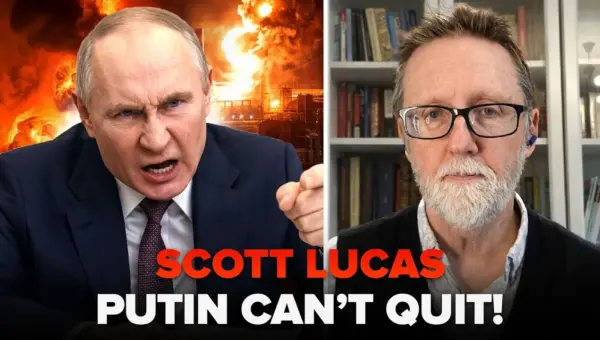
Ukraine demonstrates growing self-reliance amidst shifting U.S. support, bolstered by EU aid and its own emerging military tech exports. Russia's demands remain firm, while Iran leverages control of the Strait of Hormuz. President Trump faces domestic and foreign policy challenges.
Spain, Latin America Forge New Alliance Against US Hegemony
Spain and Latin American nations are forging new alliances, creating a united front against US global influence. This growing bloc, highlighted by a summit in Barcelona, seeks to reduce dependence on American policies and assert greater regional autonomy. The shift signals a changing world order where middle powers are consolidating economic leverage.