Crypto Collapse Echoes History’s Biggest Financial Disasters
The recent crypto market collapse, marked by Terra Luna's dramatic fall, echoes historical economic bubbles like the South Sea Company and the Dot-Com crash. These past manias offer chilling parallels to today's digital asset turmoil, highlighting a timeless pattern of speculative excess and devastating financial ruin.


Crypto Crash Mirrors Past Economic Bubbles That Devastated Fortunes
The recent dramatic collapse of the cryptocurrency market, highlighted by the staggering 99% loss of value for the Terra Luna token, is a clear reminder of history’s most destructive economic bubbles. From the South Sea Company’s speculative frenzy to the dot-com boom and bust, these historical events offer chilling parallels to the current digital asset turmoil, underscoring a timeless pattern of irrational exuberance followed by devastating financial ruin for millions.
The South Sea Bubble: A Cautionary Tale from 1720
One of the earliest and most infamous financial manias, the South Sea Bubble, burst in 1720, plunging England into an economic and political crisis. The South Sea Company, established to manage Britain’s national debt, promised exclusive trading rights in Spanish South America. The allure of untapped wealth ignited a speculative fervor, fueled by the nascent concept of joint-stock companies that allowed for easy share trading.
This success spawned a wave of dubious ventures, including one promising “an undertaking of great advantage, but nobody to know what it is.” While the Bubble Act was intended to curb these rivals, it ironically drew attention to the South Sea Company’s own precarious valuation. As insiders cashed out, confidence evaporated, share prices plummeted, and widespread bankruptcies ensued. The company was eventually scaled back and placed under stricter government control.
The Mississippi Bubble: France’s Paper Money Meltdown
In the wake of the War of Spanish Succession, France faced crippling debt. Enter John Law, a Scottish economist who proposed replacing metallic currency with paper money backed by the perceived wealth of French colonial territories, particularly Louisiana. The Company of the Indies, established in 1717, was granted a monopoly on trade with this vast, yet largely unsubstantiated, territory.
As investors began exchanging their paper money for gold and silver, confidence eroded. The bubble burst, causing the value of shares and the paper currency to evaporate almost overnight. John Law fled France in disguise, ruined and heartbroken.
Railway Mania: Britain’s 19th Century Rail Frenzy
During the 19th century, the Industrial Revolution fueled a speculative frenzy around railways. Thousands of railway companies emerged, promising lucrative routes and immense returns. George Hudson, the self-styled “Railway King,” became a prominent, albeit ultimately fraudulent, figure.
By 1847, over-speculation and unrealistic projections led to the bubble’s deflation. Hudson’s downfall came with the exposure of his accounting fraud. The Bank of England’s aggressive interest rate hikes further squeezed the overleveraged market, leading to the collapse of numerous companies and the ruin of many investors.
The Great Depression: Black Tuesday and Beyond
The Roaring Twenties in the United States was characterized by rampant stock market speculation, with many buying on margin. This illusion shattered during the terrifying week in October 1929, culminating in Black Tuesday. Panic selling decimated portfolios, and when the panic spread to banks, thousands shut their doors, wiping out the life savings of millions.
Unemployment soared to 25%, leading to widespread destitution and homelessness. The Great Depression remains a potent symbol of how the dream of easy wealth can curdle into a profound economic nightmare.
Japanese Asset Price Bubble: The Imperial Palace Valuation
In the late 1980s, Japan’s economic boom, fueled by cheap credit following the Plaza Accord, led to an extravagant binge in real estate and stocks. Land prices in Tokyo reached astronomical heights, with the Imperial Palace grounds famously rumored to be worth more than the entire state of California.
The Nikkei 225 index peaked in December 1989. However, the Bank of Japan’s interest rate hikes in 1990 triggered the bubble’s collapse, ushering in Japan’s “lost decades” of prolonged economic stagnation and deflation.
The Dot-Com Bubble: The Internet’s Initial Hype
The dawn of the internet promised a new economy, and any company with “dotcom” in its name could attract massive investment, regardless of profitability. This irrational exuberance peaked on March 10, 2000, when the NASDAQ composite index reached its zenith. Beneath the surface, many internet startups were burning through cash at an alarming rate.
The ensuing crash was swift and brutal, wiping out trillions in market value. While the ashes of this bubble eventually gave rise to today’s tech giants, it was a period of total financial devastation for many.
Asian Financial Crisis: The Tiger Economies’ Fall
In the mid-1990s, the celebrated “Asian tigers”—Thailand, Indonesia, and South Korea—experienced rapid growth fueled by foreign capital. However, underlying fragilities, weak financial regulations, and reliance on short-term foreign loans masked the precariousness. The crisis began on July 2, 1997, when Thailand devalued its currency.
Widespread corporate bankruptcies and political upheaval followed. The IMF stepped in with bailouts, but harsh austerity measures exacerbated the suffering of ordinary citizens.
Irish Property Bubble: The “Guaranteed” Investment
Fueled by low interest rates and the belief that property prices would never fall, Irish real estate became the ultimate investment. Lax lending criteria and massive loans enabled many to buy homes they could barely afford.
The euphoria ended with the 2008 global financial crisis, as property prices plummeted by over 50%. Ireland’s banking system collapsed, leading to massive government bailouts, widespread negative equity, and soaring unemployment.
United States Housing Bubble: The Subprime Mortgage Crisis
In the early 2000s, low interest rates and financial deregulation turned U.S. Housing into a seemingly guaranteed path to wealth. Risky subprime loans were packaged into complex investment vehicles and sold globally.
The belief in ever-rising housing prices proved to be an article of faith that shattered when prices began to fall in 2006. The resulting unraveling of mortgage-backed securities led to the bankruptcy of Lehman Brothers in September 2008, triggering the Great Recession, millions of foreclosures, and a devastating credit crunch.
The Cryptocurrency Bubble: A Modern Parallel
The recent cryptocurrency crash, with tokens like Terra Luna losing nearly all their value, mirrors these historical patterns. The crypto market, which soared past $2.9 trillion in late 2021, was built on speculation. As central banks tightened monetary policy in 2022, the flow of easy money dried up.
The collapse of ecosystems like Terra Luna, followed by the bankruptcies of major platforms like Celsius and the revelation of FTX as a massive fraud, has wiped out billions and left investors reeling. The sentencing of FTX founder Sam Bankman-Fried to 25 years in prison for orchestrating a multibillion-dollar fraud highlights the devastating consequences of unchecked speculation in the digital asset space.
Source: Top 10 Economic Bubbles That RUINED Lives (YouTube)

Related Articles


Crypto Poised for Growth as Clarity Bill Nears Senate Vote
The cryptocurrency market is anticipating a significant boost as the Clarity bill, focusing on stablecoin regulation, nears a Senate vote. Industry experts like Zach Pandl from Grayscale express strong optimism, predicting increased institutional adoption, a wave of acquisitions, and further innovation in tokenization and decentralized finance. Grayscale's new Avalanche Staking ETF (GAVA) exemplifies efforts to bridge traditional finance with crypto.

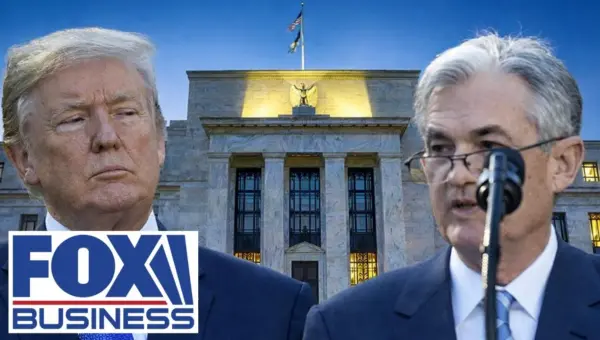
Trump Threatens Powell, Demands Fed Probe Halt
President Trump is threatening to fire Federal Reserve Chair Jerome Powell if he doesn't resign, while pushing for Kevin Warsh's confirmation. Meanwhile, a critical crypto regulation bill faces a deadline, and House Republicans are focused on passing Homeland Security funding.


Bitcoin Surges Past $77K Amidst Volatile Trading
Bitcoin experienced significant volatility, surging past $77,000 amidst mixed market signals and geopolitical uncertainty. Traders remain divided on the cryptocurrency's future direction, with conflicting technical indicators and ongoing liquidation events creating a complex trading environment.