Perfect 1989 Nissan Pathfinder Hits Auction Block
A remarkably preserved 1989 Nissan Pathfinder with just 857 miles is up for auction, offering a rare glimpse into the rugged, truck-based SUVs of yesteryear. This pristine two-door example showcases utilitarian design and a driving experience vastly different from today's crossovers.

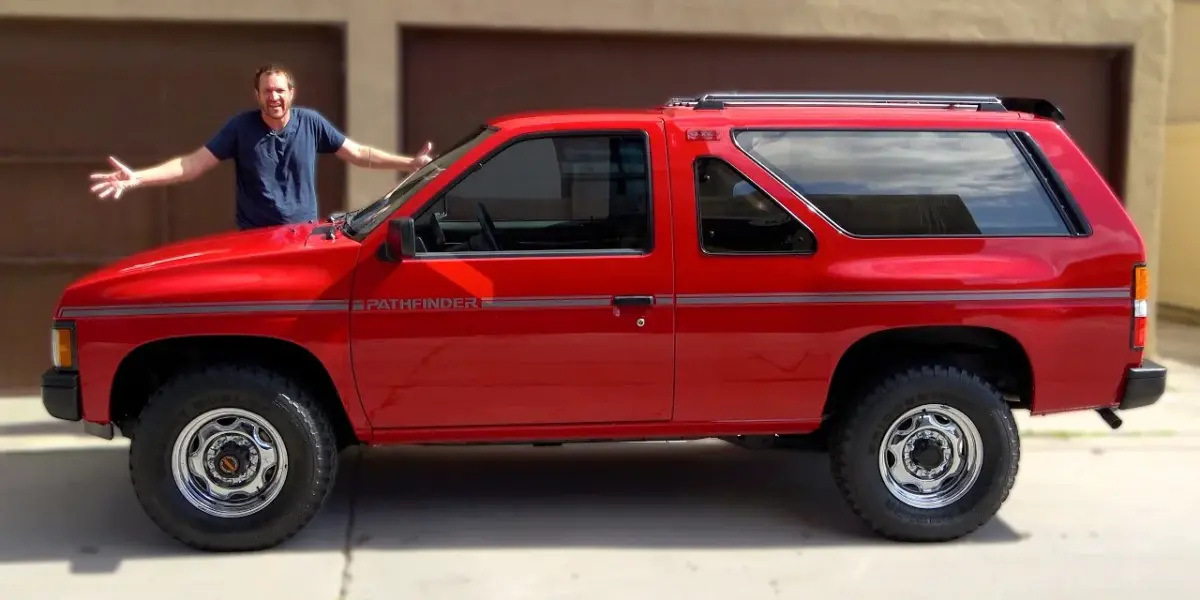
Pristine 1989 Nissan Pathfinder, a Time Capsule SUV, Surfaces for Auction
Forget the three-row crossover you know today. The 1989 Nissan Pathfinder, a pristine example of which has just hit the auction block on Cars and Bids, represents a bygone era of SUVs – a rugged, body-on-frame truck built for utility, not just family hauling. With an astonishingly low 857 original miles, this two-door Pathfinder is arguably the nicest example of its kind in existence, offering a rare glimpse into what SUVs were like before the segment exploded into the comfortable, car-like vehicles we see today.
A Truck at Heart: The Pathfinder’s Origins
Debuting in the U.S. For the 1987 model year, the original Nissan Pathfinder was essentially a Nissan pickup truck (known as the Nissan Hardbody in some markets) with its bed replaced by a full SUV body. This fundamental design philosophy placed utility and ruggedness above all else, a stark contrast to modern crossovers. This approach was common for early SUVs; the Toyota 4Runner started as a Toyota pickup with an enclosed rear, and the Ford Explorer, which truly catalyzed the SUV boom in the early ’90s, was based on the Ford Ranger pickup.
Unlike today, where a two-door midsize SUV is unthinkable, the Pathfinder was initially offered in both two-door and four-door configurations. This particular example is a two-door, a body style that was discontinued by Nissan after 1990. Nissan’s quick pivot to exclusively offer four-door models proved prescient, as two-door variants of competitors like the Ford Explorer struggled with sales in later years.
Quirks and Features of an 80s Icon
Even in its pristine state, the 1989 Pathfinder reveals charmingly utilitarian design choices. The angular bar bisecting the rear side windows, while visually striking, likely served a structural purpose and allowed for ventilation.
The exterior badging is bold and unapologetic: ‘Pathfinder’ emblazoned across the door in large lettering, and a distinct 4×4 badge placed centrally on the body. The rear features a massive panel proclaiming both ‘Nissan’ and ‘Pathfinder’ in large fonts – a hallmark of late-80s styling.
The bumpers are a clear indicator of the Pathfinder’s truck roots. They are unintegrated, protruding significantly from the body with noticeable panel gaps, a far cry from the sleek, form-fitting bumpers of modern vehicles.
Similarly, the rear wiper and keyhole lock are left exposed, with no attempt to disguise their functional purpose. This lack of aesthetic refinement was perfectly acceptable to the buyers of the era, who prioritized capability.
A notable advancement for its time are the automatic locking hubs on the front wheels. This meant drivers no longer had to exit the vehicle and manually engage the hubs in muddy conditions to engage four-wheel drive – a luxury that speaks volumes about the era’s definition of convenience.
Powertrain: V6 Muscle (for the time)
Under the hood, the sole engine option for the original U.S. Pathfinder was a 3.0-liter V6. Producing 155 horsepower and approximately 180 lb-ft of torque, it was a sensible choice that offered more grunt than the four-cylinder engines found in some rivals, like the early Toyota 4Runner. While not a powerhouse by today’s standards, it provided adequate motivation for this truck-based SUV.
A Time Capsule Interior
Stepping inside this Pathfinder is like entering a time warp. The interior is astonishingly well-preserved, with upholstery, carpeting, and seats that appear virtually untouched.
The dashboard design is unapologetically boxy and angular, reflecting its utilitarian purpose. There’s no fake wood trim or soft-touch materials here; everything is built for durability.
The gauge cluster features a classic orange glow, with warning lights that have both diagrams and descriptive labels – sometimes redundantly, as seen with the ‘Brake’ light and its accompanying ‘brake’ label. A digital clock below the tachometer was a welcome, albeit minor, luxury touch.
Quirky labeling extends to the steering column tilt lever, which simply says ‘jump up to unlock.’ The windshield wiper stalk features a unique dial with a blue line that indicates wiper speed, an unusual but functional display. Despite its basic nature, the Pathfinder offered some surprising niceties for the era, including power mirrors, cruise control (activated by a switch near the steering column and adjusted via the turn signal stalk), and air conditioning.
A particularly useful feature is the power tailgate window release, allowing access to the cargo area without opening the entire tailgate – a convenience not found on many vehicles of this period. Power windows were also present, though the switch design for the driver and passenger windows differed significantly, with the passenger switch mounted on a panel explicitly labeled ‘power window’.
Practicality and Quirks: Transmission, Cup Holders, and More
The transmission is a five-speed manual, complete with a large rubber boot – a far cry from the automatics or CVTs common today. The four-wheel-drive system is controlled by a separate, equally robust lever, featuring high and low range capabilities. Notably absent are any cup holders, highlighting the vehicle’s focus on utility over creature comforts.
An interesting feature is the ‘interlock’ switch on the dashboard, which allows the driver to disable the clutch-start interlock. The driver’s headrest even sports a detailed diagram explaining the operation of the four-wheel-drive system. The passenger headrest, meanwhile, has a simple mirror.
A small decal on the passenger window indicates ‘Thermo Guard,’ an optional paint sealant intended to reduce rattle sounds, though its effectiveness is debatable given the vehicle’s minimal mileage. The rear seat offers decent space, even in the two-door configuration, and features small storage cubbies. The unique opening rear vent windows provide airflow, which was particularly useful given the presence of rear ashtrays – a common feature of the era, prioritized over cup holders.
Cargo and Practicality
The tailgate offers dual access: the glass can be opened independently via a key twist or an interior switch, or the entire tailgate can be opened. The cargo area is spacious and unimpeded by modern hybrid components.
However, the full-size spare tire is mounted vertically in the cargo area, consuming valuable space. This was a common compromise for SUVs of the era, as under-body mounting could lead to rust, and rear swing-away carriers added weight and complexity.
There is no cargo cover, and the windows offer little tinting, meaning anything stored in the back is easily visible – a potential security concern. This lack of privacy contrasts with the ‘enclosed’ nature of the cabin compared to a pickup truck bed.
The Evolution of the Pathfinder
The first-generation Pathfinder ran until the mid-90s. The 1996 redesign marked a significant shift, retaining the body-on-frame construction but incorporating more luxury features, signaling a move towards family-oriented use.
Over subsequent generations, the Pathfinder progressively shed its truck-like characteristics, evolving into the three-row, unibody crossover it is today. This transformation mirrors the trajectory of most major SUVs, driven by consumer demand for comfort and practicality.
The Driving Experience: A Step Back in Time
Driving this 1989 Pathfinder is an exercise in nostalgia and a clear reminder of how far automotive technology has come. The low mileage means the driving experience is remarkably true to its original form.
The truck-like feel is immediate: a short first gear, long shifter throws, and a high, boxy seating position. The V6 engine, while adequate, is noisy and lacks urgency, a common trait of SUVs from this era.
Steering is vague, with significant body roll and a distinct lack of road feel, betraying its truck underpinnings. This is not a vehicle designed for agile handling; it’s built for robust capability. The experience is a visceral connection to a time when SUVs were primarily rugged tools for adventure, not comfortable daily drivers.
Verdict: A Collector’s Dream
With a Doug Score of 37 out of 100, the 1989 Nissan Pathfinder scores identically to its contemporary, the Ford Explorer. While the Pathfinder excels in nostalgic appeal and off-road capability (earning higher weekend scores), it falls short in practicality and on-road manners compared to the more family-focused Explorer. This pristine example is not just a vehicle; it’s a rolling piece of automotive history.
For collectors and enthusiasts seeking an authentic taste of the golden age of SUVs, this Pathfinder represents an unparalleled opportunity. Its incredible condition and low mileage make it a true legend, ready for a new custodian to appreciate its unique place in automotive history.
Source: This Perfect Nissan Pathfinder Is an Old-School SUV Legend (YouTube)

Related Articles


Lotus’ Front-Wheel Drive Oddity: The 1991 Elan Returns
The 1991 Lotus Elan is the only front-wheel-drive car ever made by Lotus, a unique departure from the brand's typical sports cars. Developed under General Motors ownership with an Isuzu engine, it later saw production continue as the Kia Elan and Vigato. This unusual sports car is now available for purchase, offering a rare chance to own a peculiar piece of automotive history.

New Jeep Cherokee Ditches Rugged Past for Efficiency
The all-new Jeep Cherokee ditches its legendary off-road focus for impressive fuel efficiency and modern tech. While it offers comfort and a stylish design, it sacrifices the extreme capability that made its predecessors famous.

Nissan Revives Xterra: The Rugged SUV Returns!
Nissan is bringing back the iconic Xterra SUV, a move driven by a shift in emissions regulations and strong customer demand. The revived Xterra aims to blend rugged, go-anywhere capability with modern technology to appeal to both long-time fans and new buyers.