Trump’s DOJ Struggles to Fulfill Retribution Demands
Federal prosecutors have dropped a criminal probe into Joe Biden's use of an autopen for signing documents, a case reportedly initiated by Donald Trump. This decision highlights ongoing struggles within the Justice Department to fulfill Trump's demands for retribution against perceived enemies, a pattern observed across multiple investigations.

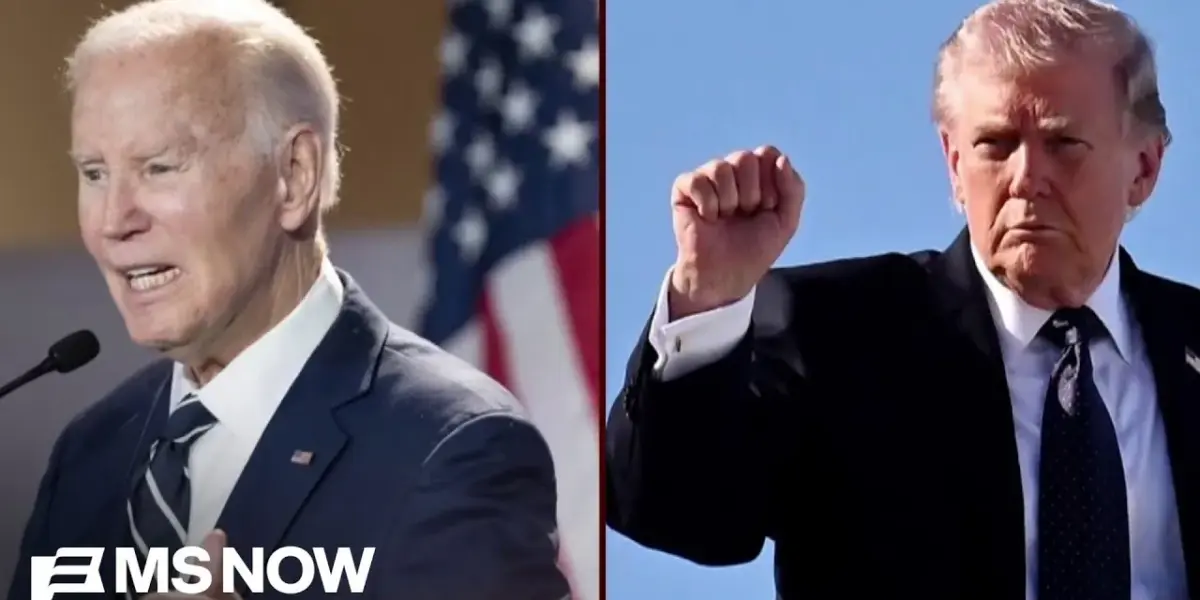
Justice Department Abandons Biden Autopen Probe Amidst Obstacles
In a significant development, federal prosecutors have quietly abandoned a criminal investigation into former President Joe Biden and his aides concerning the alleged unlawful use of an autopen to sign presidential documents. The probe, reportedly initiated at the behest of former President Donald Trump, has hit a wall, with investigators unable to build a viable criminal case, according to three individuals briefed on the matter who spoke to The New York Times.
The investigation was led by the U.S. Attorney’s Office in Washington under U.S. Attorney for the District of Columbia, Matthew Graves, who took over from interim U.S. Attorney for the District of Columbia, Michael Shields, and initially under the supervision of former U.S. Attorney for the District of Columbia, Timothy Shea. The case focused on Trump’s assertion that presidential pardons issued by Biden in his final month in office were invalid due to Biden’s supposed lack of mental capacity, necessitating the use of an autopen.
Biden has vehemently denied these claims, stating unequivocally that he personally made all clemency decisions. The autopen, a device used routinely by all presidents, including Donald Trump, to sign documents, renders the core of the investigation’s premise questionable from the outset for those familiar with presidential procedures. This outcome, while perhaps not surprising to some, highlights a recurring theme within the Trump-aligned Justice Department: a persistent struggle to fulfill the former president’s demands for retribution and the prosecution of his perceived enemies.
A Pattern of Failed Retribution Efforts
Investigative reporter Michael Schmidt of The New York Times, a co-author of the report, discussed the implications of this abandoned probe, emphasizing that it is part of a larger narrative of the Trump Justice Department’s inability to deliver on the former president’s desire for vengeance. “He wanted the Justice Department to seek retribution and vengeance against those people who he didn’t like.
He wanted them indicted and put in jail,” Schmidt stated. “And in most cases, so far, we have seen them struggle to do that.”
Schmidt pointed to several instances where similar efforts have faltered. The investigation into the six individuals Trump accused of sedition, the probes concerning former FBI Director James Comey and former FBI Deputy Director Andrew McCabe, and now the autopen case all represent roadblocks in Trump’s quest for retribution. “Sometimes those roadblocks have been at the grand jury on this, on the, um, the, um, the six who he accused of sedition.
They’ve struggled on Comey and Mccabe. They struggled here again,” he explained.
“It’s in the larger story of retribution where Trump comes out of the gate with such momentum. By the time he gets to December and they really start to zero in on putting these people in jail, they have run into roadblock after roadblock.”
These obstacles have manifested in various forms, including difficulties in securing grand jury indictments and adverse rulings from judges. However, Schmidt cautioned that the Justice Department is not entirely inactive.
He cited a recent instance where a filing to walk away from defending executive orders against law firms was reversed less than a day later, suggesting a degree of internal flux and unpredictability. Nevertheless, for now, these specific cases have encountered significant resistance.
Internal Dynamics and the Autopen Investigation
The question of whether the prosecutors involved, such as U.S. Attorney for the District of Columbia Matthew Graves, understood the tenuous nature of the autopen allegations or pursued them with a belief in a potential case remains a subject of speculation. Schmidt suggested that while U.S. Attorney for the District of Columbia, Jeanine Pirro, may have a more nuanced understanding of how to navigate the political landscape while serving in a critical role, the pursuit of such cases underscores a broader challenge within the department.
“What’s interesting and maybe controversial is not criminal. And what, you know, when you talk to people in the FBI or the Justice Department or anyone else in federal law enforcement who are confronting this, these attempts by Trump to use the criminal justice system to jail his enemies, what they say is that there’s just a lot of things Donald Trump doesn’t like that aren’t criminal. And this is probably a good example of that.”
— Michael Schmidt, The New York Times
Schmidt highlighted that despite the failures, the willingness of some individuals within the Department of Justice to attempt to carry out Trump’s wishes should not be overlooked. The autopen case is a prime example of actions that are politically charged but lack a clear criminal basis.
Pam Bondi Faces Scrutiny Amidst Unfulfilled Trump Demands
The discussion also touched upon the performance of Pam Bondi, a former Florida Attorney General and a key ally of Donald Trump, who heads a department tasked with executing some of his directives. Reports suggest growing frustration with Bondi’s inability to fully deliver on Trump’s wishes, echoing the challenges faced in other retribution-focused efforts. Trump himself has publicly expressed dissatisfaction with the performance of certain individuals, including a recent call regarding Secretary Christine Noem.
Schmidt noted that while Bondi may appear to be a loyal operative to the public, her department has struggled to achieve the outcomes Trump desires. He referenced a September Truth Social post where Trump urged Bondi to pursue indictments against specific individuals.
While some were indeed indicted, the charges did not always hold, and others named by Trump have not faced indictment. This indicates that the broader campaign for retribution has not been the decisive victory Trump envisioned, despite its impact on law firms and higher education.
Epstein Investigation and Subpoena of Pam Bondi
In a related development, the House Oversight Committee has voted to subpoena Attorney General Merrick Garland to appear for a closed-door deposition as part of the federal investigation into Jeffrey Epstein. This action comes amidst reports of approximately 50,000 missing documents from the unsealed Epstein and Maxwell files, a situation that has drawn criticism from both Democrats and some Republicans, including staunch Trump supporters like Representatives Nancy Mace and Lauren Boebert.
These lawmakers have expressed dissatisfaction with the response from Bondi’s department regarding the handling of these documents and the broader investigation. The committee has signaled its willingness to pursue contempt charges against Bondi if she does not comply, although the process for criminal contempt typically involves a referral to the Justice Department, which falls under Bondi’s jurisdiction.
This move is seen as a powerful statement demanding accountability, particularly concerning allegations of sexual misconduct involving Donald Trump that some survivors feel have been excluded from the released files. The push for answers extends beyond survivors and Democrats, with a notable contingent of Republicans also seeking clarity on the Epstein scandal.
Source: Michael Schmidt: Trump’s DOJ continues to struggle to do what Trump wants it to do (YouTube)

Related Articles


Pam Bondi’s Epstein Testimony: Fear of Truth or Political Ploy?
Pam Bondi's potential testimony in the Jeffrey Epstein case has sparked fear, with many believing her revelations could be damaging. Her career trajectory, from anti-trafficking advocate to her association with Donald Trump, has led to intense scrutiny. The situation raises questions about political influence and the pursuit of truth.

Bondi Dodges Police Over Epstein Ties
Pam Bondi, former Florida Attorney General, is reportedly facing potential contempt charges. This stems from allegations that she avoided a police investigation related to the Jeffrey Epstein case. The situation raises questions about accountability for public officials.

Bondi Defies Subpoena: Congress Faces Test of Authority
Pam Bondi's failure to appear for a congressional deposition raises serious questions about the power of subpoenas. Congressman Jared Moskowitz discusses the potential for contempt charges and the implications for congressional oversight. The conversation also touches on political distractions and redistricting battles in Florida.