Russia Crumbles Under War’s Weight: Journalist Details Economic Collapse
British journalist Kaelin Robertson reveals the dire economic situation within Russia, detailing how sanctions and the costly war are leading to widespread hardship and a desperate propaganda campaign. Robertson highlights the economic collapse, military supply chain issues, and Russia's declining global alliances.

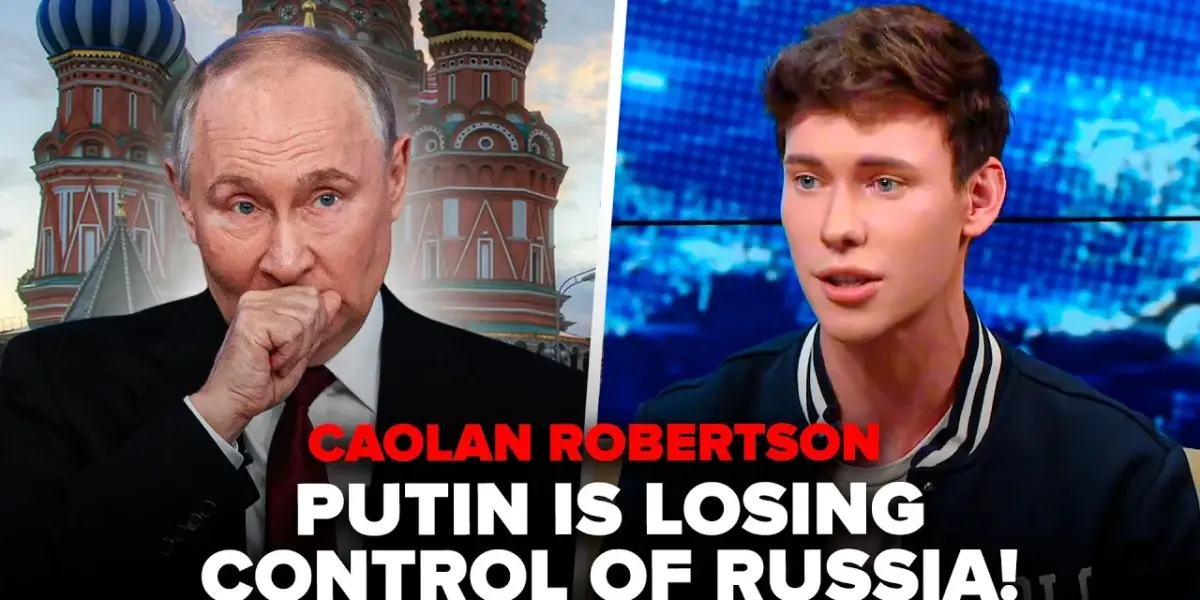
Russia’s Economy Fractures Amidst Costly War, Journalist Reveals
As the conflict in Ukraine grinds on, Russia’s economy is reportedly buckling under the immense financial strain of the war, leading to widespread domestic hardship and a desperate propaganda push. British journalist and documentary filmmaker Kaelin Robertson, speaking from Ukraine, detailed the unfolding economic crisis and its impact on ordinary Russians, painting a stark picture of a nation struggling to sustain its war effort.
Propaganda Offensive Masks Economic Woes
Robertson explained that the increasing hysteria and aggressive propaganda emanating from Russia are direct indicators of its weakening economic and military standing. “When Russia starts losing economically and militarily, they start making the loudest noise.
They start freaking out,” Robertson stated. This desperation is channeled into a barrage of misinformation, particularly targeting Ukraine with accusations of being “sinful,” “demonic,” and “degenerate.” These narratives, Robertson asserts, are easily debunked and serve to distract from Russia’s own internal struggles.
“The first lie that they put out… Is that Ukraine is sinful. Ukraine is demonic. Ukraine isn’t a Christian country or Ukraine is somehow degenerate.” – Kaelin Robertson
The journalist highlighted the hypocrisy of Russia’s claims, pointing to evidence of the Russian Orthodox Church operating as military bases and its own documented attacks on religious sites in Ukraine. “If you want to look at what country is actually targeting Christianity, it’s a country that is bombing churches every single day. If you look at the churches in this country, over 1,400 religious sites have been damaged or destroyed by Russia,” Robertson emphasized.
Economic Hardship Grips Russian Citizens
The economic fallout of the war is hitting everyday Russians particularly hard. Robertson cited reports of 40% of Russian income being spent on essential goods, a significant burden attributed to rampant inflation and the devaluation of the ruble. “Sanctions really have started to kick in over the years, and they have looted their country to pay for this very expensive war,” she noted.
Anecdotal evidence, shared through social media videos that bypass tight state control, reveals widespread discontent. Russians are reportedly complaining about soaring prices in supermarkets and shortages of basic supplies on the front lines. “Things are bad inside Russia when Russians start complaining themselves because the media is very tightly controlled and they get in trouble for that,” Robertson observed.
The scale of the economic downturn is significant, with Robertson noting that Russia’s economy is now comparable to Italy’s and projected to shrink further. The phenomenon of “shrinkflation” has become so extreme that reports indicate some products, like loaves of bread, are now being sold as individual slices, a development met with disbelief and anger by consumers.
Military Capabilities Hampered by Corruption and Sanctions
Beyond the general economic collapse, Russia’s military-industrial complex is also suffering. Robertson explained that the country’s ability to replace lost aircraft and weaponry is severely hampered by corruption, outdated technology, and the impact of international sanctions. “Corruption doesn’t build fighter jets.
And the supply lines that existed that built the type of planes that Russia is using… Disappeared a long time ago,” she stated.
Attempts to revive critical supply lines, such as for the A50 aircraft, have been repeatedly thwarted by Ukrainian strikes, resulting in significant financial damage and rendering them inoperable. This inability to replenish its military hardware, coupled with the depletion of existing stockpiles, suggests a long-term degradation of Russia’s war-making capacity.
Geopolitical Isolation and Declining Alliances
Robertson also touched upon Russia’s diminishing global standing and its crumbling alliances. The journalist pointed to the struggles of countries like Cuba and Venezuela, which have historically relied on Russian support, as evidence of Moscow’s declining influence and inability to provide consistent aid. The ongoing situation in the Middle East, particularly concerning Iran, further complicates Russia’s strategic position, potentially diverting resources and attention.
The journalist’s personal reflections on returning to Ukraine after a period of absence underscored the profound psychological impact of living under constant threat. The jarring transition from perceived safety to the reality of air raid alerts and missile strikes highlighted the resilience required of Ukrainians and the deep-seated trauma of war.
The Path Forward: A Weakening Empire
Looking ahead, Robertson anticipates a continuation of Russia’s current trajectory: an empire fracturing internally while projecting aggression externally. The economic pressures, coupled with military setbacks and a loss of international standing, suggest that Russia’s capacity to wage a protracted war is diminishing.
The internal dissent and economic hardship are likely to intensify, potentially leading to further instability within the country. The world is watching to see how long the Kremlin can sustain its costly campaign amidst this growing internal and external pressure.
Source: 😱Putin’s Worst Nightmare Is Unfolding Now! British Journalist Said Everything About Kremlin (YouTube)

Related Articles

Trump, Orban Push for Ukraine Peace Talks
Former President Donald Trump and Hungarian Prime Minister Viktor Orbán are reportedly leading diplomatic efforts to end the war in Ukraine. Their strategy focuses on direct talks to understand the needs of both Russia and Ukraine. This approach contrasts with current Western military aid strategies.


War-Stranded Bats Find Refuge in Ukrainian Rescue Effort
Ukrainian volunteers are rescuing bats whose homes have been destroyed by the ongoing war. These small creatures are losing their shelters as buildings crumble, forcing them to seek new, dangerous places to roost. The volunteers provide care and a chance for survival to these displaced animals.
Ukraine’s Long-Range Strikes Threaten Russia’s Core
Russian state TV expresses alarm over Ukraine's imminent acquisition of long-range Western weapons, including ballistic missiles. Concerns are high that Kyiv plans to strike key Russian military and political sites, potentially including the Kremlin, marking a significant escalation.