US, Israel Escalate War with Iran; Tehran Retaliates Across Region
The U.S. and Israel have launched a major offensive, 'Operation Epic Fury,' targeting Iran's military and leadership. Tehran has retaliated with strikes across the Middle East, escalating regional tensions and impacting global oil markets.

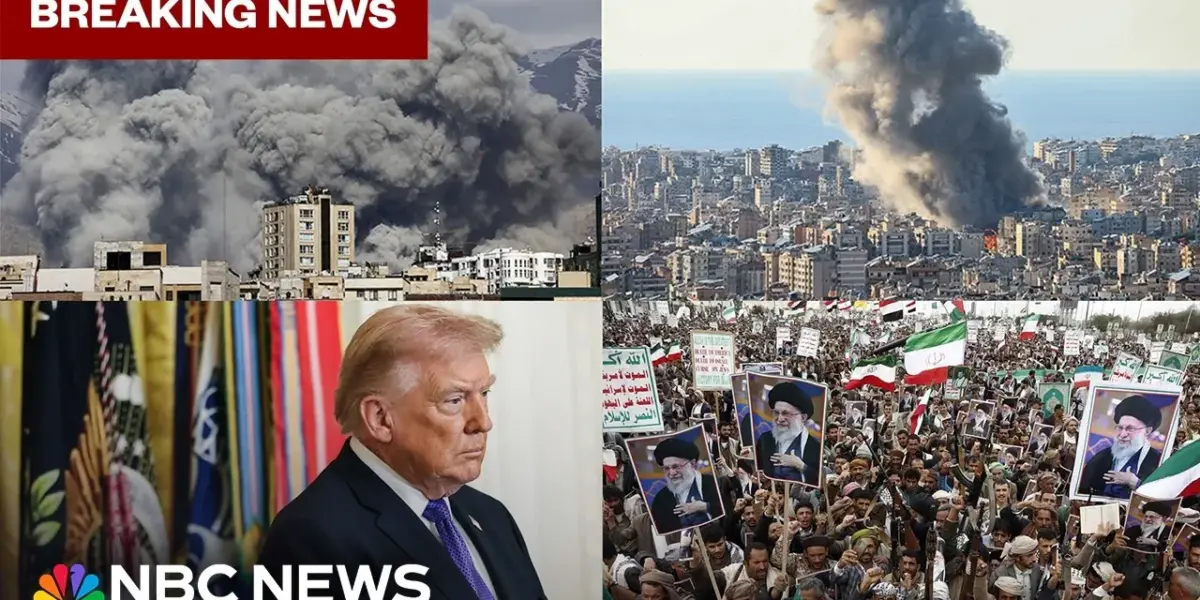
US and Israel Launch Major Offensive Against Iran
In a significant escalation of regional conflict, the United States and Israel have launched a coordinated, multi-pronged military operation targeting Iran’s military infrastructure, missile capabilities, and leadership. The offensive, codenamed “Operation Epic Fury,” commenced on Friday afternoon and has already seen extensive strikes across Iran, with President Trump projecting the conflict could last between four to five weeks.
“We will easily prevail. We’re already substantially ahead of our time projections,” President Trump stated, highlighting the administration’s confidence in the operation’s swift progress.
Pentagon Reinforces Deployment, Seeks Air Superiority
The Pentagon announced an increase in troop and fighter jet deployments to strengthen the ongoing operation. “The President directed, and I quote, ‘Operation Epic Fury is approved. No aborts.
Good luck,'” a Pentagon official confirmed. The U.S. military asserts it has achieved total air superiority over Iran, enabling them to systematically target and destroy Iranian missile launchers used in attacks against regional allies and U.S. Interests.
“Over 1200 targets already hit,” a U.S. Official noted, indicating the scale of the initial strikes. The primary objectives outlined by President Trump include crippling Iran’s missile capabilities, annihilating its navy, preventing it from acquiring nuclear weapons, and disrupting its funding and direction of terrorist activities abroad.
Iran Retaliates, Spreading Conflict to New Fronts
In response to the escalating offensive, Iran has launched retaliatory strikes across several Middle Eastern countries, broadening the scope of the conflict and introducing new risks. In Saudi Arabia, drones targeted the U.S. Embassy in Riyadh, causing a fire but no reported injuries. Kuwait experienced the loss of three U.S. Fighter jets, which the Pentagon attributed to friendly fire from Kuwaiti missile defense systems; the crews reportedly ejected safely.
However, the Pentagon confirmed at least six American service members have been killed amidst the broader hostilities. Iran’s aggression has also extended to Qatar, where its fighter jets were reportedly shot down by Qatari military forces.
In Bahrain, Iranian drones struck residential high-rise buildings, while Kuwait’s international airport sustained damage from a drone attack. Saudi Arabia’s oil fields also reportedly suffered damage from Iranian strikes.
Targeting Iranian Leadership and Infrastructure
Intelligence reports indicate that the initial U.S. and Israeli strikes were timed to coincide with a meeting of senior Iranian officials, including Supreme Leader Ayatollah Khamenei. The U.S. Claims that 49 leaders from the Iranian regime have been killed in these operations. “We also projected four weeks to terminate a military leadership.
And as you know, that was done in about an hour. So we’re ahead of schedule there by a lot,” President Trump remarked.
While Iran has not confirmed all reported fatalities, the offensive appears to have significantly degraded its military command structure. The U.S. is also investigating reports of a girls’ school being hit inside Iran over the weekend, resulting in numerous casualties.
Regional Alliances and Diplomatic Maneuvers
The conflict’s expansion has put neighboring countries on high alert. Reports suggest that Saudi Arabia’s Crown Prince Mohammed bin Salman had urged President Trump to take action against Iran in the preceding month. The U.S. State Department has issued a warning urging American citizens to evacuate from 14 countries in the Middle East, including Israel, Jordan, Saudi Arabia, and Egypt, highlighting the deteriorating security situation.
“The hardest hits are yet to come from the U.S. military.” – Secretary of State Marco Rubio
Economic Repercussions and Global Oil Markets
The escalating tensions have had an immediate impact on global oil markets. Iran has issued threats regarding the Strait of Hormuz, a critical waterway through which approximately 20% of global oil passes. Iranian state media has warned of setting fire to any ship attempting passage, leading to a near standstill in shipping traffic.
Oil prices surged following these threats, with a $10 spike potentially translating to a 25-cent increase per gallon of gasoline in the United States, where the national average already exceeds $3 per gallon. Secretary of State Marco Rubio indicated that the administration had anticipated these economic ramifications.
Uncertainty and Future Outlook
Despite the robust military action, the U.S. has stated that regime change is not the explicit goal, though the administration has expressed a desire for it. This comes after President Trump encouraged Iranian protesters to rise up against the regime. While no U.S. Ground troops are currently involved, the Pentagon has not ruled out their deployment.
Officials emphasize a strategic approach, aiming to overwhelm Iran quickly rather than engaging in prolonged occupations. The possibility of strikes on Iran’s nuclear program, which has so far been untouched, remains a significant unknown. As the conflict unfolds, the world watches closely for further escalation and the potential for wider regional instability.
Source: U.S. and Israel expand war with Iran with joint air, sea, and land operations as Tehran hits back (YouTube)

Related Articles


Middle East Conflict Sparks Global Food Price Fears
Escalating tensions in the Middle East are disrupting the global fertilizer supply, threatening to increase food prices worldwide. Farmers are struggling with shortages, and aid organizations warn of rising hunger risks as key shipping routes become restricted.


Trump Admin’s Troop Treatment Sparks Outrage
MSNBC's Rachel Maddow has reported on concerning actions by the Trump administration that have impacted military families. These incidents include the arrest of a soldier's wife on a military base and a mistaken announcement about ICE presence at Marine Corps graduations. These events have sparked outrage and raised questions about government support for service members and their loved ones.


Jet Fuel Crisis Looms: Global Travel Faces Disruption
A severe jet fuel shortage looms as the conflict in the Middle East has effectively closed the Strait of Hormuz, impacting global oil supply. Airlines worldwide are preparing for higher costs, route reductions, and potential flight cancellations. The crisis is expected to raise ticket prices and affect supply chains, leading to broader economic consequences.