Woman Caught Lying in Virtual Court, Faces Judge’s Wrath
A woman's attempt to lie about her location during a virtual court hearing backfired spectacularly when the judge caught her in the act. Appearing via video conference, the woman was asked if she was driving, to which she gave evasive answers before the judge realized she was in a vehicle. Judge Jeffrey S. Diller expressed disbelief and moved to enter a default judgment against her.

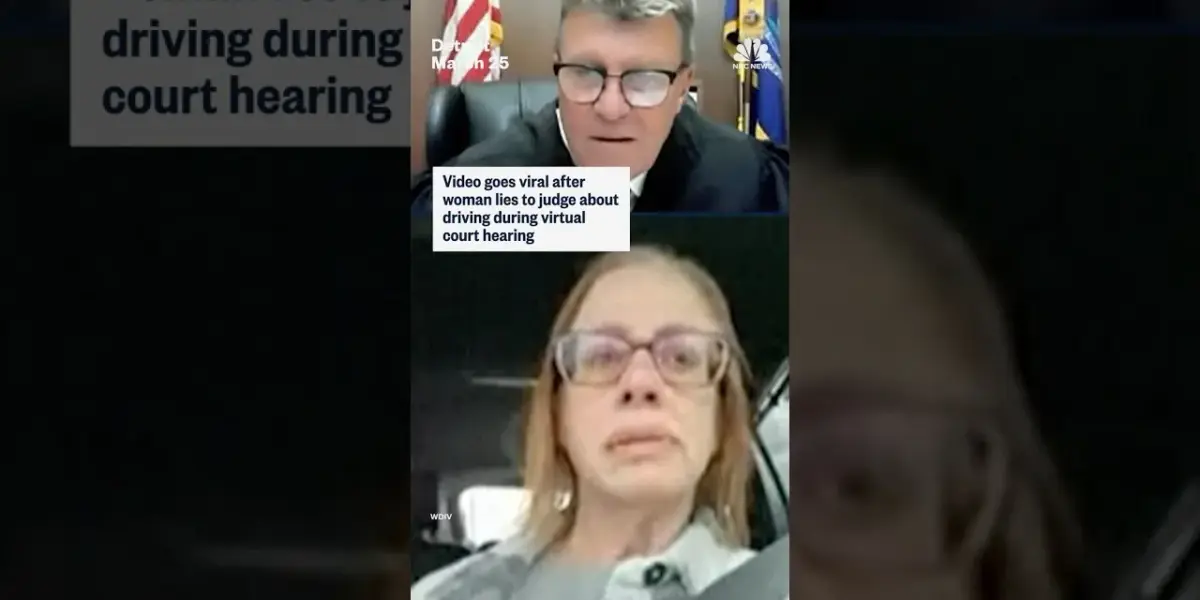
Driver Caught Red-Handed in Virtual Court Hearing
A woman’s attempt to deceive a judge during a virtual court hearing has gone viral, highlighting the pitfalls of online proceedings and the unexpected ways people try to bend the rules. The incident occurred when the woman, identified as Jennifer, appeared in court via video conference for a driving-related case.
Judge Jeffrey S. Diller presided over the hearing, which quickly took an unusual turn as Jennifer’s story unraveled before the court.
The trouble began when the judge asked to see the defendant, implying she was driving. Jennifer initially hesitated, asking for permission from someone else before a brief, muffled exchange was heard. This moment immediately raised suspicion, as it suggested she wasn’t in a typical courtroom or home setting, but rather somewhere else entirely.
A Failed Attempt at Deception
Judge Diller, known for his no-nonsense approach, pressed Jennifer on her location and circumstances. He asked if she was in the driver’s seat of a vehicle.
Jennifer’s response was evasive, leading the judge to directly question her truthfulness. The judge’s tone grew stern as he realized the blatant deception at play.
“You think I’m that stupid?” the judge asked, his voice filled with disbelief and a touch of anger. The question hung in the air, a clear indication that Jennifer’s ruse had failed spectacularly. The judge then stated his intention to enter a default judgment against her, a serious consequence for obstructing the court.
Courtroom Rules and Virtual Realities
The judge then referenced the court’s paperwork, asking Jennifer if it clearly stated that she was prohibited from driving. This suggests that Jennifer was likely in court because of a previous driving offense or a related restriction. Her inability to recall or acknowledge these terms further fueled the judge’s frustration.
“I’m sorry, your honor. I took a breath and started choking,” Jennifer stammered, attempting to explain her lapse in memory or perhaps feign distress. This excuse did little to appease the judge, who was focused on the core issue of her apparent violation of court orders and her attempt to mislead the court.
Judge’s Firm Stance on Truthfulness
Judge Diller reiterated his confusion about the court’s documentation, questioning why it wouldn’t be clear about driving restrictions. He expressed his disbelief that the paperwork might not explicitly tell people they cannot be in a car, especially during a virtual hearing where such a situation could easily arise.
Jennifer’s response, “I don’t know, your honor. I’d have to look at it again.
I haven’t looked at it in a while,” further cemented the impression that she was not being forthright. The judge’s decision to enter a default judgment signals the severity with which he views her actions, emphasizing that honesty and compliance are paramount in legal proceedings, regardless of the setting.
Broader Implications for Virtual Courts
This incident is a clear reminder of the challenges presented by virtual court hearings. While convenient, they also open the door for new methods of deception and require judges and court staff to be extra vigilant. Verifying a defendant’s identity and circumstances can be more difficult when not physically present in a courtroom.
The viral nature of the video highlights public fascination with courtroom drama and the consequences of dishonesty. It also highlights the importance of clear communication of court orders and the need for defendants to take their legal obligations seriously. The judge’s firm response in this case sends a clear message: attempting to deceive the court will likely lead to more severe repercussions.
What Happens Next
The default judgment means Jennifer has likely lost her case and will face penalties determined by the court without further argument from her side. The specific penalties will depend on the original offense and the court’s policies. This case will likely be referenced in discussions about the effectiveness and security of virtual court proceedings moving forward.
Source: Video goes viral after woman lies to judge about driving during virtual court hearing (YouTube)

Related Articles


DOJ Seeks to Overturn Jan. 6 Convictions, Sparking Controversy
The Department of Justice is seeking to overturn seditious conspiracy convictions related to the January 6th Capitol attack, a move legal experts find extraordinary. Concerns are also rising over comments suggesting a president has the right to direct DOJ investigations into individuals, challenging post-Watergate norms.


Iran Employs Proxy Tactics Amid Standoff
The Islamic Revolutionary Guard Corps is expected to increasingly use proxy tactics to inflict economic pain, particularly targeting the Strait of Hormuz. Military experts explain deception as a key warfare strategy to keep adversaries guessing about future actions.


Lost City Myth Lures Man to His Death in Jungle
A quest for a mythical lost city in the Brazilian jungle led to John Reed's disappearance and a web of deception involving a German imposter. Meanwhile, a salesman's faith was tested during a harrowing two-month ordeal stranded in the snowy Oregon mountains.