Vance Stumbles Under Fox Host’s Scrutiny on Foreign Policy
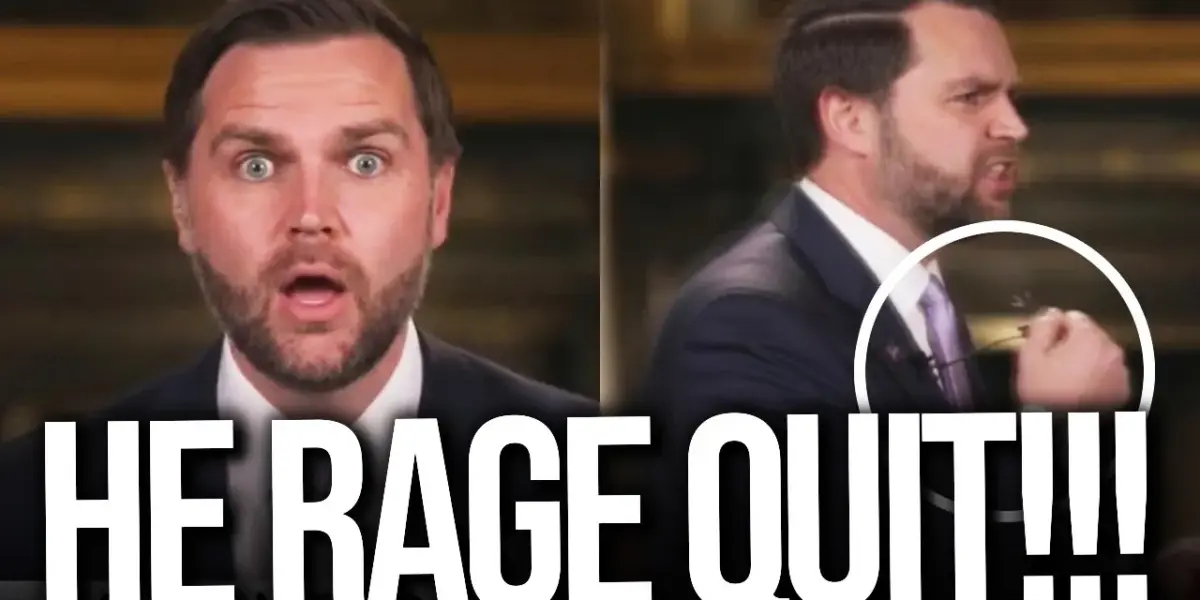
Senator JD Vance faced sharp questioning from Fox News host Brett Baer regarding his recent foreign policy efforts. The interview revealed potential inconsistencies in Vance's accounts of negotiations in Islamabad and his support for controversial figures like Viktor Orban. Vance also appeared to admit the U.S. might engage in 'economic terrorism' and struggled to address Donald Trump's public dispute with the Pope.

Vance Stumbles Under Fox Host’s Scrutiny on Foreign Policy
Senator JD Vance recently faced a tough interview on Fox News where host Brett Baer asked sharp questions about his recent foreign policy efforts. Vance, who has been involved in high-level diplomatic talks and campaigned for international figures, found himself defending his actions and statements under direct questioning. The interview touched on failed negotiations in Pakistan, his support for controversial European leaders, and his response to Donald Trump’s public disputes with the Pope.
Trouble in Islamabad: Misrepresenting Negotiations?
One of the main points of contention was Vance’s role in recent negotiations in Islamabad, Pakistan. Baer pressed Vance on what went wrong during these talks, especially concerning Iran. Vance initially tried to frame the situation as having both progress and flexibility from the U.S. side. However, earlier statements from Vance himself, made immediately after the negotiations concluded, suggested a different outcome. In those remarks, Vance stated, “we weren’t able to make any headway.” This directly contradicted his later claim of progress, leading to questions about whether he was accurately representing the results of the talks.
The transcript highlights a significant difference between Vance’s public statements. While he told Baer there were “some wins, some losses” and “good conversations,” his earlier assessment was that the U.S. and Iran “just could not get to a situation where the Iranians were willing to accept our terms.” This discrepancy suggests Vance may have been attempting to downplay the failure of the negotiations to a domestic audience.
Campaigning for Controversial Allies: The Orban Factor
The interview also delved into Vance’s decision to campaign for Hungarian Prime Minister Viktor Orban. Orban, who recently lost an election after 16 years in power, has been a controversial figure due to his strong support for Vladimir Putin and his government’s impact on Hungarian democracy. Baer questioned the wisdom of Vance’s support, given Orban’s political defeat and his alignment with Putin, a stance at odds with many European leaders.
Vance defended his actions by stating that Orban is “a great guy who’s done a very good job” and that Hungary has been a crucial ally against the “bureaucracy in Brussels.” He argued that Orban has been willing to stand up for American interests, even voting against measures that could harm U.S. companies. Vance also pointed out Hungary’s role in blocking Ukraine aid packages, suggesting this demonstrated Orban’s willingness to defy the European mainstream. However, critics, as noted in the transcript, view Orban as an authoritarian who has undermined democratic institutions, making Vance’s endorsement politically risky.
Accidental Admission of ‘Terroristic Methods’?
A particularly striking moment in the interview occurred when Vance appeared to admit that the United States is using “terroristic methods” in the Middle East. When discussing Iran’s actions in the Strait of Hormuz, Vance stated, “if the Iranians are going to try to engage in economic terrorism, we’re going to abide by a simple principle that no Iranian ships are getting out either.” He later rephrased this, saying, “we’re going to abide by one single principle… we also want to commit economic terrorism.”
This statement drew criticism for suggesting the U.S. is mirroring what it condemns. The transcript points out that Vance’s language seemed to imply a willingness to engage in economic warfare, potentially abandoning principles of international law in favor of retaliation. The implication is that if Iran uses such tactics, the U.S. will too, regardless of legal or moral considerations.
Clash with the Pope: Faith, Politics, and Social Media
The interview also addressed the public spat between Donald Trump and Pope Francis. Baer asked Vance, as a Catholic, how he viewed Trump’s social media posts, one of which was widely interpreted as depicting Trump as Jesus. The Pope had previously expressed concerns about war and urged peacemaking, leading to Trump’s controversial posts. Trump later claimed the image was meant to show him as a doctor helping people.
Vance attempted to smooth over the situation, calling Trump’s post a “joke” and emphasizing that Trump communicates directly with the people, unfiltered by advisors. He acknowledged that disagreements between the Vatican and the U.S. administration on public policy are normal. However, he suggested it would be “best for the Vatican to stick to matters of morality” and the Catholic Church, while the U.S. President should focus on American interests. This stance was criticized as a dismissal of the Pope’s concerns about human dignity and just warfare, especially when juxtaposed with actions taken by the Trump administration.
The analysis in the transcript argues that Vance downplayed a significant conflict, characterizing it as a minor disagreement. The Pope’s statements were framed as calls for human dignity and just conduct in war, while Trump’s response was seen as an aggressive, personal attack. Vance’s position, suggesting the Pope should focus on morality and the President on policy, was seen by critics as a way to shield the administration from criticism on human rights and ethical issues.
Why This Matters
This interview is significant because it highlights the challenges faced by politicians like JD Vance when discussing complex foreign policy issues. The scrutiny from a prominent host like Brett Baer revealed potential inconsistencies in Vance’s messaging and raised questions about his judgment in aligning with controversial figures and his administration’s approach to international relations and ethical conduct.
The events underscore a broader trend in political discourse where diplomatic efforts are closely watched and scrutinized. Vance’s defense of his actions, particularly his apparent admission of using “terroristic methods” and his attempt to navigate the dispute between Trump and the Pope, reflect the difficulties of balancing party loyalty with nuanced policy positions. The situation also points to the growing influence of social media in shaping political narratives and international relations, as seen in the public feud with the Pope.
Implications and Future Outlook
The interview suggests that Vance, despite his position, may struggle with articulating clear and consistent positions on foreign policy. The perceived failures in negotiations, the controversial endorsements, and the handling of the dispute with the Pope could impact his political standing and future ambitions. The willingness of a major news outlet like Fox News to question him so directly indicates a potential shift in how political figures are held accountable.
Looking ahead, it will be crucial to see how Vance responds to such challenges. His ability to provide clear explanations and defend his policy decisions will be key to maintaining public trust. The ongoing debates about the U.S. role in global affairs, the ethics of foreign policy, and the intersection of religion and politics will continue to shape political discourse, and Vance’s handling of these issues will be closely observed.
Historical Context
The interview touches upon several historical contexts. U.S.-Iran relations have been fraught with tension for decades, marked by events like the 1979 hostage crisis and subsequent diplomatic standoffs. The Strait of Hormuz has historically been a critical chokepoint for global oil supplies, making any disruption there a matter of international concern. The U.S. has often engaged in complex diplomatic maneuvers and sometimes military posturing in the region.
Furthermore, the relationship between the U.S. and European nations has evolved significantly since World War II. While NATO has been a cornerstone of transatlantic security, recent years have seen internal divisions and differing approaches to Russia and other global challenges. Figures like Viktor Orban represent a growing nationalist movement in Europe that often clashes with traditional liberal democratic values and EU policies, creating complex diplomatic landscapes for U.S. policymakers.
The public commentary from the Pope on political matters is also historically significant. The Catholic Church has a long tradition of engaging with social and political issues, often advocating for peace, human dignity, and the poor. However, direct public criticism or engagement with specific political leaders, particularly a U.S. President, is notable and often sparks debate about the appropriate role of religious leaders in secular politics.
Source: JD Vance Crumbles As Fox Host Ends His Career (YouTube)

Related Articles
Judge Tosses Trump’s $10B Lawsuit Against WSJ
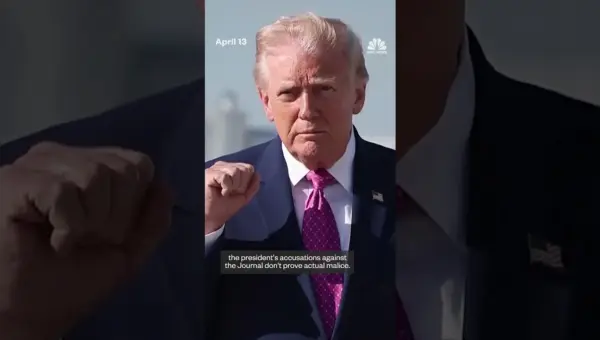
A federal judge has dismissed former President Donald Trump's $10 billion lawsuit against The Wall Street Journal. The judge ruled that Trump's team failed to prove 'actual malice' by the newspaper. Trump's legal team stated they will continue to fight against what they call 'fake news'.
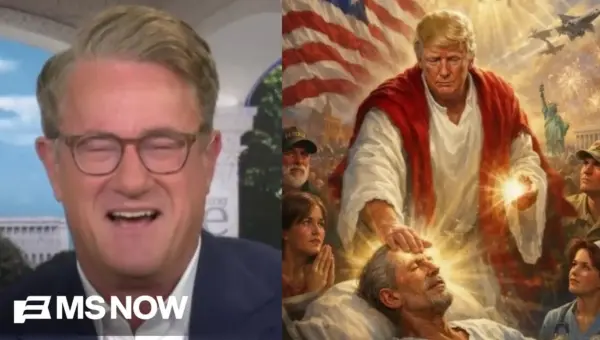
Trump’s ‘Jesus’ Image Sparks Outrage, Laughter
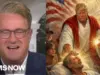
Donald Trump's Easter social media post depicting himself as Jesus Christ sparked widespread outrage and disbelief, leading to the image's swift deletion. His subsequent claim that he thought the image was of himself as a doctor was met with derision, with critics citing biblical ignorance and blasphemy. The incident occurred amid broader criticism of Trump's remarks about Pope Francis, further fueling debate about faith and politics.

Trump Cleans House Amidst Growing Chaos
President Trump's recent cabinet shake-ups reveal a pattern of prioritizing loyalty over competence. With a depleted talent pool and a leader who shuns advice, the administration faces increasing chaos and uncertainty, impacting both domestic policy and global stability.