Trump Cleans House Amidst Growing Chaos
President Trump's recent cabinet shake-ups reveal a pattern of prioritizing loyalty over competence. With a depleted talent pool and a leader who shuns advice, the administration faces increasing chaos and uncertainty, impacting both domestic policy and global stability.

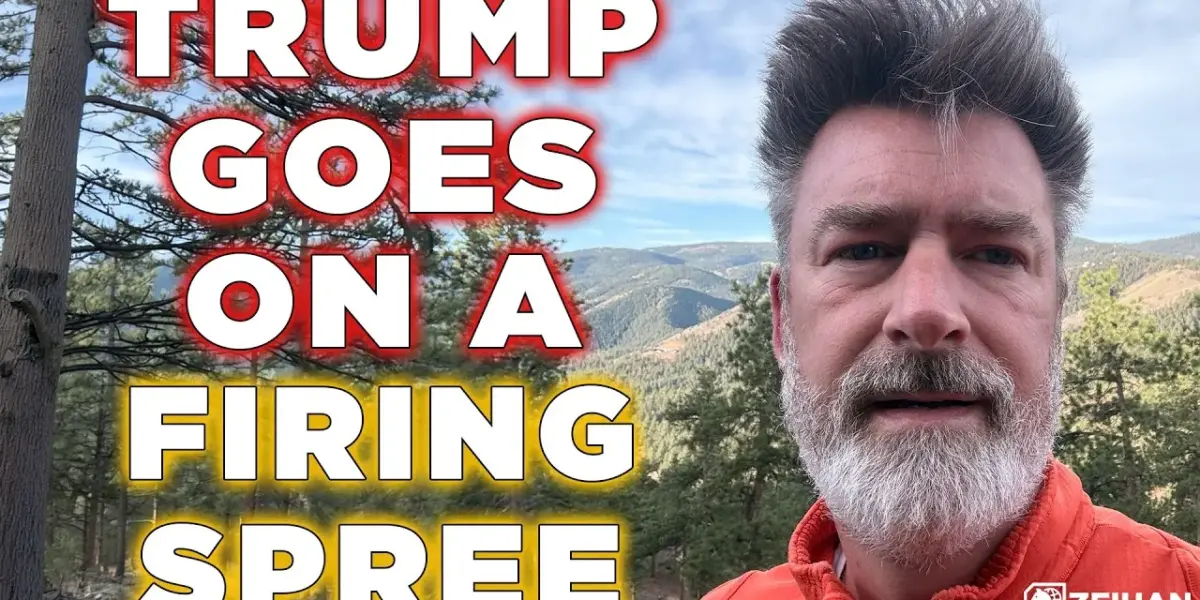
Trump Cleans House Amidst Growing Chaos
President Donald Trump has recently removed several key figures from his administration, including Christine Gnome from the Department of Homeland Security and Pam Bondi, the former Florida Attorney General. This move has sparked questions about whether it signals a broader wave of dismissals. However, the analysis suggests these changes are less about performance and more about Trump’s preference for loyalty and praise over expert advice.
Trump’s Staffing Strategy: Worship Over Wisdom
During his first term, Trump’s administration was staffed with individuals from the Republican establishment, many of whom he didn’t personally know. He ended up firing most of them, cycling through more cabinet secretaries than previous presidents. This happened because advisors who offered informed advice made him feel less intelligent. In response, Trump took over the Republican party, removing its research and recruitment arms so he couldn’t be staffed by knowledgeable people again. For his second term, the pool of experienced talent within the Republican party is now very shallow. This has led to appointments of people who tell him what he wants to hear or simply praise him. The government still has over a thousand unfilled positions, a situation that appears to be by design.
Potential Departures and Their Reasons
Several other high-profile individuals are rumored to be on the chopping block. Howard Lutnik, a candidate for Commerce Secretary, is described by many in New York’s financial world as corrupt. While his appointment might seem fitting for Trump’s erratic tariff policies, which have caused over 7,000 changes and hurt business confidence, Trump’s issue with Lutnik is reportedly tied to his family’s past association with the Epstein group, not his job performance.
Robert F. Kennedy Jr. is also mentioned as a potential candidate for Health and Human Services. He is known for promoting unsubstantiated claims about vaccines and diet. While his views could harm public health, Trump’s apparent problem is that Kennedy is drawing too much attention, potentially splitting support from the ‘Make America Healthy Again’ group. The Surgeon General position has remained unfilled for 14 months, with the only appointed candidate being described as a ‘quack’.
Tulsi Gabbard, currently responsible for intelligence briefings, is also reportedly on the list. Her foreign policy stances have often been seen as pro-Russian. Trump’s issue with her is not her overall stance but her opposition to the war in Iran, specifically her testimony that there was no clear evidence of Iran actively developing a nuclear bomb. This contradicts Trump’s stance, and he dislikes hearing such information.
Cash Patel, a candidate for FBI Director, is criticized for lacking law enforcement experience and for being a conspiracy theorist. His actions, such as reassigning counter-terror personnel to focus on minor issues, have damaged federal law enforcement. Trump’s concern isn’t Patel’s incompetence but his failure to prosecute Trump’s political opponents, a task made difficult by Trump’s own unsupported accusations.
Pete Hegseth, at Defense, is considered by some to be the least qualified Defense Secretary. He has struggled to appoint a chief of staff and has interfered with military training and promotion processes, leading to clashes with senior staff. The firing of the Army Chief of Staff and the Chief Chaplain highlights these issues. Hegseth’s use of ‘crusader’ language to justify the Iran war, while disconnected from the conflict’s management, has also drawn criticism from religious leaders. Trump sees Hegseth as a potential scapegoat for the Iran war, which is not going well.
The Collapse of the Republican Talent Pool
The core issue is that these individuals were often chosen for their inability to do their jobs effectively, not for their competence. Any replacements are likely to fall into the same category. The business community, once a strong supporter of the Republican party, has become disillusioned. They now realize they have been pushed out of the party coalition. This realization is also dawning on some Republican senators.
The willingness of Congress to approve new appointees who are chosen for their incompetence is low. This suggests more White House problems, inconsistencies, and continued incompetence. The situation is worsened by the absence of Chief of Staff Susie Wilds, who has been the ‘Trump whisperer’ but is currently battling breast cancer. Her reduced role means there is little to mediate between Trump and the rest of the world, and his frustration is becoming increasingly apparent.
Global Impact: Why This Reshapes the World Order
The current state of the Trump administration, characterized by internal turmoil, a lack of qualified personnel, and a leader who reportedly prefers praise over policy, has significant implications. The erratic nature of its decision-making, particularly on trade and foreign policy, creates uncertainty for global markets and allies alike. The inability to fill key diplomatic and administrative roles suggests a weakening of American institutional capacity at a time of complex global challenges. This internal disarray can embolden rivals and strain relationships with allies who rely on consistent American leadership. The focus on personal loyalty over professional expertise risks undermining the effectiveness of U.S. foreign policy and national security apparatus, potentially leading to miscalculations and a less stable international environment.
Historical Context: A Pattern of Disruption
Donald Trump’s approach to staffing and governance has consistently deviated from traditional norms. His first term saw a high turnover of cabinet members, a pattern attributed to his dislike of advice that challenged his own views. This tendency to prioritize personal loyalty and discourage dissenting opinions is a recurring theme. Historically, American presidencies have relied on experienced professionals and established bureaucratic processes to manage government functions. Trump’s administration, however, has often bypassed these norms, leading to a significant departure from established governance models. The current situation, where the administration struggles to find qualified candidates and relies on individuals who are seen as incompetent or sycophantic, reflects a deeper erosion of the traditional talent pipeline within the Republican party itself.
Economic Leverage: Tariffs and Uncertainty
Trump’s administration has heavily utilized tariffs as a tool of economic policy, resulting in over 7,000 changes to tariff regulations. This constant flux creates significant uncertainty for businesses, both domestically and internationally, making long-term planning difficult and hindering investment. The analysis suggests that individuals like Howard Lutnik might have been appointed to leverage this system for personal gain, offering exemptions in exchange for favors. This approach undermines fair trade practices and can damage economic stability by creating an environment where success depends on connections rather than merit. The resulting drop in industrial construction spending, even falling below pandemic-era levels when data center construction is excluded, highlights the real-world economic consequences of such policies.
Future Scenarios: Worsening Instability
The outlook suggests a worsening situation. With a lack of competent replacements and a Congress less willing to confirm questionable appointees, the administration is likely to face continued internal problems and inconsistencies. The public frustration of a leader who has initiated problems he cannot solve, compounded by a weakened support structure, points towards a presidency that is not only failing but potentially becoming more unstable. The absence of key advisors like Susie Wilds further exacerbates this, leaving the President more exposed to his own impulses and frustrations. This scenario suggests a period of increased unpredictability and potential policy missteps, both domestically and on the international stage.
Source: Trump Goes on a Firing Spree || Peter Zeihan (YouTube)

Related Articles


Iran-Made Drones Fuel Ukraine War, Stirring Kyiv Resident
A Kyiv resident with Iranian roots describes the emotional toll of seeing Iranian-made drones used by Russia in Ukraine. He shares his deep connection to Ukraine and the difficult personal conflict the war has created.
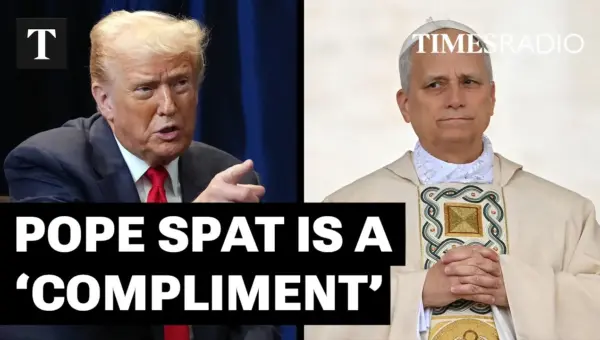
Catholic Supporter Defends Trump in Pope Feud, AI Image Row
A key Trump supporter, Joe Allen House, called the ongoing feud between Donald Trump and Pope Francis a "minor tempest in a teapot." House, president of Valor America, defended Trump's sharing of an AI image depicting himself as Jesus, calling it common online culture. He argued that Catholic voters appreciate Trump's policies and his fight against the left, giving him leeway for his "peculiar" public statements.


Iran Faces Economic Crisis Amid Sanctions Over Nuclear Ambitions
Iran faces a severe economic crisis as international sanctions target its nuclear program and regional proxies. The regime's financial decisions have led to internal unrest and a critical point regarding its nuclear ambitions.