Vance Stumbles as Empty Crowd Questions His Immigration Stance
Senator JD Vance's recent appearance at the University of Georgia was overshadowed by a sparse crowd and pointed questions about his immigration policies. A student's personal story about lengthy green card waits highlighted the gap between Vance's 'America First' rhetoric and the practical realities faced by legal immigrants.


Vance Stumbles as Empty Crowd Questions His Immigration Stance
Senator JD Vance recently spoke at the University of Georgia, but the event was marked by a surprisingly small turnout and pointed questions from students. The senator faced criticism regarding the current administration’s immigration policies and his own stated views, revealing a disconnect between his public image and the concerns of many.
Questions on Policy and ‘War Crimes’
The forum began with Vance being directly challenged about what the questioner termed “war crimes” linked to the administration he represents. This set a confrontational tone early on. Shortly after, a University of Georgia student respectfully approached the microphone to ask about immigration. The student sought clarity on Vance’s vision for immigration policy, particularly concerning the path to citizenship.
The student highlighted how current policies, such as revoking Temporary Protected Status for certain groups, can paradoxically increase the number of undocumented immigrants. This, the student argued, creates a contradictory situation where the administration is making assimilation harder while also removing protections, leading to more people without legal status. The student pointed to Vance as a prominent voice defending these policies.
A Thin Crowd and a Tough Crowd
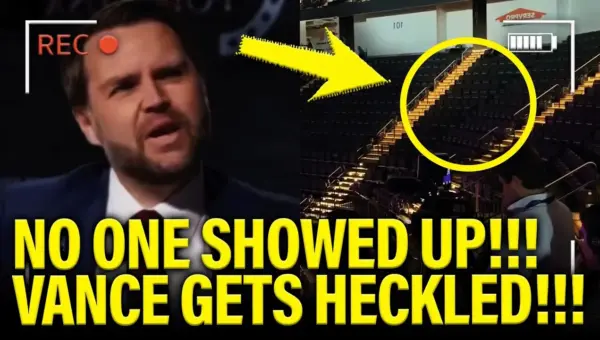
The video accompanying the report showed a stark image: a large university auditorium with very few people in attendance during Vance’s speech. This was presented as evidence that Vance lacks broad appeal or “juice,” as the younger generation might say. The sparse crowd was interpreted as a sign of public disinterest or disagreement with his message, especially on a topic as significant as immigration.
The speaker argued that Vance often tries to present a moderate image on immigration, but his actions and statements suggest a much harsher stance. For example, Vance’s past comments were cited where he seemed to approve of actions taken against citizens protesting legal immigrants. This was used to argue that Vance’s goal isn’t just deportation but a significant reduction or halt to immigration altogether, with mentions of potential mass deportations involving millions of people.
The Personal Story and the Policy Answer
The student who questioned Vance then shared a personal story. She explained she was the daughter of legal immigrants who came to the U.S. on H-1B visas over ten years ago. Her parents worked hard, paid taxes, and sacrificed to send her to private school, all while dreaming of the “American dream” for her. However, she described the immense difficulty her family faced due to long green card backlogs, noting that under the Biden administration, it could have taken 150 years for her family to get a green card.
She directly asked Vance how the administration plans to fix the system for people like her family, who have been in the U.S. for years, contributing and waiting patiently for a clear path to permanent residency. Her question was about streamlining the process and addressing the lengthy wait times that prevent legal immigrants from achieving full citizenship.
Vance’s response focused on the idea of “American first” and the responsibility of citizens to prioritize the United States above any former country or group affiliation. He acknowledged his own in-laws are immigrants from India and are great contributors. However, he stressed that becoming an American citizen means thinking of the country’s best interest and viewing oneself as solely American. He used an anecdote about a Ukrainian American constituent who urged support for Ukraine, telling the man that if he is American, his country is the United States, not Ukraine.
He concluded that this “American first” perspective is crucial for immigration policy and for making Americans feel welcoming towards newcomers, emphasizing that whether a family has been in the U.S. for 300 years or just arrived, being American means looking out for Americans first.
Analysis of Vance’s Response
The speaker in the video felt Vance did not directly answer the student’s core question about streamlining the immigration process and reducing green card wait times. Instead, Vance shifted to a more philosophical discussion about national identity and loyalty. The speaker suggested Vance’s response was evasive, focusing on an “esoteric ideology” rather than practical solutions for legal immigration.
The speaker proposed their own guidelines for immigrants: follow laws, love America, strive to make it better, provide for family, and build something. This was presented as a common-sense approach, contrasting with what they perceived as Vance’s dismissive or overly rigid stance. The speaker also questioned Vance’s consistency, pointing out his opposition to funding Ukraine while seemingly supporting interventionist actions elsewhere.
Another point raised was the last-minute withdrawal of a scheduled co-speaker, Erica Kirk, from the event due to security concerns. While Kirk cited threats, Candace Owens suggested it might have been related to the low attendance, implying it was a convenient excuse. The speaker in the video agreed, questioning why Vance remained if there were genuine threats, and whether Kirk’s departure was linked to the embarrassingly small crowd.
Why This Matters
This event highlights critical debates surrounding immigration policy in the United States. It shows how political figures are challenged on their stances, particularly when those stances appear to contradict personal experiences or create practical difficulties for individuals and families. The incident raises questions about how political leaders connect with younger generations and address complex issues like legal immigration pathways, national identity, and border security.
Historical Context and Trends
Immigration has long been a central and often divisive issue in American politics. Debates have historically swung between periods of more open immigration and times of increased restriction. The H-1B visa program itself, designed for skilled foreign workers, has been a subject of ongoing discussion, with concerns about fraud, its impact on American jobs, and the long waits for permanent residency for those who enter through it.
Senator Vance’s “America First” rhetoric aligns with a broader trend in recent years, emphasizing national interests and a more restrictive approach to immigration. However, the student’s question reflects a different perspective, one that values the contributions of legal immigrants and seeks practical solutions for integration and citizenship, rather than focusing solely on enforcement and restriction.
Future Outlook
The challenges Vance faced at the University of Georgia may indicate a growing public demand for nuanced and practical solutions to immigration issues. As demographics shift and the country grapples with the economic and social impacts of immigration, political figures will likely continue to face scrutiny. The tension between restrictive policies and the desire for efficient legal immigration pathways will remain a key battleground in political discourse, potentially influencing future policy debates and election outcomes.
Source: JD Vance Traumatized as EMPTY CROWD Exposed! (YouTube)

Related Articles

GOP Eyes Reconciliation to Fund DHS for Years
Republicans are exploring the use of Senate reconciliation to pass a long-term funding bill for the Department of Homeland Security, aiming for stability and bypassing Democratic opposition. The strategy could provide multi-year funding for agencies like ICE and TSA, focusing on public safety.

Vance Event Chaos: Kirk’s Exit Sparks MAGA Feud
Senator JD Vance's event in Athens, Georgia, became a stage for MAGA infighting after Erika Kirk withdrew, citing threats. Candace Owens publicly accused Kirk of fabricating the reasons, sparking a feud and drawing attention to Vance's own controversial remarks during the event.

Vance Faces Hecklers Amidst Empty Stadium Criticism
Senator JD Vance faced a sparsely attended event and intense heckling, sparking debate on political engagement and foreign policy. The incident highlights criticisms of his stance on the Middle East and broader concerns about national security and economic issues.