Trump’s Jesus Image Sparks Outrage, Pope Clash Continues
An AI-generated image of Donald Trump as Jesus has caused backlash, with experts calling it blasphemous. This controversy adds to the ongoing public feud between Trump and Pope Leo, who has criticized war rhetoric and Trump's attacks on the pontiff. The incidents raise questions about Trump's connection with his Christian base.

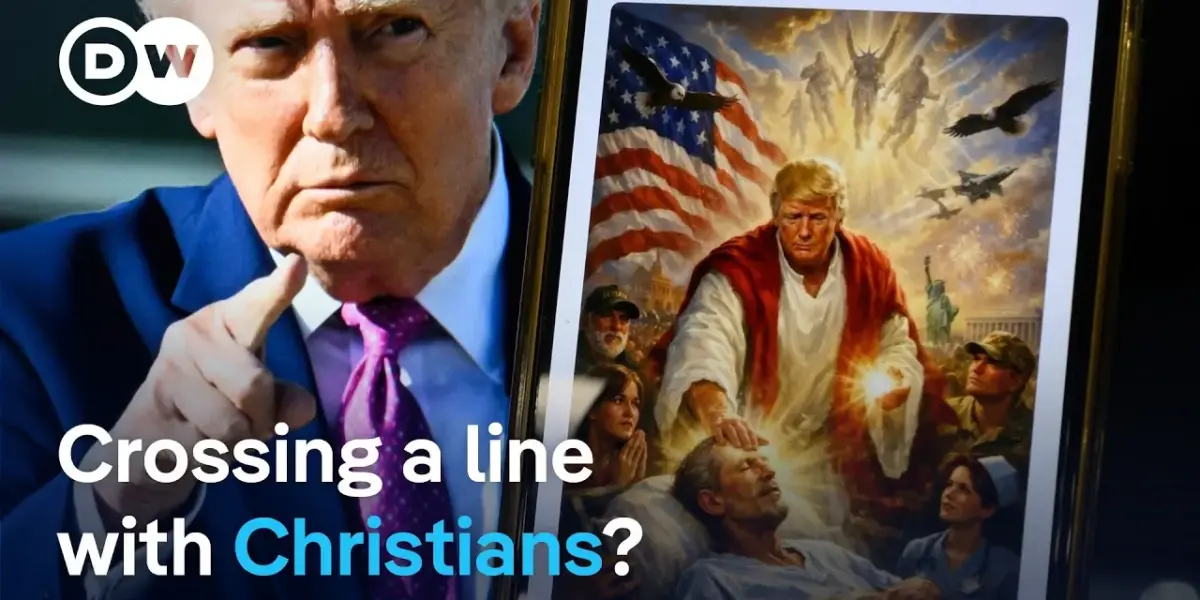
AI-Generated Jesus Image Sparks Backlash
A recent AI-generated image depicting former President Donald Trump in a Jesus-like manner has ignited controversy, drawing sharp criticism from Christians and leading to its swift deletion. The image, which showed Trump in robes with light emanating from his hands, was initially posted by Trump himself. He later claimed he believed it showed him as a doctor, a defense that has been widely dismissed.
Megan J. Clark, a professor of theology and religious studies at St. John’s University, expressed a sentiment of “#shocked not shocked” upon seeing the image. She found Trump’s explanation unconvincing, stating, “No one who’s ever been around doctors, sought medical attention, or even seen any images of the Red Cross would believe that it was him as a doctor.” Clark pointed out that the iconography, including the robes and light, are deeply rooted in Christian depictions of Jesus, making the religious intent clear.
Clark noted that the image serves as an example of how AI can combine various elements. “It only makes sense if it is a Jesus image because we’re coded and we’re brought up to see, especially with the white and the red and the light, and the laying on of hands, that these are all meant to be religious images,” she explained. The surrounding elements in the image, she added, feed into a “nationalistic Christian nationalism kind of vision that we’re getting out of this White House and this administration.”
The backlash was significant, with many in Trump’s base, including evangelical Christians, finding the image blasphemous rather than humorous. This reaction differed from a previous instance where Trump posted an image of himself as the Pope, which his base found amusing.
Trump’s War of Words with Pope Leo
The controversy over the AI image comes amid an ongoing public dispute between Donald Trump and Pope Leo. The conflict escalated when Pope Leo pushed back against rhetoric from the White House that suggested God was on America’s side in its conflict with Iran. During a military operation, Secretary of Defense HGth compared the rescue of an American pilot to the resurrection of Jesus, stating, “God is good and God wants to see people taken care of.”
Professor Clark explained that invoking God in political and military actions, particularly in the context of American exceptionalism, is deeply troubling to many globally. She believes Trump’s engagement with religion is often superficial, tied more to power and appealing to his supporters than genuine belief. “He surrounds himself every now and then with religious leaders, but if you look back from the campaign when he was asked what his favorite Bible verse was or kind of any sort of specific religious personal identity question, he pushes it off,” Clark said.
The rhetoric also raises concerns about Islamophobia and anti-Muslim sentiment, which Clark suggests can give the administration “permission to use the rhetoric.” She believes that beneath this lies a “deep arrogance” that assumes God is always on their side, leading to clashes with religious leaders like Pope Leo and previously Pope Francis. “There isn’t justification for portraying the United States as somehow holier than other countries or more important than other countries in God’s plan,” she stated.
Pope Leo responded to this rhetoric on Palm Sunday, emphasizing that Jesus is the “king of peace who rejects war” and does not listen to the prayers of those who wage war. He powerfully stated, “Your hands are full of blood.”
Attacks on the Pontiff
President Trump reacted strongly to Pope Leo’s statements, posting a series of criticisms. He called the Pope “weak on crime and terrible for foreign policy” and suggested the Pope should not think it’s okay for Iran to have nuclear weapons. Trump urged Pope Leo to “get his act together as pope, use common sense, stop catering to the radical left, and focus on being a great pope, not a politician.”
Professor Clark found this level of direct attack on a Pope unprecedented. “I’ve never seen anything like this,” she remarked. She highlighted that Popes throughout history, including Pope John Paul II and Pope Francis, have spoken out against military action and in favor of peace. Clark noted that while President George W. Bush disagreed with Pope John Paul II’s stance against the Iraq War, he never attacked the Pope personally. Instead, he tried to persuade him.
Clark also pointed out that Pope Leo, being American, speaks in colloquial English, making his messages more accessible and harder to dismiss for the American public and Catholics. This contrasts with previous Popes whose messages might have been perceived as less understanding of the United States due to language or cultural barriers. “With Leo, you can’t say he doesn’t understand the United States. He’s born and raised here,” Clark said.
Potential Alienation of Supporters
The question remains whether Trump’s public attacks on Pope Leo could alienate the Christian voters who form a significant part of his base. Professor Clark believes the backlash from the Jesus-like image did hurt Trump with white Christians, leading to the image’s removal. While Catholics have shown strong support for Trump, Clark sees “chips in that armor.”
She suggests that issues beyond the Pope, such as mass deportations and the treatment of migrants, are also causing moderate Christians to question their support. “When they see these ICE raids in their communities, they’re saying, ‘Wait, that’s not what I voted for,'” Clark explained. The unpopularity of the war itself, even among his supporters, further complicates the timing of Trump’s decision to attack Pope Leo. Clark concluded that these factors create “reasons for them to question him,” potentially weakening the “unquestioning support” he has previously enjoyed.
The article concludes by pondering whether this might be a misstep for Trump, suggesting that unlike previous controversies, this one might have lasting consequences. The interview with Professor Megan J. Clark provides a theological and political analysis of these events, exploring the intersection of faith, power, and public discourse in the United States.
Source: Trump as Jesus: Joke or blasphemy? | DW News (YouTube)

Related Articles
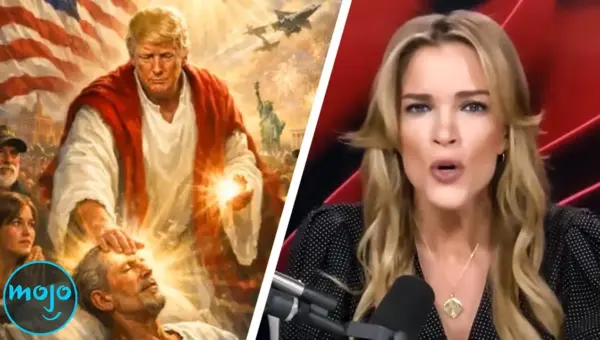
Trump’s Allies Rebel: Conservatives Slam President’s Policies
Prominent conservative figures and lawmakers are openly criticizing President Trump's policies in 2026, signaling a growing divide within the movement. From Candace Owens questioning the Iran conflict to Senator Rand Paul challenging trade policy, a wave of dissent is challenging the president's agenda.
Trump Threatens Fed Chair Powell, Faces Nomination Blockade
President Trump is threatening to fire Fed Chair Jerome Powell over a renovation probe, creating a political stalemate. Senator Tom Tillis is blocking Trump's nominee, Kevin Warsh, until the investigation concludes. Warsh himself faces scrutiny over his vast personal wealth, estimated between $135-226 million, raising conflict of interest concerns.

Trump’s Grip Weakens as Allies Falter, Democracy’s Future Hinges
Donald Trump's approval ratings are plummeting, even among his core supporters, signaling a potential collapse of the MAGA movement. Global events, like Hungary's shift to democracy, and domestic economic woes are fueling discontent and opening doors for broader political coalitions.