US Navy Blocks Iran Ports, Tightens Strait of Hormuz
The U.S. Navy has initiated a naval blockade on Iranian ports, turning back six oil tankers on its first day. Supported by over 10,000 personnel and a dozen warships, the operation aims to isolate Iran economically without disrupting global oil flows. The U.S. also seeks to ensure permanent freedom of navigation in the Strait of Hormuz.

US Navy Enforces Blockade on Iranian Ports
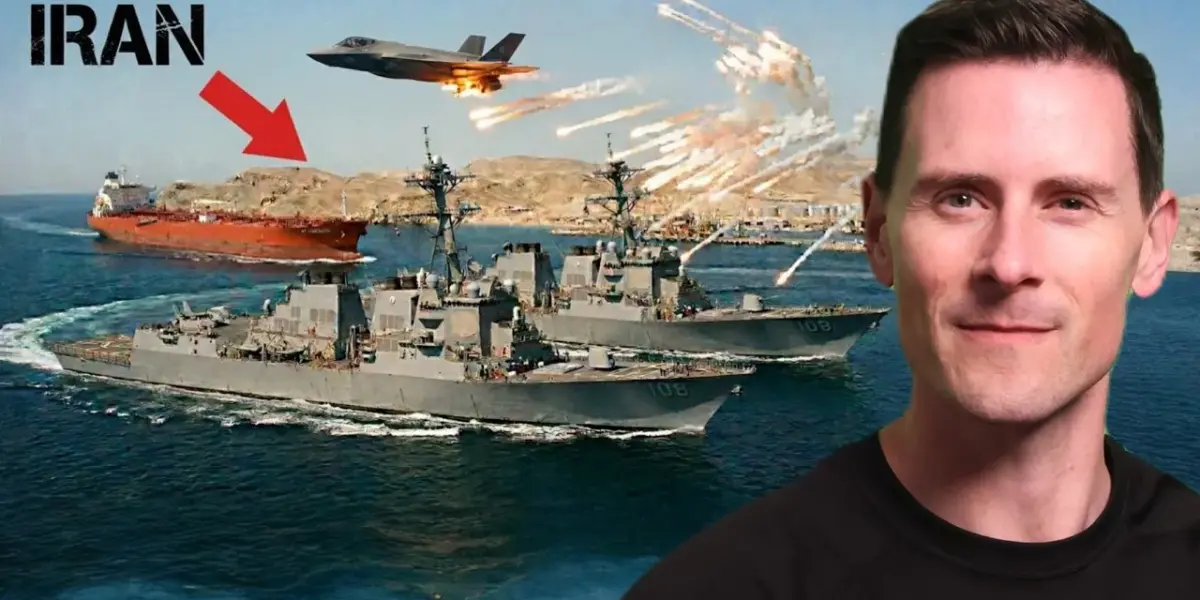
The United States Navy has initiated a naval blockade on Iranian ports, signaling a significant escalation in regional tensions. For three days, starting April 15, 2026, U.S. forces have been enforcing this measure in the Strait of Hormuz and the Gulf of Oman. The operation involves over 10,000 American personnel, including airmen, sailors, and marines, supported by more than a dozen warships.
On the first day alone, U.S. naval vessels turned back six Iranian-linked merchant ships, primarily oil tankers. These vessels were intercepted as they approached or departed Iranian ports. The U.S. Navy used radio warnings and its visible presence to compel the captains to alter course. No boardings or shots were fired, demonstrating a strategy of overwhelming naval power to enforce the blockade.
The U.S. Navy confirmed that the blockade is holding firm, with no vessels successfully breaching the declared zone. This operation is designed to be targeted, allowing non-Iranian commercial traffic to continue flowing. Over 20 ships have passed through normally, indicating the blockade is not a blanket shutdown of maritime activity.
Chabahar Port Targeted
The port of Chabahar, located south of the Strait of Hormuz, is reportedly a key point for Iran’s oil exports. In the past 12 hours, at least one ship attempting to leave Chabahar was turned back by the U.S. Navy. This strategic port is vital for Iran’s oil infrastructure, including a new pipeline designed to bypass the Strait of Hormuz.
Iran’s ports are considered dual-use, meaning they can support both civilian and military operations. This includes the potential use of fishing vessels or smaller craft for military purposes. Iran has been developing a pipeline to move oil along its coast, aiming to maintain revenue even if the Strait of Hormuz is closed to global traffic. The U.S. blockade directly targets this strategy by restricting movement in and out of Iranian ports.
Geopolitical Ramifications and China’s Role
President Trump has stated that the blockade is intended to permanently open the Strait of Hormuz. He also indicated that China has agreed not to send weapons to Iran as part of a broader understanding. This suggests a potential shift in China’s stance, possibly influenced by the effectiveness of the U.S. blockade and Iran’s perceived military weakness.
Reports suggest China may have reconsidered plans to supply Iran with advanced weaponry, such as man-portable air-defense systems (MANPADS) with tracking capabilities. This alignment, if confirmed, would significantly alter the regional balance of power. The U.S. is emphasizing its commitment to keeping the Strait of Hormuz open, using this as a key leverage point in its dealings with Iran and other nations.
Naval Assets and Capabilities
The U.S. naval presence includes the aircraft carrier USS Abraham Lincoln, which has been operating in the U.S. Central Command (CENTCOM) area of responsibility since late January 2026. The carrier provides persistent air power, surveillance, and strike capabilities through its air wing, which includes advanced drones and fighter jets like the F-35 and F-18.
Supporting the blockade are advanced Aegis-equipped ships armed with Tomahawk cruise missiles and SM-3 and SM-6 interceptors. These systems provide both long-range and close-in strike capabilities. The U.S. Navy also utilizes intelligence, surveillance, and reconnaissance (ISR) assets, including drones like the RQ-4 Global Hawk, to monitor Iranian ship movements and enhance the blockade’s effectiveness. The threat of submarine-launched torpedoes adds another layer of deterrence.
The USS George H.W. Bush carrier strike group is also en route to the Middle East, circling Africa to avoid potential chokepoints. Its arrival will further increase the pressure on Iran and augment the blockade’s enforcement capabilities.
Iran’s Response and Strategic Analysis
Iran has responded with strong rhetoric, denouncing the blockade as piracy and a violation of international law. An IRGC spokesperson threatened to introduce new methods of warfare, while a senior commander warned that if Iranian ports remain threatened, no port in the Persian Gulf or Sea of Oman will be safe, potentially extending the threat to the Red Sea.
However, the U.S. strategy appears to be a form of strategic chess. By blockading Iranian ports while keeping the Strait of Hormuz open for other nations, the U.S. aims to isolate Iran economically without disrupting global energy markets. This approach offers European nations alternatives to Iranian oil, potentially at a lower cost, thereby reducing Iran’s influence and bargaining power.
The U.S. military’s actions are designed to economically pressure the Iranian regime, potentially creating internal divisions within its leadership. The effectiveness of this blockade in forcing Iran to negotiate or altering its regional behavior remains a key question. The situation highlights the critical role of maritime security and energy independence in global geopolitics.
“The blockade is holding firm with no runners getting through to violate the rules. Over 10,000 US airmen, sailors, and marines backed by more than a dozen warships are executing this with the kind of precision and overwhelming superiority that defines the US Navy.” – Transcript
Source: U.S. Military Just Forced Iran Into a Corner They Can’t Escape (YouTube)

Related Articles


Oil Prices Surge to $91 Amid Geopolitical Tensions
Oil prices have surged to $91 a barrel, driven by disruptions in the Strait of Hormuz. This is leading to higher gas prices across the U.S., with California facing particularly steep costs. The situation is fueling debate on energy policy, exports, and the transition to renewable fuels.

China’s Iran Gambit: Deception or a New World Order?
President Trump claims China will stop sending weapons to Iran, but deep skepticism remains due to China's past support and use of spy satellites to aid Iran. This move could be a strategic ploy to weaken the US military.
China Aids Iran Amid US Conflict Escalation
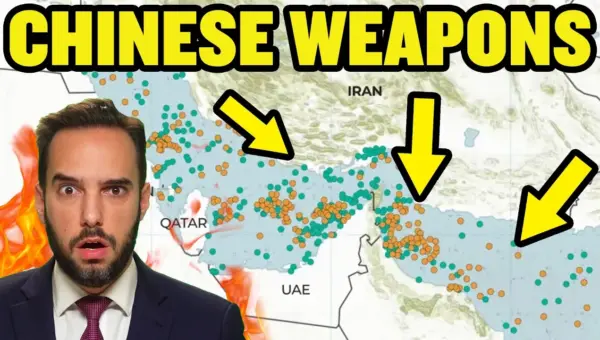
Recent intelligence suggests China is secretly supplying Iran with weapons like MANPADS and sharing critical intelligence, a significant escalation from its previous stance. This move, if confirmed, could deepen regional conflict and lead to severe US economic retaliation, while highlighting long-standing strategic ties between Beijing and Tehran.