Ukraine Vet Details 8 Years of Covert Resistance
A Ukrainian soldier details eight years of covert resistance against Russian occupation in his hometown. He describes the pervasive fear, the shift to underground communication, and the brutal realities of life under foreign control. The soldier now serves in the Ukrainian military, reflecting on his mission into Russia and the future of occupied territories.

Ukraine Vet Details 8 Years of Covert Resistance
A Ukrainian soldier, who spent eight years resisting Russian occupation in his hometown, has detailed the constant fear and paranoia of living under foreign control. Artem, originally from Kadiivka in Luhansk Oblast, described how life changed after Russian-backed forces occupied the city in 2014. He recounted his experiences of covertly supporting Ukraine from within, a dangerous endeavor that ultimately led him to join the Ukrainian military.
Life Under Occupation Begins
Artem was only 16 when Kadiivka, then known as Stakhanov, fell under occupation in 2014. He recalled seeing both Ukrainian and Russian flags displayed in public spaces, a confusing sight for a young resident of Ukraine. The situation escalated from pro-Ukrainian activism to open confrontation. After pro-Ukrainian activists faced gunfire for raising a flag, public actions became impossible, forcing them underground.
The city, with a population of about 75,000, was small enough that residents knew each other. This familiarity meant pro-Russian activists knew the pro-Ukrainian ones personally. However, the arrival of armed militants and Russian military vehicles in July 2014 marked a significant escalation. Artem felt compelled to show that not all residents supported the occupation, aiming to prove to the rest of Ukraine that pro-Ukrainian sentiment remained.
Underground Resistance via Social Media
Unable to use Russian-controlled platforms like VKontakte, Artem turned to Twitter. This platform became an unlikely space for him and others to express their views and share information. Initially, he focused on everyday issues like empty store shelves and water problems. He documented these issues with photos, aiming to show the realities of life under occupation.
Later, Artem began reporting on combat actions. Neighboring cities had been liberated by Ukrainian forces, and Russian forces retreated into Kadiivka. This created a difficult situation, as the Russian forces were somewhat encircled and unlikely to withdraw easily. The city saw a massive influx of military equipment and personnel, transforming the atmosphere.
The Human Cost of Occupation
Artem described the occupying forces as looking like “typical terrorists,” heavily armed and moving with their families. He emphasized that ordinary residents of Kadiivka, who knew each other, were not the ones driving the occupation. He pointed to his own history of displaying pro-Ukrainian symbols, noting that before Russian intervention, relations remained neighborly despite differing views.
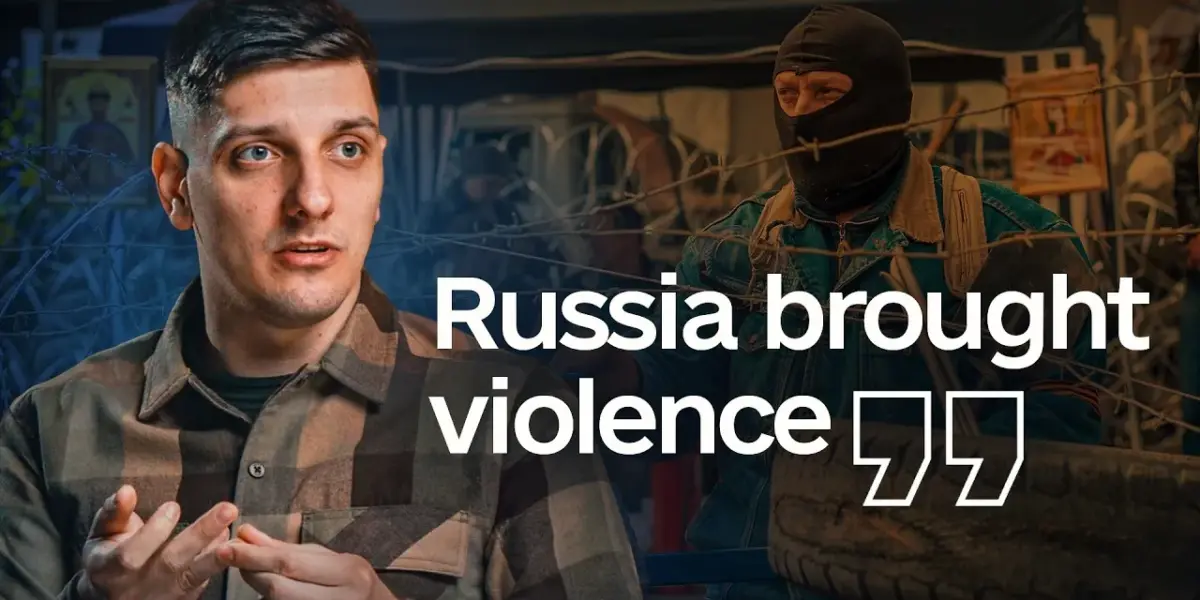
“Russia brought violence,” Artem stated. He believes that without Russian intervention, Luhansk residents would not have turned guns on each other. The occupation, he explained, created a situation where many men joined the Russian-backed military, the so-called Second Army Corps, simply to earn a living. Mines and enterprises had shut down, leaving few job opportunities. Earning 15,000 rubles in the army was a stark contrast to the 2,000 rubles offered for other jobs. Many joined without initial hatred, seeking income to support their families and unwilling to leave their homes.
Russia’s Hybrid Warfare Strategy
Artem highlighted Russia’s strategy of pitting Ukrainians against each other, using violence to bind them and seize territory. He noted that Russia aimed to replace the Ukrainian population with Russians, citing Crimea as an example. New specialists like teachers were brought in, and many Russian contract soldiers who stayed after 2014-2015 also became residents, altering the demographic landscape.
He observed that many Russians who moved to the occupied territories felt empowered. In Russia, they might have been ordinary citizens, but in the occupied areas, they often held higher-paying military positions, attracting local attention and establishing roots. This gradual influx and integration, Artem suggested, served to solidify Russian control.
Living with Paranoia and Risk
Artem attributed his ability to evade detection for eight years to a combination of luck and the incompetence of local special services. He described constant paranoia, fearing arrest with every sound of footsteps on the stairs. Threats like “We know that you work for Ukraine. Stop or we will put a bag over your head” were commonplace, creating an unbearable psychological burden.
His parents knew of his pro-Ukrainian stance but urged him to be cautious. After his mother’s death, his father expressed concern, telling him, “Son, those big guys will eat you up.” Artem believes his parents may have suspected his deeper involvement but perhaps couldn’t fully grasp the extent of his actions or the risks involved.
Leaving and Joining the Fight
After the deaths of his parents in 2020 and 2021, Artem felt he had little reason to stay. A friend serving in the Azov Regiment urged him to leave, securing him a place in Kyiv. He realized that if he had stayed longer, he likely would have been forcibly mobilized into the Russian army and potentially killed as an occupier. He left on December 6, 2021, driven by the news of forced mobilization in occupied territories.
Increased Repression Post-2022
Following Russia’s full-scale invasion in 2022, repression in occupied territories intensified. Russia replaced local law enforcement with Russian Federation employees and increased the staff of special services. Control over the population tightened, especially as Ukrainian forces began attacking occupied areas, suggesting a source of real-time intelligence.
“Filtration activities” became common. Settlements were surrounded, and mobile devices were checked for “extremist materials” or evidence of supporting Ukrainian forces. Artem expressed strong disapproval of public acts of resistance, like posting photos online, calling them irrational. He argued that such actions, without changing tactics, only led to the arrest or death of Ukrainians and jeopardized those who could provide valuable intelligence.
He explained that modern technology, like smartphones and security cameras, makes it easy for Russian intelligence to identify individuals involved in overt resistance. “Any open source intelligence gathering professional… can determine the time of the photo, the location and the cameras will track who did it,” he stated.
The Future of Resistance
Artem believes coordinated resistance movements are impossible under current conditions, as they put too many people at risk. He sees only individuals acting alone, providing intelligence or carrying out sabotage. He advises those in occupied territories to prioritize survival and await liberation. For those willing to undertake partisan actions, he stresses that transferring intelligence is the most effective form of resistance, far more impactful than one-off sabotage acts like burning conscription offices.
Moral Satisfaction on Russian Soil
Artem recounted a mission into Russia’s Kursk Oblast, which he described as a “moral satisfaction” and a “clear and just response.” Entering Russian territory with arms, he felt it was a way to retaliate for the occupation of his city. The operation targeted areas with a high concentration of Russian law enforcement, including FSB employees, making it a personal act of revenge.
He witnessed Russian forces fleeing, abandoning their homes and civilians, which he saw as proof that Russia did not prioritize the well-being of people in Donbas or even its own citizens. Unlike the Russian occupation, Ukrainian forces aimed to show locals they were not occupiers, offering aid and emphasizing they did not seek to hold the territory permanently. This contrasted sharply with the Russian narrative of permanent annexation and hostility.
While the mission provided a sense of retribution for the destruction of his life, Artem acknowledged the lasting psychological impact. He remains on an international wanted list and lives with the awareness of potential future repercussions. He stated, “For me, it was morally important to enter their land with a gun in my hands and pay back for the actions that they did.”
Looking Ahead
Artem expressed a desire to see Ukrainian flags fly over his hometown but admitted it seemed unlikely in the near future. He understands that the actions of the past eight years have made it impossible for him to live in his city as it once was. For him, the ultimate goal remains justice and the return of his city to Ukraine.
Source: How one Ukrainian resisted Russian occupation for eight years (YouTube)

Related Articles

Germany, Ukraine Deepen Defense Ties, Boost Air Power
Ukraine and Germany have signed a major defense pact, boosting air defense systems and joint drone production. This strategic partnership aims to enhance European security amidst ongoing Russian strikes on Ukrainian cities. Diplomatic talks continue between Russia and China, while the U.S. reports progress in Iran negotiations.


EU Parliament Debates Mideast Conflicts, Iran Sanctions, and Ukraine Aid
EU Parliament members convened to address escalating global conflicts, focusing on the war in Iran, tensions at the Strait of Hormuz, and support for Ukraine. Discussions also covered European security concerns regarding Russia and the potential for enhanced cooperation with Gulf countries.

Ukraine, Norway Forge Strategic Defense Partnership
Ukraine and Norway have signed a declaration for enhanced defense and security cooperation, solidifying a strategic partnership. The agreement focuses on drone development, joint production, and air defense support, aiming to leverage Ukraine's combat experience for mutual benefit.