Supreme Court’s Legitimacy Tested: A Look Inside
The Supreme Court is increasingly seen as the "last branch standing" to resolve national disputes, a role that strains its legitimacy. Author Sarah Isker's new book, 'Last Branch Standing,' examines the court's internal dynamics and its complex relationship with public opinion and other branches of government.

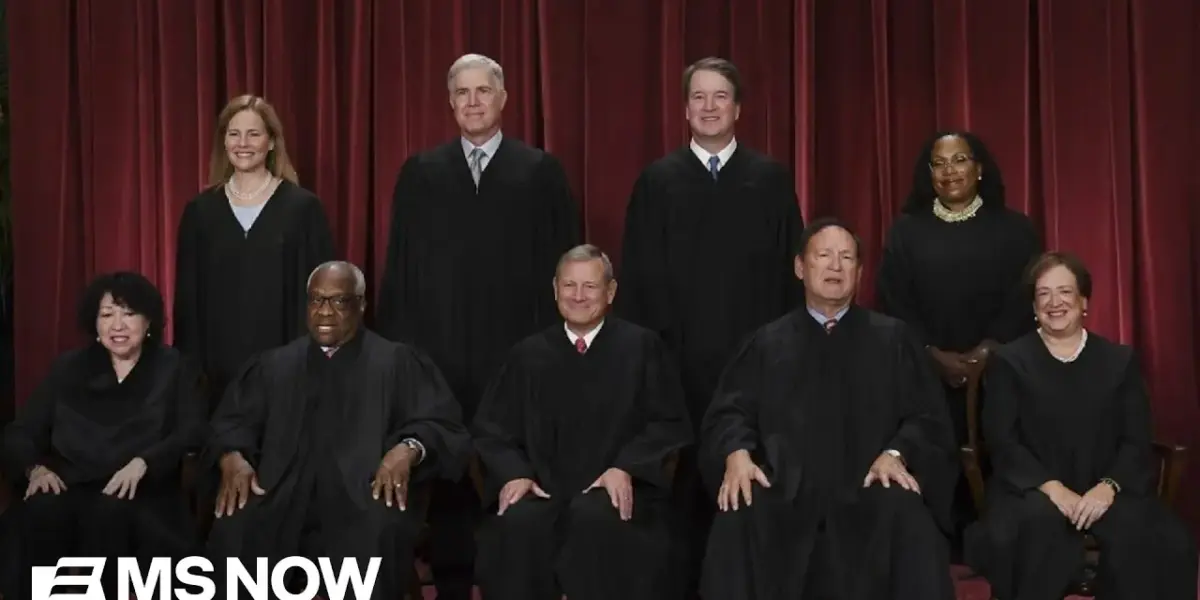
Supreme Court Faces Legitimacy Crisis Amid Political Pressure
The Supreme Court finds itself at a critical juncture, often seen as the final arbiter of deeply divisive cultural issues. This perception, however, places immense pressure on a branch of government not designed for direct public accountability. As the nation grapples with complex policy debates, many believe the court is increasingly blamed for problems that Congress and the presidency have failed to address.
The “Last Branch Standing” Theory
Sarah Isker, author of the new book “Last Branch Standing: A Potentially Surprising, Occasionally Witty Journey Inside Today’s Supreme Court,” explains this phenomenon. She argues that when Congress avoids making tough decisions and the executive branch rules by decree, the Supreme Court becomes the default decision-maker. This forces justices to rule on matters like election integrity or border policy, issues that ideally should be handled by lawmakers.
“We blame them instead of blaming Congress for not doing its job and the presidency for ruling by executive order.”
This situation creates a perception that the court is the ultimate authority on contentious topics, yet it remains insulated from the democratic process. Isker’s book explores this dynamic, suggesting that the court’s role as the “last branch standing” contributes to public frustration when its decisions don’t align with popular opinion.
Decoding the Court’s Internal Dynamics
Contrary to a simple six-to-three conservative-liberal split, Isker proposes a more nuanced view of the court’s voting patterns. She describes the justices as falling into three main groups: the swing votes, often including Chief Justice John Roberts and Justice Brett Kavanaugh; the liberal bloc of Justices Sonia Sotomayor, Elena Kagan, and Ketanji Brown Jackson; and a group she dubs the “conservative honey badgers” – Justices Clarence Thomas, Samuel Alito, and Neil Gorsuch.
This internal structure means that decisions aren’t always along strict ideological lines. For instance, President Trump’s policies have not always received unanimous conservative support. Isker notes that the court has heard cases on issues like tariffs and the National Guard, where the outcome wasn’t a foregone conclusion based solely on ideology.
Chief Justice Roberts’ Influence
Chief Justice John Roberts plays a particularly significant role, not just as a deciding vote but also as the one who assigns who writes the majority opinion. Isker highlights his deep commitment to the institution of the court, often seeking unanimity. This desire for consensus can lead to more moderate opinions and a higher number of unanimous or near-unanimous decisions, a strategy she describes as potentially orchestrated by figures like Justice Kagan behind the scenes.
“He is an institutionalist, so he is going to be more likely to take that paragraph out if it means getting the case,” Isker explains, referring to the chief justice’s efforts to find common ground.
Justices and Public Opinion
While the justices pride themselves on independence from political pressures, Isker acknowledges they are not entirely oblivious to public sentiment. She notes that some justices are aware of the court’s approval ratings and even monitor public discussion, including on social media. However, their primary duty is to interpret the law and the Constitution, even when it runs counter to popular opinion.
The justices see themselves as guardians of minority rights, a role exemplified by historical figures like Justice John Marshall Harlan. Harlan famously dissented in *Plessy v. Ferguson*, a decision later overturned, reminding them that their duty is to uphold justice, not necessarily to reflect the prevailing political winds of the moment.
Looking Ahead
As the Supreme Court continues to navigate complex legal and social issues, its legitimacy in the eyes of the public remains a key concern. The dynamics within the court, the influence of its leadership, and its relationship with the other branches of government will all be crucial factors in shaping its public standing in the years to come. The ongoing debate over judicial appointments and the court’s role in American life suggests that this is a conversation that will continue to evolve.
Source: 'Last Branch Standing' looks at how to preserve the Supreme Court's legitimacy (YouTube)

Related Articles


US Imposes Iran Port Blockade; Peace Talks Loom Amid Tensions
U.S. forces have fully implemented a blockade on Iranian ports, halting trade amid escalating Middle East tensions. Peace talks between the U.S. and Iran are reportedly on the horizon, though Iran's nuclear program remains a key obstacle. Meanwhile, historic direct talks between Israel and Lebanon took place in Washington, marking a significant diplomatic step.


Trump’s Late-Night Posts Spark Stability Concerns
Donald Trump's recent late-night social media activity, featuring attacks on historical figures and political rivals, has sparked renewed debate about his stability. This analysis explores the erratic rhetoric, the role of allies, and the broader context of global and domestic anxieties.


Trump’s Erratic Posts Spark Calls for 25th Amendment
Unusual late-night posts by Donald Trump have sparked widespread debate about his fitness for office, leading to calls for invoking the 25th Amendment. Congress is now considering legislation to establish a commission to assess presidential capacity, reflecting deep concerns both domestically and internationally.