UK Defense Spending Trails 1980s Levels in Value
Matthew Savill of RUSI warns that the UK's current defense spending, though similar in nominal terms to the 1980s, yields a poorer return due to factors like inflation and procurement inefficiencies. Delays in implementing the Strategic Defense Review and the Defense Investment Plan have raised concerns about the UK's military readiness and future capabilities.

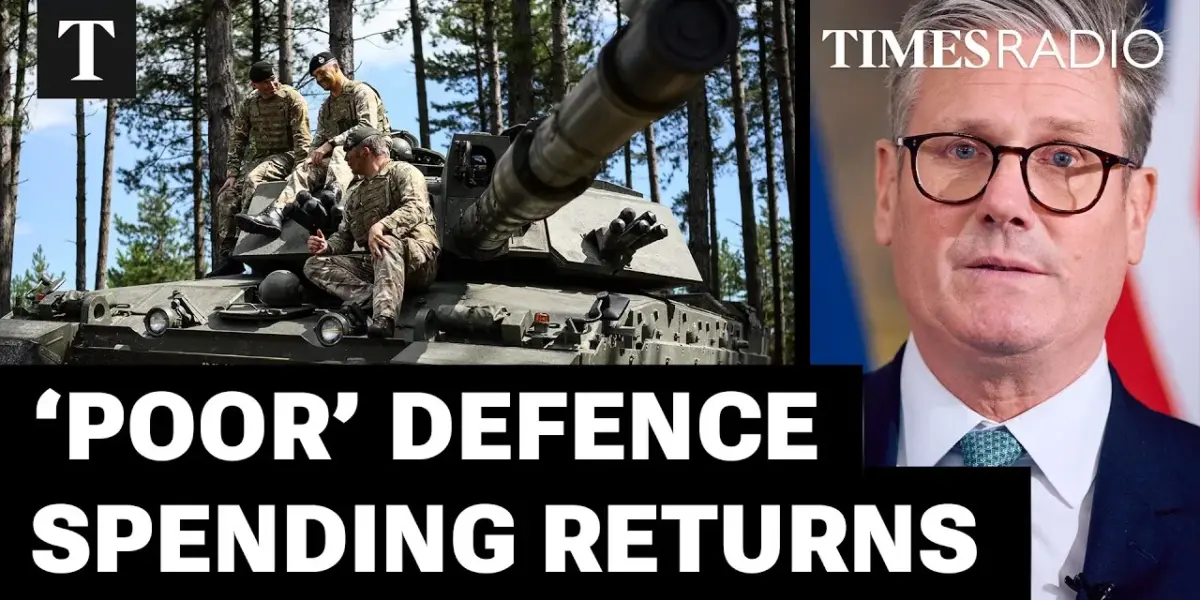
UK Defense Spending Falls Short of 1980s Value
Despite spending similar amounts of money on defense as in the 1980s, the United Kingdom is receiving less value for its investment today. This is according to Matthew Savill, director of military sciences at RUSI, who spoke about the issues surrounding the UK’s defense budget. Savill highlighted that current defense spending, when adjusted for inflation, does not match the purchasing power of decades past, leading to a poorer return on investment.
Strategic Defense Review Lacks Clear Path Forward
The Strategic Defense Review (SDR) aimed to modernize the UK’s armed forces to meet modern threats. However, it has been criticized for not clearly outlining the costs or a timeline for implementation. Savill noted that the review set a target of spending 2.5% of GDP on defense but lacked specific financial figures or a timetable for equipment and capability upgrades.
The Defense Investment Plan (DIP) was intended to address these gaps. It was supposed to detail how additional government funding would be spent over a decade to reach the 2.5% to 3% GDP target. The public release of this plan has been delayed, leaving uncertainty about the pace of military transformation and where the government plans to focus its investments.
Concerns Over Defense Procurement and Funding
Savill pointed to several problems within the defense procurement system. One major issue is defense inflation, which includes the impact of foreign exchange rates when purchasing equipment from overseas. Another challenge is the frequent changes made to the procurement system itself, which often shifts problems rather than solving them.
He explained that delaying projects often leads to increased long-term costs. The government then faces the difficult decision of cutting spending mid-year to manage budgets. While new initiatives like the National Armaments Director are in place to improve efficiency, their effectiveness remains to be seen.
Debate on Funding Mechanisms
The discussion around increasing defense spending has led to various funding proposals. One idea is the issuance of defense bonds, similar to war bonds from previous eras. These bonds would allow the public to invest in defense, receiving their money back with interest at a later date.
Savill expressed caution about the long-term financial implications of such bonds. He questioned who would ultimately pay the bill when these bonds mature, particularly if the primary problem is near-term spending. Treasury officials share this concern about the future cost burden.
Hypothecated Taxes and Public Opinion
Another suggestion is a hypothecated tax, where a specific tax is levied and dedicated solely to defense spending. However, public opinion on increasing taxes for defense is divided. Polling suggests that while the public generally supports the armed forces, there is confusion about their specific roles and the immediate need for increased funding.
There is no broad public agreement on how additional defense funds should be raised. Conservative voters might suggest cuts to welfare, while Labour and Liberal Democrat supporters may not share this view. This lack of consensus makes it challenging to implement new tax-funded defense initiatives.
International Relations and UK Capabilities
The ongoing conflict in Ukraine has also highlighted deficiencies in the UK’s military capabilities. Lord George Robertson, former Labour Defense Secretary and NATO Secretary General, warned that the UK is in peril due to what he described as corrosive complacency from the government regarding defense.
Savill noted that Lord Robertson’s intervention sparked significant debate, partly due to his prominent past roles. His concerns align with those of other reviewers who have expressed worry about the slow implementation of the SDR. The delay in the Defense Investment Plan further fueled these apprehensions.
Future Outlook for Defense Spending
The UK’s defense budget currently stands at around 65 billion pounds annually, making it the third largest in NATO. However, this figure does not account for operational costs or support for Ukraine. There is a projected funding gap of nearly 30 billion pounds over several years, though the government disputes this figure, arguing it depends on how spending is defined.
The path forward for UK defense spending remains uncertain. Key decisions regarding the Defense Investment Plan and potential new funding mechanisms will be crucial in determining the UK’s future military capabilities and its position on the global stage. The effectiveness of new procurement reforms will also be closely watched.
Source: Current UK Defence Spending Matches 1980s Levels But Delivers ‘Poorer Return’ Now | Matthew Savill (YouTube)

Related Articles


Canada’s Arrow: A Sovereignty Wound That Won’t Heal
The Avro Arrow's cancellation in 1959 remains a pivotal, unresolved moment in Canadian defense history. Far from a simple procurement failure, its legacy continues to shape debates on sovereignty and dependence, particularly concerning the current F-35 fighter jet acquisition. The question isn't just about aircraft, but about who controls Canada's skies.


Iran War Hits US Economy: Tips Tax Cut Offers Relief
President Trump's 'no tax on tips' initiative aims to ease financial burdens on workers amid global economic pressures from the Iran conflict. While the wealthy see gains, many Americans struggle with inflation and high interest rates. Experts advise living within means and reducing debt to navigate these challenging times.

Ex-Judge Calls Thomas Speech ‘Most Important’ Wrongly Given
Former federal judge J. Michael Luttig has strongly criticized Supreme Court Justice Clarence Thomas's recent speech, calling it the "most important speech that should never have been given." Luttig argues the remarks promote a flawed ideology detrimental to true conservatism and constitutional principles. The speech, he contends, lacks doctrinal and constitutional grounding and mischaracterizes American history.