UK Conscription Debate: ‘Wrong People’ for Modern Warfare?
As global instability rises, the UK faces a debate on whether conscription is needed for modern warfare. Experts are divided, with some seeing it as crucial for societal resilience and others fearing it would recruit unwilling individuals, potentially weakening the armed forces. The discussion highlights a clash between historical approaches and the realities of today's complex security landscape.

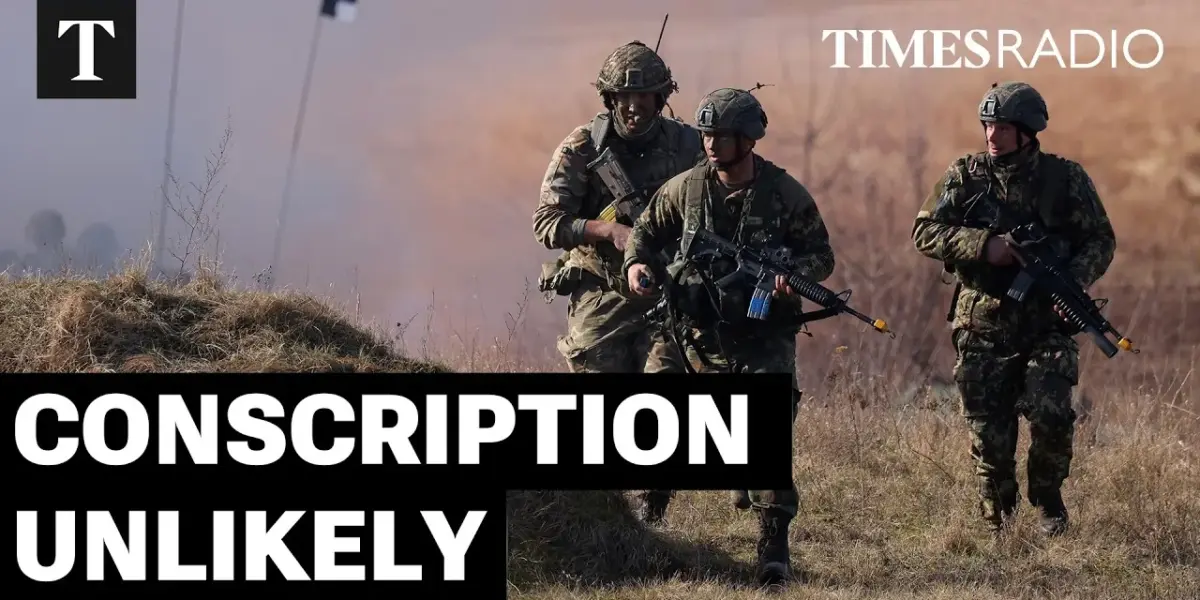
UK Conscription Debate Ignites Over Modern Warfare Needs
The United Kingdom’s defense strategy is facing renewed scrutiny as a debate emerges over whether conscription could bolster its forces for the complex threats of modern warfare. With global instability on the rise, experts are questioning if the current volunteer-only model can adequately prepare the nation for future challenges. The discussion highlights a divide between those who see national service as a vital tool for societal resilience and those who fear it would recruit unwilling participants, ultimately weakening the armed forces.
A World in Flux Demands New Defense Thinking
Former Chair of the Defense Select Committee, Tobias Ellwood, argues that the international landscape has fundamentally shifted, demanding a reevaluation of national security. He points to recent security conferences where leaders have openly acknowledged a decline in global order and the dawn of a dangerous new era. Ellwood has long advocated for a form of national service, not just to increase military numbers, but to build broader societal resilience. He believes this service could encompass vital areas like critical infrastructure protection, cyber defense, and emergency response, utilizing the skills of the younger generation.
“Our global order is dying, that we’ve entered a new and dangerous era of insecurity, and we need to prepare for the storms ahead,” Ellwood stated, emphasizing the vulnerability of national infrastructure to attacks. He suggests that countries like Finland and Sweden, which already have forms of national service, possess a latent capability to respond to crises. This approach, he argues, could act as a deterrent and prepare communities for scenarios like extended blackouts without power or internet.
Conscription: A Modern Solution or Relic of the Past?
Matt Baldwin, a former tank commander and author, expresses admiration for the goal of strengthening defenses but strongly disagrees that conscription is the answer. He likens the idea to a temporary fix, a “stick in plaster,” that belongs to a bygone era, similar to ration cards. Baldwin believes that forcing individuals into military service against their will would result in recruiting the “wrong kind of people.”
“Conscription is one of those things. It’s a great idea at first glance, but unfortunately, is not going to be the way to do this,” Baldwin explained. He highlighted a cultural shift, noting that in the past, conscription often aligned with nationalistic sentiments like “king and country.” Today, however, he argues that people are more independent thinkers, heavily influenced by online information, making it difficult to compel them into service. He warned that dragging people into the armed forces would create resentment, leading to a less effective military and potential public disorder.
The Cultural Divide and the Volunteer Force
The debate touches on a significant cultural point: the nature of modern society and individual choice. Baldwin raised concerns about a potential “national identity crisis” and the public’s reliance on the internet for information. He questioned how a government narrative could effectively persuade a population that might already distrust official information or even hold unconventional beliefs, such as the Earth being flat.
Baldwin also pointed out the practical challenges. If individuals are forced to join, they might object on religious or conscientious grounds, leading to legal challenges and public unrest. “When you sign up, you do so knowing that you are giving up some of your civil liberties. It’s part of the quid pro quo that you expect. But when you drag people in, you will end up probably with public disorder the likes of which we haven’t seen since Brexit,” he cautioned.
Rethinking National Service for a New Generation
Ellwood countered the historical comparisons, suggesting that current proposals for national service are not simply a return to “Dad’s Army.” He acknowledged that past national service did foster a sense of shared experience and responsibility among young men. However, he agreed that the current generation is different, more “freethinking” and equipped with instant access to information, which can lead to skepticism.
Despite these challenges, Ellwood remains convinced that a modern form of national service is necessary. He believes that while a portion might serve in uniform, a larger segment could contribute through specialized skills in areas like cybersecurity, drone operation, and countering disinformation. He cited the growing international trend, noting that countries like Poland, Germany, France, and the United States are also engaging in conversations about strengthening their national defense capabilities. Ellwood stressed that approximately one-third of those signing up for a modern national service might be in uniform, with the rest applying their skills to other critical defense and resilience areas.
Looking Ahead: A Necessary Conversation
The discussion between Ellwood and Baldwin reveals a fundamental disagreement on the feasibility and desirability of conscription in the UK today. While the need to adapt defense strategies to a more dangerous world is widely acknowledged, the path forward remains contested. As global tensions continue to rise, the debate over national service is likely to persist, prompting further examination of how the UK can best ensure its security and resilience in the face of evolving threats.
Source: Army Conscription Would Attract The ‘Wrong Kind Of People’ | Tank Commander (YouTube)

Related Articles


Draft Registration Sparking Fears of War
A new law automatically registers men aged 18-25 for the military draft, sparking fears of a return to conscription. This change, coupled with rising global tensions and aggressive presidential rhetoric, raises questions about public willingness to engage in future conflicts and the government's use of citizen data.

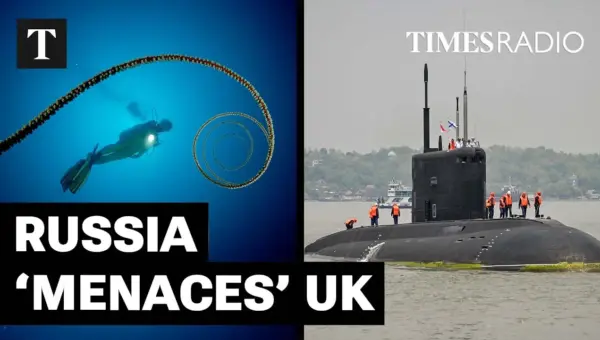
Russia Submarine Spying Threatens UK’s Critical Underwater Links
Three Russian submarines attempted to spy on UK underwater cables and pipelines, the Defense Secretary revealed. The Royal Navy tracked the vessels, sending a clear message that such actions will not be tolerated. This incident is seen as part of Russia's strategy to pressure Britain over its support for Ukraine.

US Draft Registration System Gets Digital Upgrade
Starting in December, men in the U.S. will be automatically registered for the military draft pool, a move aimed at saving money and streamlining the Selective Service System. This change simplifies registration but does not signal an immediate return to the draft itself, which requires Congressional action.