Trump’s Endorsement Backfires as Orban Suffers Historic Election Defeat
Victor Orban has been ousted as Hungary's Prime Minister after 16 years in power, following a landslide victory for opposition leader Peter Magyar. Donald Trump's strong endorsement of Orban failed to prevent the defeat, signaling a potential shift in his influence on European politics.

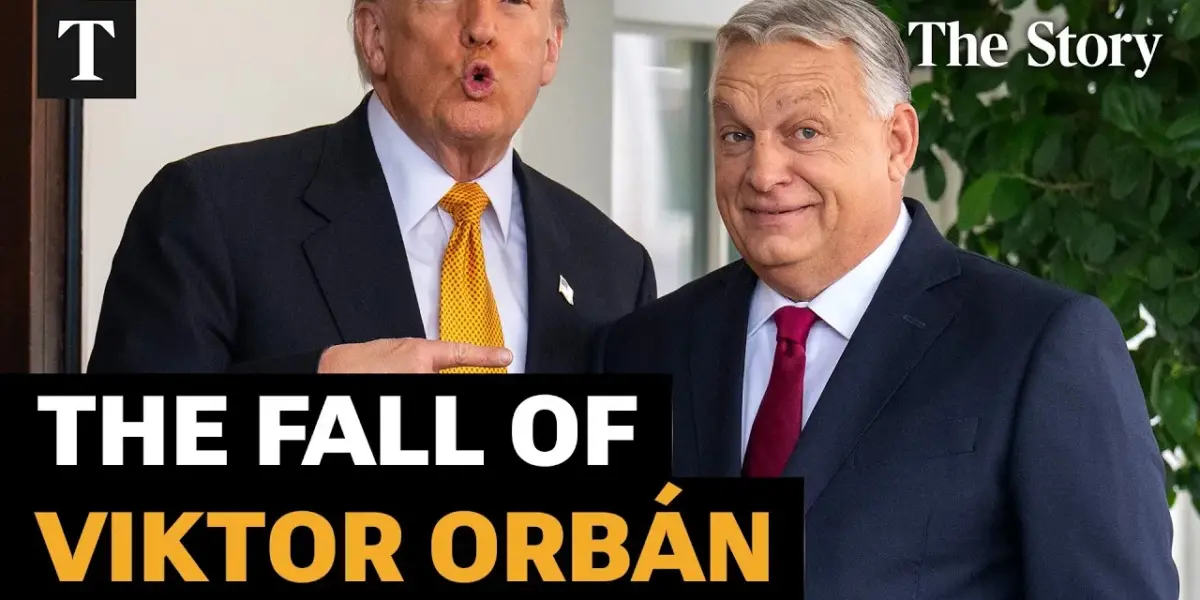
Hungary Votes Out Long-Time Leader Victor Orban
Budapest, Hungary – In a stunning electoral upset, Hungarian voters have ousted far-right Prime Minister Victor Orban after 16 years in power. A record turnout saw the opposition coalition, led by Peter Magyar and his TISA party, secure a decisive victory, winning 53% of the vote and 138 out of 199 seats in the National Assembly. This landslide win not only marks a significant blow to Orban’s grip on power but also raises questions about the fading influence of former U.S. President Donald Trump in European politics.
Trump’s Bold Support Proves Ineffective
Donald Trump had publicly and vociferously backed Orban throughout the election campaign. He lauded Orban as a “fantastic man” and praised him for preventing the “storming” and “invasion” of Hungary. Trump even sent Vice President J.D. Vance to Budapest to campaign alongside Orban, emphasizing a shared fight for freedom and sovereignty. “You’re fighting for your freedom. You’re fighting for your sovereignty. And I am here because President Trump and I wish for your success,” Vance stated at a rally. However, these high-profile endorsements and interventions appear to have backfired, failing to sway Hungarian voters and potentially even contributing to Orban’s downfall.
Peter Magyar: The New Force in Hungarian Politics
Peter Magyar, the leader of the TISA party, emerged as a formidable challenger to Orban’s long-standing rule. Described as a former Fidesz party official, Magyar has a diverse background, including diplomatic work and experience in state-owned banking. His political career gained significant momentum after he left Orban’s Fidesz party following a scandal involving a presidential pardon for a convicted pedophile accomplice. Magyar then revitalized the previously insignificant TISA party, transforming it into a serious political force in less than two years. His campaign focused on tackling government corruption and addressing economic stagnation, with living standards eroding and a shortage of jobs plaguing the nation.
Economic Woes and Corruption Fuel Opposition Victory
Oliver Moody, Berlin correspondent for The Times and The Sunday Times, explained that Magyar’s victory was fueled by two key factors. Firstly, Hungary has experienced virtually no real economic growth in recent years, leading to a decline in living standards. Magyar effectively framed this as a consequence of government corruption, presenting himself as someone who knew the “skeletons in the closet.” Secondly, Magyar’s personal charisma played a significant role. The campaign also highlighted divisions over foreign policy, particularly Orban’s stance on Russia and Ukraine. Orban’s decision to block a crucial EU loan to Ukraine and leaked audio recordings suggesting a subservient relationship with Russian officials were instrumentalized by Magyar’s campaign to portray Orban and his administration as foreign stooges.
Orban’s Future and the Legacy of “Orbanism”
Despite his defeat, Victor Orban, aged 62, has cryptically hinted at a return to politics from the opposition benches. Having previously served as prime minister from 1998 to 2002, a comeback is considered plausible. His political ideology, often termed “Orbanism,” has provided a home for conservative thinkers and served as a model for right-wing parties seeking to hold onto power. This ideology is expected to persist in Hungary and potentially across Europe and beyond. The new administration under Magyar faces the significant task of dismantling the structures Orban established over 16 years, including addressing corruption and restoring press freedom.
Hungary’s Path Back to Europe and the EU’s Response
Peter Magyar has pledged to return Hungary to its place within Europe and normalize relations with the European Union. A key immediate step will be lifting Hungary’s veto on a 90 billion euro EU loan to Ukraine, a move that could unlock up to 35 billion euros in frozen EU funds for Hungary. European leaders, including European Commission President Ursula von der Leyen, German Chancellor Olaf Scholz, and French President Emmanuel Macron, have welcomed the election results, viewing it as an opportunity for a more cohesive and sovereign Europe. While Magyar is described as a conservative pragmatist rather than a liberal, European leaders are hopeful he will be a more constructive partner than Orban.
Trump’s Strategy Falters Amidst Global Instability
The failure of Trump’s endorsement highlights a growing trend among European right-wing parties to distance themselves from the former U.S. President. Factors such as the war in Ukraine, the ensuing energy crisis, and concerns about foreign interference have made close association with Trump politically toxic. Parties across Europe, from France’s National Rally to Germany’s AfD and Italy’s Brothers of Italy, are showing increased caution. The “MAGA” ideology, while still overlapping with some European right-wing parties, is now seen as a liability, particularly concerning foreign and security policy. The election of Peter Magyar in Hungary signals a potential shift away from the close alignment with Trump’s vision of Western politics.
Source: Did Trump Lose Viktor Orban His Election? (YouTube)

Related Articles

Trump’s Core Voters Flee: New Poll Shows Steep Decline
A recent poll reveals a significant drop in Donald Trump's support, especially among white, non-college-educated voters, his traditional base. This decline, from a strong positive to a negative rating, signals a potential shift in the Republican electorate. The numbers suggest widespread disapproval across all demographics and key issues like the economy.

Trump’s AI Image Sparks Outrage: Blasphemy, Not Humor, Critics Say
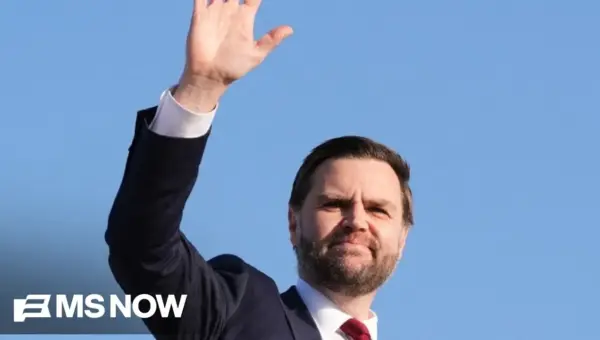
Former President Donald Trump's sharing of an AI-generated image depicting himself as Jesus Christ has ignited a firestorm of criticism, with many labeling it blasphemous rather than humorous. Despite explanations that it was meant as a joke or a portrayal of him as a doctor, the image has drawn condemnation from various quarters, including prominent conservative voices and political analysts. The controversy raises questions about religious sensitivities, political judgment, and the potential impact on Trump's support base.

Trump’s Mind Faltering: Is the GOP Ready to Face It?
Concerns about Donald Trump's mental sharpness are growing, with even some supporters reportedly finding it difficult to ignore. While the White House insists on his high energy and acuity, public observations and internal MAGA discussions suggest a different narrative is emerging. This raises important questions about leadership fitness and political strategy.