Trump’s Risky Blockade & Divine Images: A Troubled Presidency
President Trump's naval blockade of Iran is a high-risk gamble, potentially escalating regional conflict. Meanwhile, controversial AI imagery and legal battles reveal fractures in his support base and a strained relationship with the media.

Trump’s Risky Blockade & Divine Images: A Troubled Presidency
The waters around the Strait of Hormuz have become a flashpoint, with President Trump orchestrating a naval blockade against Iran. This move, less than a day old, is already raising alarms among military experts. They warn it’s a high-risk operation that could easily lead to further conflict in a volatile region. The goal, it seems, is to pressure Iran back to the negotiating table after recent talks in Pakistan failed. Some officials believe Iran had unrealistic demands, holding too many cards. This blockade is seen as an attempt to apply maximum pressure. However, the operation itself is complex and far from home. Identifying, hailing, and potentially boarding ships is a dangerous task. It risks drawing the U.S. deeper into the conflict.
A Questionable Blockade
Adding to the confusion, a Chinese-linked tanker, sanctioned by the U.S., was allowed to pass through the strait. This happened because it originated from the UAE, an ally. This exception raises questions about the U.S.’s ability to enforce the blockade effectively. Allies are not offering help, which frustrates the President. He feels NATO and European countries aren’t doing enough. This lack of support makes the U.S. task more complicated. It suggests the blockade is meant as a temporary tactic, not a long-term strategy. The U.S. wants Iran back at the table quickly.
Alienating Allies and Escalating Tensions
Even with assurances that allies won’t be targeted, the blockade could push them further away. Iran has threatened to retaliate against American allies in the region. This is because Iran can easily reach them with its military assets. The U.S. must balance these complex dynamics. The flow of oil to China through the strait adds another layer of geopolitical complexity. This situation could increase competition and conflict between the U.S. and China. China is seen by some as the biggest threat to the U.S. The administration is trying to be strategic about China. However, some critics feel the U.S. is distracted by other global issues.
Diplomacy on Shaky Ground
Meanwhile, U.S.-mediated talks between Israel and Lebanon are underway in Washington D.C. These talks aim to address the ongoing fighting between Israel and Hezbollah. However, a disputed ceasefire adds to the tension. Lebanon and Iran believe a ceasefire is in place, while the U.S. and Israel disagree. There’s a significant gap between what Israel wants and what Lebanon wants. Israel wants Lebanon to act against Hezbollah first. Lebanon wants a ceasefire from Israel first. Despite these differences, the talks themselves signal a seriousness to find a solution. The U.S. recognizes this issue as a major hurdle for broader Iran talks.
Legal Battles and Media Clashes
President Trump suffered a legal setback when a judge dismissed his $10 billion lawsuit against The Wall Street Journal. The judge ruled Trump failed to prove the newspaper acted with malice. This lawsuit stemmed from a report linking Trump to a birthday message for Jeffrey Epstein. Trump insists the story is false and plans to continue legal action. This is part of a pattern of unsuccessful lawsuits against media outlets. Interestingly, The Wall Street Journal will receive an award for courage and accountability at the White House Correspondents’ Dinner. Trump is expected to attend, creating a potentially awkward encounter.
Divine Imagery Sparks Outrage
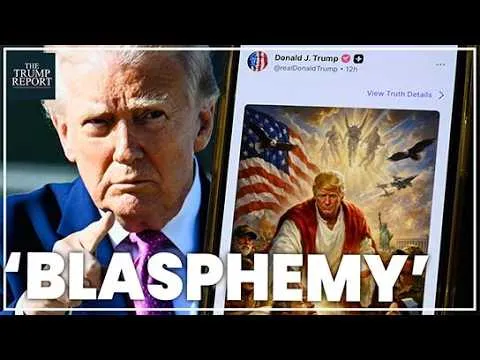
Adding to the controversy, Trump posted an AI-generated image depicting him as Jesus. This sparked widespread criticism, with many calling it offensive and blasphemous. Religious figures, including some of his own supporters, voiced strong disapproval. While Trump later claimed he thought it showed him as a doctor, the image was quickly deleted. This incident highlights a potential fracture within his voter base, which includes a large percentage of Christians and Catholics. Some supporters, like MAGA Catholics, defended him, calling it a joke. Others, particularly evangelical Christians, felt it crossed a line.
Cracks in the Coalition
The incident with the AI image has brought underlying tensions in Trump’s coalition to the surface. While his supporters often overlook his less religious behavior, the Jesus image pushed boundaries. Some believe the White House staff will try to smooth things over with concerned groups rather than the President issuing a direct apology. Taking down the post so quickly shows awareness of the political damage. This is especially true with midterm elections approaching. The controversy also comes as Trump is expected to meet with Chinese President Xi Jinping. This meeting aims to de-escalate tensions, but it’s complicated by the U.S.’s broader strategy toward China.
A Bipartisan Critique
In a surprising turn, Democrat Ro Khanna and Republican Marjorie Taylor Greene have found common ground. They agree that political division is failing voters. Both also believe elites are not held accountable, particularly concerning the Epstein files. They also share opposition to foreign wars and a belief that the economic system is failing ordinary Americans. This bipartisan critique suggests a shared frustration with the status quo. It highlights potential shifts within the populist base. As the political landscape evolves, the ability of parties to connect with working-class sentiment will be crucial. Figures like Bernie Sanders have tapped into these feelings before. This new alignment between Khanna and Greene shows that populists are a significant force to watch.
Why This Matters
The U.S.’s actions in the Strait of Hormuz carry significant global implications. A misstep could lead to wider conflict, disrupting oil supplies and international trade. The situation also impacts U.S. relations with key players like China and its allies. Domestically, the controversies surrounding Trump’s imagery and legal battles reveal deep divisions. They question his judgment and his ability to maintain a unified base. The unexpected bipartisan agreement on certain issues suggests a potential realignment of political forces. It shows that some voters are disillusioned with traditional politics and seeking new voices. The upcoming elections will likely be shaped by how effectively parties address these widespread frustrations.
Looking Ahead
The coming months will be critical. The success or failure of the Iran blockade, the outcome of the Israel-Lebanon talks, and the ongoing legal challenges will shape President Trump’s presidency. His relationship with the media and his ability to manage controversial incidents will be under constant scrutiny. Furthermore, the growing competition with China and the evolving dynamics within the Republican party will influence U.S. foreign and domestic policy for years to come. The political discourse surrounding issues like economic inequality and accountability for elites will likely intensify, potentially leading to further unexpected alliances and challenges to the established order.
Source: Trump needs to immediately 'apologise' for this (YouTube)

Related Articles
US Policy Shift on Hormuz Stirs Global Economic Fears
A significant shift in U.S. policy regarding the Strait of Hormuz has triggered global economic concerns, impacting energy prices worldwide. The move, alongside ongoing conflicts and domestic political challenges, raises questions about America's international influence and economic stability.
US Blockades Strait of Hormuz, Iran Nuclear Talks Stall
The U.S. has enforced a blockade on the Strait of Hormuz, emphasizing that Iran will not be allowed to acquire nuclear weapons. Talks between the U.S. and Iran are stalled, with Pakistan reportedly offering to host future negotiations. Senator Ron Johnson voiced concerns over proposed nuclear enrichment suspensions, advocating for complete program dismantling.

Ukraine Unveils Advanced Defense Tech, Seeks Global Partnerships
Ukraine is showcasing its rapidly expanding defense industry, highlighting advanced domestic missile systems, drones, and robotic platforms. President Zelenskyy announced new international security partnerships, positioning Ukraine as a global provider of defense technology and expertise.