Trump Vows to ‘Save College Sports’ with New Reforms
Former President Donald Trump has pledged to "save college sports," criticizing current trends as "crazy" and vowing to implement reforms. His administration's focus includes protecting women's sports and ensuring athletic success is based on merit, not "pay for play" schemes that favor larger programs.

Trump Vows to ‘Save College Sports’ with New Reforms
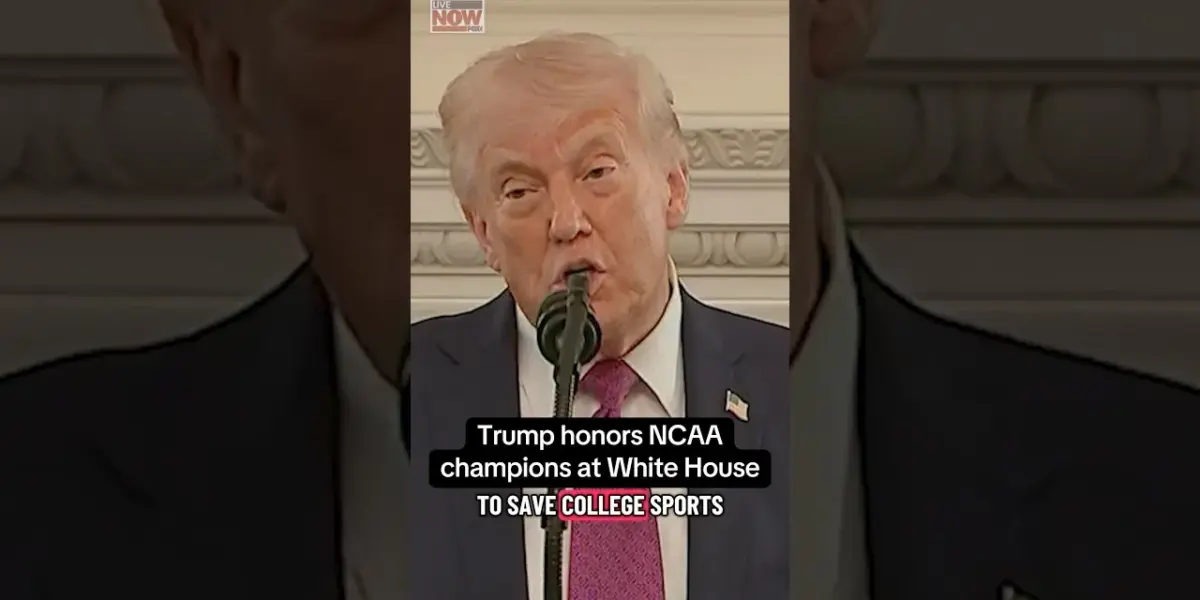
Former President Donald Trump declared his intention to “save college sports,” calling them a cherished American institution. Speaking to a group of athletes, Trump framed his administration’s actions as crucial for preserving the integrity and traditional values of collegiate athletics. He criticized current trends, describing them as “crazy” and emphasizing his commitment to protecting athletes and programs.
Trump’s remarks, delivered to what he described as the “very best” athletes embodying grit, determination, and teamwork, highlighted his administration’s focus on what he termed “key reforms.” These reforms aim to support programs that may not receive widespread media attention but are seen as vital for education, sports, and competitive success.
Focus on Fairness and Merit
A central theme of Trump’s address was the principle of meritocracy in sports. He referenced a “wonderful decision in the Supreme Court” that he believes reinforces the idea that the best athletes should succeed based on their abilities. This, he argued, is essential to combatting “pay for play schemes” that he claims disproportionately benefit larger, more established programs.
“We have we now have, thanks to a wonderful decision in the Supreme Court, we’re a country that’s again based on merit,” Trump stated. “In other words, if you’re the best shooter, you’re the best shooter. If you’re the best golfer, you’re the best golfer.” This stance suggests a desire to maintain a system where athletic prowess, rather than external financial incentives, dictates success.
Addressing Gender in Sports
Trump also touched upon the issue of gender in sports, referencing an executive order he signed to ban men from competing in women’s sports. He polled the audience, asking if they agreed that men should be allowed to participate in women’s sports, and noted that he had “never found anybody” who supported such participation.
This executive order, signed earlier in his term, reflects a broader conservative stance on gender identity and its implications for athletic competition. The move was intended to protect women’s sports, ensuring what he views as fair competition for female athletes.
Protecting Smaller Programs
The former president emphasized his administration’s efforts to protect programs that might not be in the national spotlight. He suggested that these programs are fundamental to the educational experience and the development of athletes. By supporting these less prominent teams, Trump aims to ensure a more equitable structure within college athletics.
The reforms mentioned are intended to strengthen the connection between education and sports, fostering an environment where athletes can compete and win. This approach seeks to uphold the traditional values associated with college sports, where character development and academic achievement are seen as equally important as athletic success.
Broader Context and Future Implications
Trump’s statements come at a time of significant change in college sports, including debates over Name, Image, and Likeness (NIL) deals, conference realignments, and the potential for a more professionalized structure. His focus on “saving college sports” suggests a desire to return to or reinforce certain traditional aspects of collegiate athletics, particularly concerning competitive balance and the role of merit.
The mention of a Supreme Court decision related to merit could refer to various rulings impacting sports or broader legal principles. The administration’s actions, such as the executive order on gender in sports, signal a specific ideological approach to these complex issues. The “pay for play” concern is a widely discussed topic, often linked to the increasing commercialization of college athletics and the potential for athletes to receive compensation.
Trump’s rhetoric suggests a vision for college sports that prioritizes traditional competitive structures and aims to prevent what he perceives as undue influence from financial incentives or changing social norms. This approach aims to preserve the integrity of the games and the educational mission of universities.
What’s Next
As college sports continue to evolve, the impact of such policy discussions and executive actions remains a key area to watch. Future developments may involve further legislative efforts or legal challenges concerning athlete compensation, competitive fairness, and the definition of sports categories.
Source: Trump on effort to ‘save college sports’ (YouTube)

Related Articles

Trump’s Iran Stance: Weakness or Strategy?
Critics argue Donald Trump's approach to foreign policy, particularly regarding Iran, signals weakness due to his business history. This perspective suggests his statements lack authority, potentially emboldening adversaries and damaging America's global standing.

Trump Blinks: Iran Rejects Talks, Forces Ceasefire Extension
Iran has rejected U.S. negotiation offers, viewing the naval blockade as an act of war. President Trump has unilaterally extended a ceasefire deadline, a move Iran states it never requested, leading to a diplomatic stalemate and heightened regional tensions.

Trump’s Cabinet: A ‘Wimp’ Problem or a Mirror?
A report suggests Donald Trump feels his cabinet members lack 'manliness.' This focus on outward toughness may overshadow actual competence and effective governance. The discussion highlights evolving expectations for leadership beyond traditional notions of strength.