Palantir’s ‘Techno-Fascism’ Manifesto Sparks Global Debate
Tech giant Palantir's recent manifesto, outlining a vision for US technological leadership and AI as a new form of deterrence, has sparked international debate and accusations of 'techno-fascism.' Experts warn that fewer restrictions on surveillance could lead to repression, raising critical questions about the balance between privacy and security.

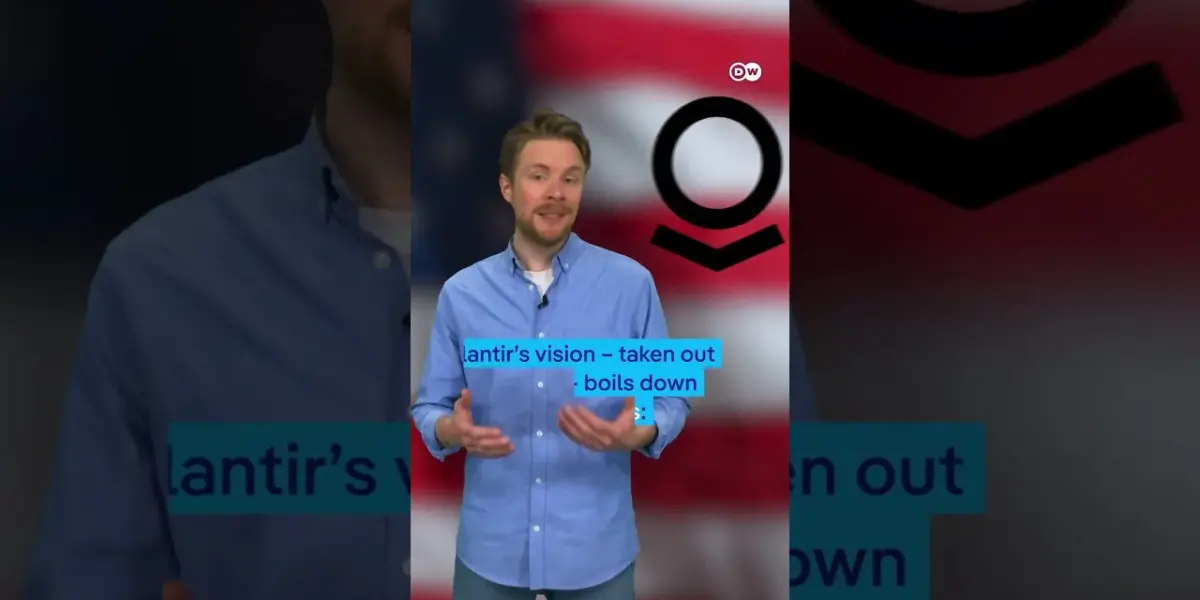
Palantir’s Bold Vision Ignites International Controversy
Data analytics company Palantir, co-founded by billionaire Peter Thiel, has ignited a global discussion with its recent public statement, often described as a manifesto. This declaration, which quickly went viral, outlines a vision for the United States and the role of artificial intelligence in national security. Palantir’s tools are already in use by governments across the globe, affecting daily life through applications in policing, border control, and military operations.
The company’s ideas, detailed in their recent publication, center on three core tenets. First, they propose the U.S. should lead the world in technological advancement.
Second, they suggest artificial intelligence could replace nuclear weapons as a primary form of deterrence. Third, Palantir advocates for fewer restrictions on surveillance technologies, a point that has raised significant alarm among experts and civil liberties advocates.
Critics Label Palantir’s Vision ‘Techno-Fascism’
One prominent critic, who has labeled the vision “techno-fascism,” expressed deep concern over the implications of Palantir’s proposals. This viewpoint suggests that the company’s ideas could lead to dangerous levels of state control and repression. The fear is that advanced surveillance and AI could be used to monitor and control citizens, rather than protect them.
“With AI, with digital technologies, there are a lot of new methods to crack down on your own citizens, to repress them, to, you know, arbitrarily arrest them and so on,” stated one expert, highlighting the potential for misuse. This perspective directly challenges Palantir’s claims that its vision is solely about enhancing security.
The Clash Between Privacy and Security
Palantir insists its vision is fundamentally about ensuring national security in an increasingly complex world. They argue that advanced technology is necessary to counter emerging threats and maintain a strategic advantage. The company believes that by providing powerful data analysis tools to governments, they are helping to keep nations safe.
However, critics argue that Palantir’s emphasis on surveillance and AI without sufficient checks and balances poses a serious threat to individual privacy and civil liberties. The debate centers on where to draw the line between necessary security measures and the fundamental right to privacy. This is not just an abstract discussion; it has real-world consequences for how governments operate and how citizens are treated.
Broader Implications and Future Concerns
The Palantir manifesto brings to the forefront a critical global conversation about the future of technology, governance, and individual freedoms. As AI capabilities grow, so does the potential for both immense benefit and significant harm. The company’s influence, given its widespread use by government agencies, makes its pronouncements particularly impactful.
The core question remains: how can societies harness the power of advanced technologies like AI for security without sacrificing essential privacy rights? This challenge requires careful consideration from policymakers, tech companies, and the public alike. The international community is watching closely as these debates unfold.
What’s Next?
The international debate sparked by Palantir’s statement is expected to continue. Discussions will likely focus on the ethical guidelines and regulations needed for AI and surveillance technologies. Governments worldwide will face increasing pressure to define their stance on these powerful tools and their potential impact on citizens’ rights.
Source: Inside the Palantir Manifesto | DW News (YouTube)

Related Articles


Trump Ally’s Lawsuit Faces Tough Judge, Doubts
Cash Patel's $250 million defamation lawsuit against The Atlantic faces a tough challenge with Judge Emmet Sullivan presiding. The case centers on allegations of alcoholism and duty neglect, which The Atlantic stands by. Patel must prove "actual malice" for his case to succeed.


ChatGPT Agents Automate Complex Workflows
OpenAI's new ChatGPT Agents allow users to create custom AI assistants for complex tasks. Accessible via a Business plan, these agents can be built using natural language and connected to various tools. They automate workflows, from drafting emails to managing risk assessments, promising increased efficiency for businesses.


Trump Kept Out of War Plans Amid U.S. Casualties
Former President Donald Trump was reportedly excluded from critical mission planning related to the Iran conflict due to concerns about his judgment. This decision occurred amidst U.S. casualties, drawing criticism regarding Trump's war prosecution. The exclusion highlights deep-seated concerns among advisors about his strategic decision-making.