Canada Steps Up as US Falters on Global Stage
Canada is stepping up as a global leader, forging new trade partnerships and strengthening its economy under Mark Carney's guidance. This strategic pivot aims to protect citizens from global instability, contrasting sharply with the U.S.'s shifting policies and internal economic struggles. Canada's focus on social programs and national investment signals a new era of independent strength.

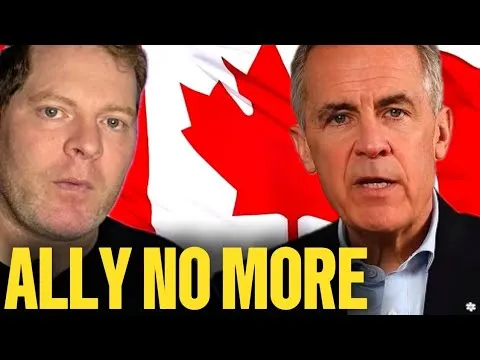
Canada Steps Up as US Falters on Global Stage
Canada is charting a new course, positioning itself as a stable leader for middle powers as the United States shifts its global approach. This change is driven by Canadian Finance Minister Mark Carney’s call for a strategic pivot, recognizing that past reliance on the U.S. has become a weakness. Canada aims to build its own economic strength and forge new international partnerships to protect its citizens from global instability.
Carney has highlighted that U.S. trade policies, including rising tariffs, are creating economic harm for Canadian industries like autos, steel, and lumber. Businesses are hesitant to invest due to the uncertainty hanging over the global economy.
Canada’s plan, called “Canada Strong,” focuses on attracting investment, building the nation for Canadians, and securing new markets abroad. This strategy is about regaining control over Canada’s security, borders, and future.
Shifting Alliances and Economic Strategies
Carney’s speech emphasizes that waiting for the U.S. to return to its previous role is not a viable strategy. He argues that the current changes in the global system are permanent.
Canada is actively addressing economic and security risks by securing new trade agreements. In less than a year, Canada has signed around 20 new trade deals across four continents.
This extensive network of agreements acts as an economic shield. It protects Canada from disruptions in global energy markets, potential food crises, and other major global events.
This contrasts with the U.S., where unpredictable trade policies have made it a less reliable partner. Other nations are hesitant to make long-term commitments with a country seen as unstable.
Canada’s Stability vs. U.S. Volatility
When looking at North American resources, countries now have a choice: work with Canada, which is presented as a stable, forward-looking nation, or the United States. The U.S., according to this analysis, appears to be harming its own working and middle classes to benefit Wall Street and wealthy elites. This is seen in alleged market manipulation and a focus on corporate profits over the well-being of its citizens.
Canada’s approach is rooted in its history of overcoming challenges. Leaders evoke figures like General Isaac Brock, who united diverse groups to defend the land, and indigenous heroes who resisted expansion. The nation’s past achievements, like building the St. Lawrence Seaway and the TransCanada Highway, are presented as proof of its capacity for bold, nation-building projects.
Investing in People and Future Security
Canada is implementing large-scale structural changes to strengthen its economy and reduce reliance on the U.S. This includes a new housing agency to build affordable homes, aiming to improve housing affordability. The country is also removing barriers to major infrastructure projects and building new trade and energy corridors.
Canada is significantly increasing its defense spending, planning to invest $500 billion over the next decade. This aims to rebuild and modernize the Canadian Armed Forces, a move that has already led to a 13% increase in recruitment. This surge in military enlistment during peacetime is seen as a sign of growing patriotism and national pride.
Social Programs and Contrasting National Priorities
Canada is also prioritizing social programs to support its citizens. These include making the National School Food Program permanent, which feeds 400,000 children annually.
Tax cuts for middle-class families, first-time homebuyers, and reduced costs for public transport are also highlighted. These measures aim to lower living costs and provide a safety net.
This focus on social well-being stands in stark contrast to the U.S. approach. The analysis points to rising childhood food insecurity in America, with millions of children lacking consistent access to food.
Social safety nets like food stamps and housing assistance are reportedly being dismantled. This creates a more complex and expensive life for Americans, leading to record levels of consumer debt and bankruptcies.
A New Global Role for Canada
Carney’s vision for Canada includes ambitious goals: catalyzing trillions in investment, creating a unified Canadian economy, building new trade and energy routes, and doubling clean energy capacity. He believes that in times of crisis, boldness leads to success. Canada’s historical resilience, built by its people in a challenging land, provides confidence for the future.
The speaker, an American observer, expresses envy and admiration for Canada’s leadership. He sees Canada as a nation investing in its people, while the U.S. is divesting from them. This shift suggests that as the U.S. role as a global leader diminishes, its neighbor to the north is emerging as a potential superpower, offering a new model for international stability and citizen welfare.
Canada’s future under this new direction is uncertain but promising. The nation is taking back control to build a stronger Canada, a process that is already showing positive results. The speaker suggests that the U.S. could learn from its global partners, integrating successful practices to achieve stability and truly benefit its people, not just corporations.
Source: Mark Carney Said The Quiet Part Out Loud: Ending The "Special Relationship" (YouTube)

Related Articles


Iran Nuclear Deal Fuels National Debate on Security
A significant national debate is emerging over the risks posed by Iran's nuclear program and its government's actions. Concerns are raised about trusting Iran, given its history of hostility and its stated goals. The potential for Iran to acquire weapons capable of destroying cities is a central point of contention.

Trump’s Iran Stance Could Define Election
A strong stance on Iran's nuclear ambitions is emerging as a critical election issue, with critics arguing Democrats are misjudging Donald Trump's assertive strategy. The potential threat of Iranian nuclear weapons is presented as a direct danger to American cities, demanding immediate action. This foreign policy debate is seen as potentially overshadowing traditional Republican platforms like the economy.
US Seizes Iran Ship, Signals Tough Stance on Tehran
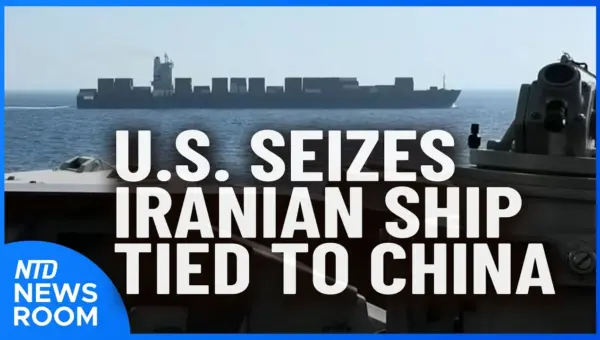
The US has seized an Iranian ship tied to China, signaling a tough stance on Tehran. This action, coupled with a naval blockade, aims to curb Iran's regional influence and nuclear ambitions. China's complex role and global ambitions remain a key factor in the ongoing geopolitical struggle.