Senate Hearing Uncovers ‘Arctic Frost’ Allegations
A Senate Judiciary Committee hearing delved into allegations of 'Operation Arctic Frost,' a supposed government campaign targeting former President Trump and the Republican party. New documents and witness testimony fueled claims of lawfare and the weaponization of federal powers, while opposing views defended the investigations as legitimate responses to election-related events.

Senate Panel Probes ‘Arctic Frost’ Over Alleged Political Targeting
The Senate Judiciary Committee’s Subcommittee on the Constitution convened a hearing to examine “Operation Arctic Frost” and a broader alleged campaign of “lawfare” against former President Donald Trump and his allies. The hearing focused on claims that federal government powers may have been used as a political weapon.
The subcommittee’s opening statements laid out the core of the allegations. The focus was not on re-litigating the 2020 election or suggesting anyone is above the law.
Instead, the core concern was whether the government’s coercive powers were used to target political opposition. The evidence presented suggested that law enforcement agencies may have been used to map and profile one side of American politics rather than investigate crimes.
Allegations of Government Overreach Surface
The hearing presented new documents that committee members claim show prosecutors discussing how to navigate legal protections for members of Congress while seeking information. Specifically, prosecutors allegedly discussed ways to obtain cloud data and phone records without notifying the members involved.
These discussions, according to proponents of the allegations, should concern all lawmakers and the public. The Speech and Debate Clause is designed to protect the legislative branch from executive branch intimidation. Prosecutors reportedly explored how close they could get to obtaining information involving Republican members of Congress.
White House Communications and Fani Willis’s Team
Another set of documents examined communications between the Biden White House and the office of Fulton County, Georgia, District Attorney Fani Willis. These records reportedly show Willis’s team reaching out to the White House Counsel’s office to interview former executive branch officials.
The White House reportedly facilitated the executive privilege process for these interviews. One email highlighted a Biden White House official describing Fani Willis as an “icon,” a sentiment that drew sharp criticism from some committee members. This was contrasted with questions about whether the same officials would view her actions in Georgia favorably.
Timeline of Investigations and Special Counsel Appointment
The hearing explored a timeline connecting the Biden White House’s actions to the investigations. White House Deputy Counsel Jonathan Su reportedly assisted the FBI in obtaining access to government phones belonging to former President Trump and Vice President Pence.
This expanded investigation, it was argued, merged with the Department of Justice Inspector General’s work. It eventually became a foundation for Special Counsel Jack Smith’s case. Simultaneously, Fani Willis’s office in Georgia was pursuing its own prosecution, with her team coordinating on executive privilege issues with the White House.
Special Counsel Appointment and Case Development
Nathan Wade, an outside counsel for Fani Willis, reportedly billed Fulton County for an “interview with DC White House” on November 18th, 2022. This date is significant as it was the same day Jack Smith was appointed special counsel.
Within weeks of Smith’s appointment and the White House’s contact with Wade, Matthew Colangelo, then a top official in the Biden Justice Department, moved to the Manhattan District Attorney’s office. This is where Alvin Bragg brought a case against former President Trump, which was then revived.
Arguments of a Coordinated Campaign
The narrative presented by some committee members was that federal investigators, the special counsel, the Biden White House, Fani Willis in Georgia, and Alvin Bragg in New York were part of a coordinated campaign of “lawfare” against President Trump and the American right.
This alleged campaign aimed to bankrupt, deplatform, delegitimize, and imprison Trump, and even remove him from the ballot. The outcome of the 2024 election was presented by one speaker as an “acquittal” by the American people.
‘Process as Punishment’ Argument
A key argument made was that the “process was the punishment” in these investigations. Subpoenas, search warrants, non-disclosure orders, legal bills, and the resulting uncertainty were described as tools to ruin individuals and organizations without securing a criminal conviction.
This approach, it was argued, could lead to individuals being targeted for representing certain clients, working on specific cases, donating to certain organizations, or serving certain presidents. This was characterized as political discipline by legal process, not equal justice under the law.
Differing Perspectives on Investigations
Conversely, some senators argued that the actions were legitimate investigative steps following the January 6th Capitol attack. They contended that the effort by former President Trump to “rewrite history” following his election loss was the root cause.
These senators pointed to the events of January 6th, including the breach of the Capitol and injuries to law enforcement officers, as the basis for subsequent investigations. They asserted that “normal investigatory steps” were taken to hold accountable those who incited the insurrection.
Jeffrey Clark’s Role and Testimony
Jeffrey Clark, a former Department of Justice official, was a key witness. He was accused by some of pushing false allegations of voter fraud and attempting to influence state election certifications. His actions were described as a corrupt effort to overturn the 2020 election.
Clark’s defense, as presented by his proponents, focused on alleged “weaponization of the Justice Department.” They argued that the committee’s investigation was necessary due to a perceived lack of oversight from Democratic colleagues during the Biden administration.
Witnesses and Opening Statements
The hearing featured opening statements from various witnesses and senators, including Dr. Dan Epstein from America First Legal and Daniel Schwager, an attorney with experience in government ethics and prosecution. Witnesses were sworn in before providing testimony.
Dr. Epstein stated that former President Trump faced the “most vindictive weaponization of the justice system.” He described Operation Arctic Frost as a “sweeping dragnet targeting the entire Republican political apparatus and the America First movement.” He claimed the investigation involved hand-picked partisan agents and led to numerous subpoenas impacting over 400 Republican organizations, individuals, and lawmakers.
Concerns Over Subpoenas and Secrecy
Concerns were raised about the scope of subpoenas issued, with over 197 grand jury subpoenas reportedly ensnaring more than 400 entities. These included donor lists, financial records, and communications of Republican organizations and individuals.
Allegations also surfaced that the FBI secretly obtained personal cell phone records of eight Republican U.S. senators and one representative without notifying Congress. The seizure of former President Trump’s and Vice President Pence’s government cell phones was also highlighted as part of this alleged dragnet.
Counterarguments on Investigations
In contrast, some senators argued that the investigations were legitimate responses to alleged criminal conduct, particularly in the context of the 2020 election and the January 6th events. They emphasized that subpoenas for toll records, for instance, are not wiretapping but standard metadata collection in criminal investigations.
The argument was made that while concerns about separation of powers and the Speech and Debate Clause are important when evidence involves members of Congress, seeking information to prosecute a case is not a violation of these protections. Federal grand juries, composed of citizens, indicted individuals because crimes were committed, not due to prosecutorial animosity.
Call for Jack Smith Testimony
Several participants expressed a desire for Special Counsel Jack Smith to testify before the committee under oath to answer questions directly. This was seen by some as a necessary step for transparency and accountability.
However, the committee’s majority expressed a different view, suggesting that holding hearings without the newly obtained records would be an attempt to obscure the truth. The debate highlighted the deep divisions regarding the nature and legitimacy of the investigations into the 2020 election and its aftermath.
Source: WATCH LIVE: Senate probes 'Arctic Frost' over alleged conspiracy plot (YouTube)

Related Articles

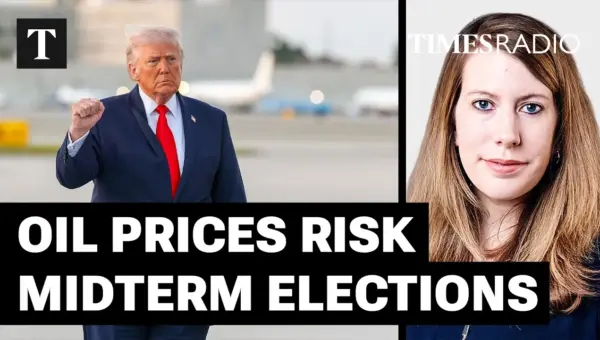
Oil Prices Pressure Trump Ahead of Midterms
Rising oil prices are creating political pressure for Donald Trump as the November midterm elections approach. The ongoing conflict in Iran is impacting the global economy, raising concerns about the cost of living for American voters. Meanwhile, Trump has also commented on UK politics, criticizing Prime Minister Keir Starmer's choice of ambassador.
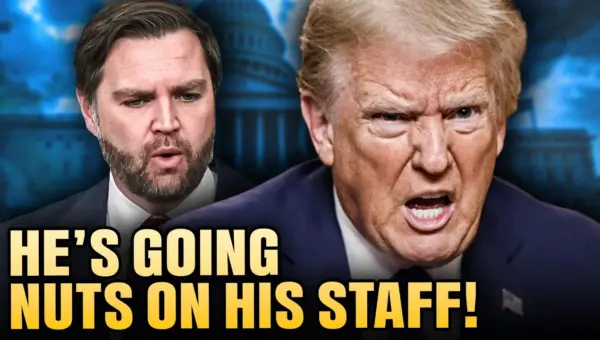
Trump’s ‘Manly’ Cabinet: A Clown Show of Insecurity
Donald Trump reportedly criticizes his cabinet for not being "manly enough," a focus on appearance over competence that breeds insecurity and hinders effective governance. This obsession with superficial traits highlights a deeper problem of unqualified individuals struggling to perform their duties.
Generals Block Trump from Nuclear Codes Amidst Global Tensions
A report claims top generals blocked Donald Trump from accessing nuclear codes, citing his erratic behavior. This alleged incident, coupled with Trump's controversial statements on resuming nuclear testing, raises serious concerns about national security and global stability.