Judge Blocks Trump’s Ballroom Dream at White House
A federal judge has ruled against Donald Trump's plan to build a 90,000-square-foot ballroom at the White House. While underground construction for security facilities is permitted, the above-ground ballroom has been blocked due to lack of congressional approval. The case highlights the balance of power between the president and Congress regarding federal property.

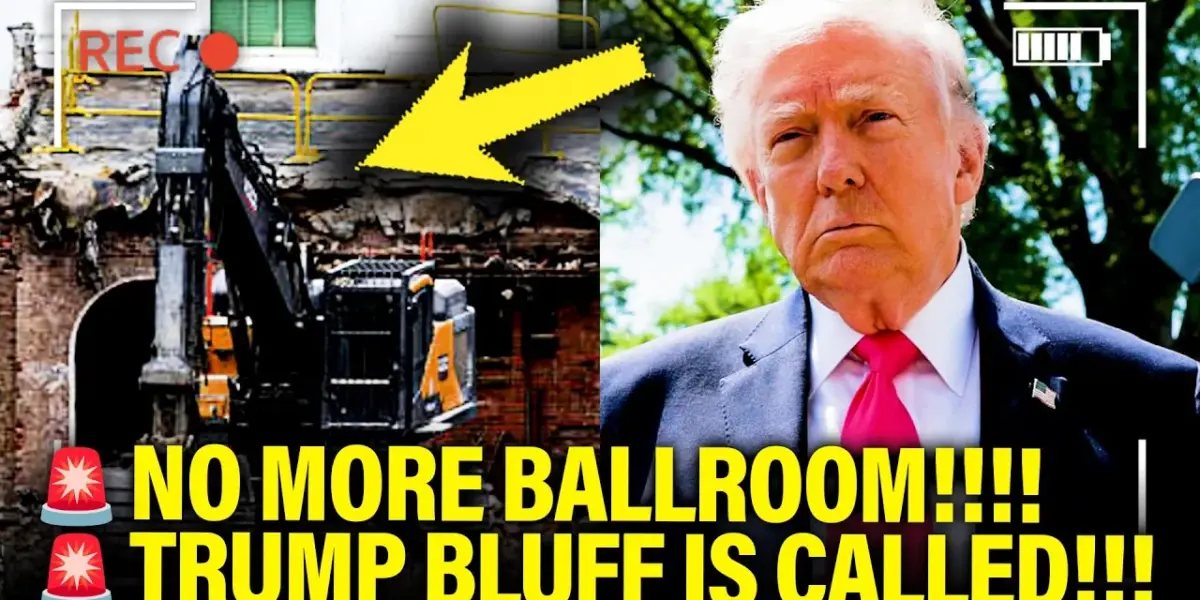
Judge Blocks Trump’s Ballroom Dream at White House
A federal judge has delivered a clear message to Donald Trump regarding his controversial plans for a massive ballroom at the White House. The judge, presiding over the case, has ruled that while Trump can proceed with building underground facilities, like top-secret military installations or hospitals, he will not be allowed to construct the proposed 90,000-square-foot ballroom above ground.
This decision comes after a series of legal back-and-forth. Initially, the judge allowed underground construction to continue, understanding the need for security and infrastructure.
However, he made it clear that this permission did not extend to building a colossal ballroom on top of these secure facilities. The argument that the ballroom is essential for covering the underground work was dismissed.
Historical Context of Presidential Property Use
The White House and its surrounding grounds are federal property, managed under the authority of Congress. While presidents have historically made some modifications or repairs without explicit congressional approval, major construction projects typically require oversight and funding from Congress. This principle is rooted in the Constitution’s Property Clause, which grants Congress power over federal lands.
The idea of a president unilaterally altering or expanding the White House in such a significant way without consulting Congress raises questions about presidential power versus legislative authority. Historically, large-scale projects have always involved congressional input, ensuring a balance of power and responsible use of public resources.
The Legal Battle Over the Ballroom
Judge Leon, who has overseen this case for nearly a year, initially expressed doubts about the legality and constitutionality of the proposed ballroom. Trump’s legal team argued that the underground work and the ballroom were interconnected and that blocking one would hinder the other. This stance marked a shift from their earlier position that the underground construction was separate from above-ground plans.
The judge ultimately ruled the ballroom unconstitutional and illegal, citing the lack of congressional approval. He issued a preliminary injunction, effectively halting the project and giving Trump 14 days to appeal. This ruling emphasized that no president has the unchecked power to build such a structure without congressional oversight.
Appeals Court Weighs In
Donald Trump appealed the decision, arguing that the National Trust, the group that brought the lawsuit, lacked standing. He also reiterated the need for the ballroom as a covering structure for the underground excavation. A three-judge panel at the appellate court reviewed the case.
The appellate court, with a two-to-one decision, did not fully overturn the injunction. Instead, they sent the case back to Judge Leon for further fact-finding regarding the security necessity of the ballroom. The court wanted a clearer understanding of whether the ballroom was truly essential for security or simply a desired addition.
Judge’s Clarified Ruling and Future Outlook
Following the appellate court’s instructions, Judge Leon issued an amended order. This order explicitly prohibits any action that furthers the above-ground construction of the ballroom. It reiterates that underground construction for national security facilities is permitted, as is work necessary for the safety and structural integrity of the White House.
However, the judge firmly stated that this underground work cannot be used to justify or lock in the size and scale of the proposed ballroom. Any construction beyond what is strictly necessary for safety and security requires express authorization from Congress. Trump’s team has been given seven days to appeal this clarified order to the appellate panel again.
The Path to the Supreme Court?
With the appellate court’s split decision, Trump’s next likely step is an appeal to the U.S. Supreme Court, possibly through an emergency or shadow docket. This would require him to convince at least four justices to hear the case.
The legal and political implications of this case are significant. It tests the boundaries of presidential authority in modifying historic federal properties and highlights the ongoing tension between executive power and congressional oversight. The Supreme Court’s involvement, if it occurs, will set a critical precedent for future presidential actions concerning federal buildings.
Why This Matters
This legal battle is more than just about a ballroom; it’s about the separation of powers and the proper use of public resources. It addresses who has the final say when a president wants to make significant physical changes to iconic national landmarks like the White House.
The ruling reinforces the idea that even presidential projects, especially those involving substantial construction or alteration of federal property, are subject to legal and constitutional checks. It emphasizes that the authority over such matters ultimately rests with Congress, not solely with the sitting president.
Implications and Future Trends
The case raises broader questions about the balance of power between the executive and legislative branches, particularly concerning the management of federal property. It could influence how future presidential administrations approach renovations or additions to federal buildings.
The reliance on the shadow docket for emergency appeals is also a point of discussion, with concerns that it bypasses standard judicial review. The Supreme Court’s decision on whether to even hear this case will be closely watched.
Conclusion
The legal process is ongoing, with Donald Trump having a short window to pursue further appeals. The ultimate decision on whether a ballroom can be built at the White House, and under what conditions, will depend on these continuing legal proceedings.
Trump’s team must file a status report within 21 days, detailing their next steps. The nation will be watching to see if this legal saga continues to the highest court in the land.
Source: 🚨Judge CALLS Trump’s BLUFF on BALLROOM in SCATHING RULING!!!! (YouTube)

Related Articles


Pope Slams Trump’s ‘Tyrants’ Amidst Religion Row
Pope Leo XIV has publicly criticized "tyrants" and the misuse of religion for political gain, sparking backlash from Donald Trump and his allies. The podcast hosts discuss this conflict, arguing that some politicians exploit faith as a "grift." This clash highlights the growing tension between religious authority and political power.

GOP Faces Midterm Meltdown as Trump’s Woes Mount
Republicans are reportedly in a state of panic over the upcoming midterm elections, as Donald Trump's record-low approval ratings and persistent distractions are overshadowing their efforts. A combination of economic woes, foreign policy stumbles, and internal party conflicts are creating significant challenges for the GOP as they approach a crucial election cycle.


Tulsi Gabbard Refers Whistleblower for Criminal Probe
Director of National Intelligence Tulsi Gabbard has reportedly sent criminal referrals to the Justice Department concerning a former intelligence community inspector general and a whistleblower. The whistleblower's complaint was key to Donald Trump's first impeachment. Critics view this move as part of a pattern of alleged political retribution and a potential undermining of whistleblower protections.