Generals Blocked Trump from Briefings Amidst War Fears
Top Pentagon officials reportedly excluded former President Donald Trump from critical briefings due to fears his erratic behavior could jeopardize a mission. This decision stemmed from Trump's volatile state after Iran shot down a U.S. airman, leading to threats and obsession with political fallout. The situation highlights concerns about leadership judgment and trust within the administration.

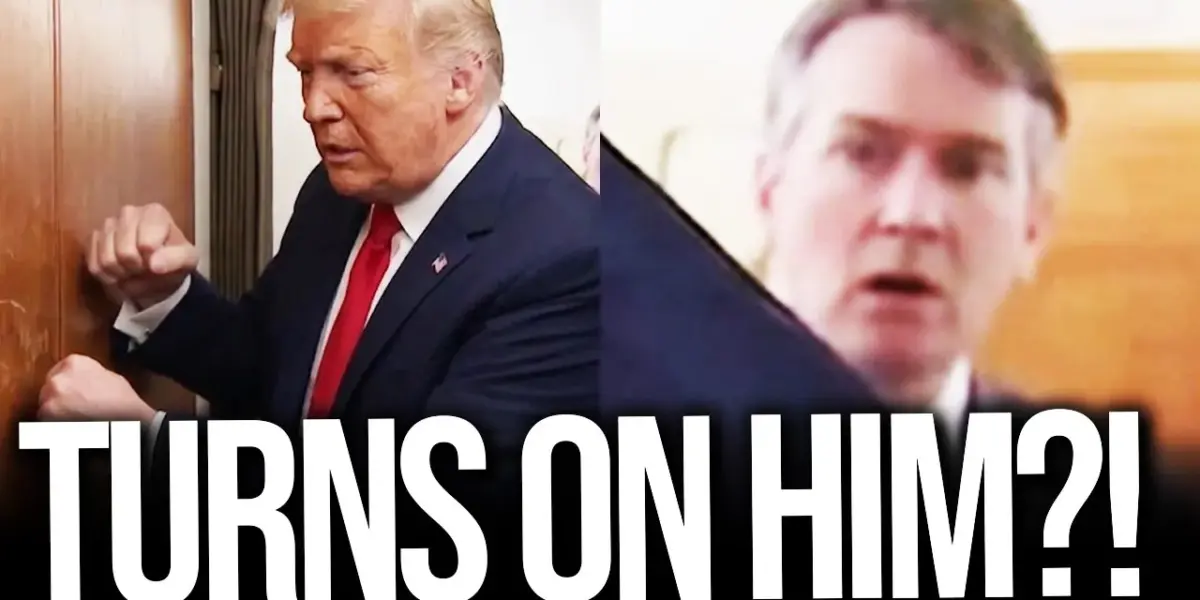
Generals Blocked Trump from Briefings Amidst War Fears
In a startling revelation, top Pentagon officials reportedly excluded former President Donald Trump from crucial command room briefings during a high-stakes operation. This decision was made because military advisors feared his erratic behavior could endanger the mission. The Wall Street Journal detailed how advisors intentionally limited Trump’s access to real-time information.
This move came after Iran shot down a U.S. airman. Trump was reportedly in a volatile state, screaming at aides and obsessing over political fallout. He even invoked the 1979 Iran hostage crisis, drawing parallels to Jimmy Carter’s presidency.
A Pattern of Behavior
The report suggests Trump was briefed only at key moments, rather than having direct control. This approach was a direct response to his intense reactions and perceived instability. Trump’s threats to Iran, including wiping out its entire population, were seen as dangerously escalatory.
Trump has continued to echo these sentiments on social media. This pattern of behavior raises serious questions about his judgment during times of international crisis. His focus seemed to be on personal political consequences rather than strategic military action.
Broader Administration Concerns
The situation with Trump is not isolated. The transcript also touches on allegations against the FBI Director, who faces claims of excessive drinking impacting his work. These accusations, detailed by The Atlantic, paint a picture of an administration struggling with serious issues.
Further complicating matters, the Director of National Intelligence was reportedly not being listened to by the president. The counterterrorism director had also resigned. This suggests a wider problem of trust and effectiveness within the national security apparatus.
Historical Context: The 1979 Hostage Crisis
Trump’s references to the 1979 Iranian hostage crisis are significant. That event deeply impacted President Jimmy Carter’s administration and his public image.
Carter’s attempts to rescue American hostages in Tehran were fraught with difficulty and ultimately unsuccessful in their initial stages. The crisis became a symbol of American vulnerability and foreign policy challenges.
By invoking this historical event, Trump appeared to be preoccupied with the political implications of a failed rescue mission. This focus on past failures and potential electoral damage overshadowed the immediate needs of the operation.
Leadership and Decision-Making
The decision by military advisors to withhold information from the President highlights a profound crisis of confidence. It suggests that the professional military leadership believed Trump’s instincts were too dangerous to follow. They felt experienced generals, with their extensive war planning and simulations, were better equipped to handle the situation.
The author of the transcript argues that this exclusion might have been beneficial. They suggest that the war might have gone better, or perhaps not started at all, if experienced generals had been in charge. This points to a debate about the role of political leadership versus military expertise in foreign policy decisions.
The FBI Director’s Defense
When confronted with allegations of alcohol abuse and its impact on his job, the FBI Director responded by defending his record. He pointed to statistics on crime reduction, homicide rates, and drug seizures as proof of his effectiveness. He framed the accusations as attacks from a hostile media.
However, the transcript questions the validity of these statistics and suggests the Director avoided directly addressing the core allegations. The author implies the Director is attempting to deflect criticism by highlighting unrelated achievements.
The President’s Approach to Truth
A key takeaway from the transcript is Trump’s tendency to push away advisors who offer truthful, albeit difficult, information. This pattern was noted during the COVID-19 pandemic, when he reportedly disregarded expert advice on treatments. It was also evident after the 2020 election, when he allegedly ignored counsel from figures like Bill Barr and Mike Pence.
Instead, Trump seemed to favor advisors who reinforced his own beliefs and narratives, even if those narratives were based on misinformation. This preference for validation over factual input can be detrimental in high-stakes decision-making scenarios. It creates an echo chamber where potential dangers are not adequately assessed.
The Rescue and its Aftermath
While one airman was rescued quickly, the second airman’s recovery took longer. Trump was reportedly informed of the second rescue late on a Saturday. Despite the tense situation, he later posted aggressive messages on social media, demanding Iran open the Strait of Hormuz.
These posts, filled with threats and unusual religious references, exemplified his unorthodox approach. The author describes this as a maximalist strategy, veering between aggression and conciliation. It suggests a leader grappling with the severity of the situation while also seeking to project strength.
Why This Matters
The reported exclusion of a president from critical national security briefings is a grave concern. It suggests a breakdown in trust between civilian leadership and the military. This situation raises fundamental questions about accountability and the stability of command during international crises.
The events also highlight the potential dangers of a leader who prioritizes political optics and personal validation over objective reality. When leaders surround themselves with sycophants and reject truthful counsel, the consequences can be dire for national security and global stability.
Future Outlook
This incident, if accurate, points to a concerning trend of leadership characterized by impulsivity and a disregard for expert advice. The reliance on instinct over strategic planning can lead to miscalculation and escalation. The ongoing debates about election integrity and the actions of key officials will likely continue to shape political discourse.
The transcript ends by emphasizing the importance of leaders who provide moral clarity and patient guidance. It suggests that a strong democracy relies on leaders who can confront difficult truths and make decisions based on facts, not just personal inclination. The future demands leaders who can foster trust and navigate complex challenges with sound judgment.
The transcript references an ongoing situation regarding an FBI Director facing allegations. The outcome of these investigations and the continued scrutiny of leadership decisions will be closely watched.
Source: Screaming Trump Locked Out of Office as War Backfires (YouTube)

Related Articles
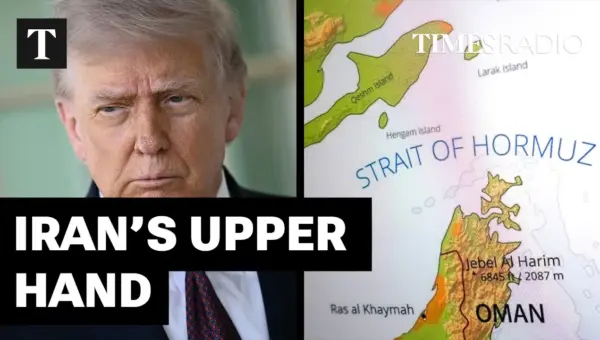
US Faces Limited Options Against Iran’s Strait Control
Iran's control over the Strait of Hormuz presents the U.S. with limited options beyond a massive ground invasion. Despite ongoing peace talks and a potential deal mirroring past agreements, Iran's demonstrated leverage over the vital economic chokepoint solidifies its strategic position. The conflict's economic fallout is impacting global markets, with the U.S. experiencing higher energy prices and slower economic growth, while other nations face more severe consequences.
US Threatens Iran: “Knock Out Power Plants, Bridges”
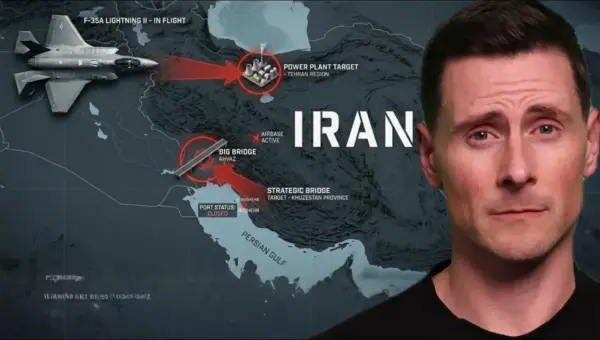
The U.S. has threatened to strike Iran's power plants and bridges if diplomatic talks fail, following IRGC attacks on commercial shipping in the Strait of Hormuz. Iran remains defiant, asserting control over the vital waterway amidst an ongoing U.S. naval blockade.
FBI Director Patel Faces Allegations of Misconduct and Job Insecurity
A new report from The Atlantic alleges FBI Director Cash Patel is concerned about his job security due to alleged excessive drinking and unexplained absences. Multiple sources claim his conduct has alarmed officials and potentially weakened national security. Patel's spokesperson denies the report and is threatening legal action.