Mandelson Vetting Failure: A Political Blunder, Not Civil Service Flaw
Danny Finkelstein argues that the Peter Mandelson vetting failure was a political misstep, not a civil service error. He contends the core issue was a flawed idea from politicians, not the vetting process itself. The controversy highlights concerns about political patronage and the need to protect the impartiality of the civil service.

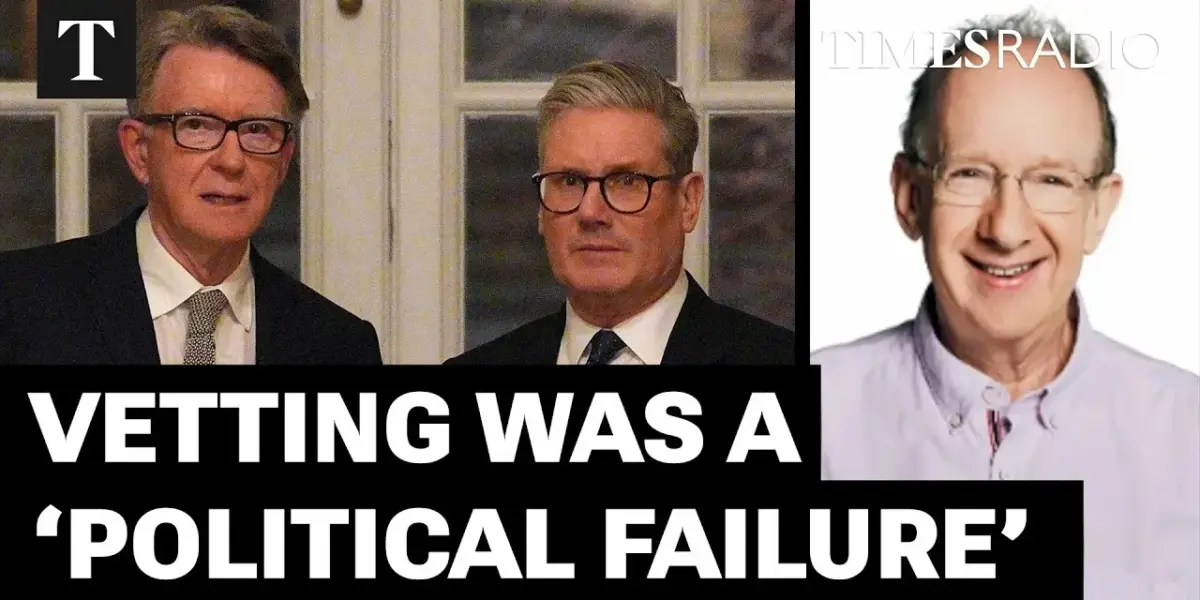
Mandelson Vetting Failure: A Political Blunder, Not Civil Service Flaw
The recent controversy surrounding Peter Mandelson’s vetting failure has been framed as a political problem stemming from a flawed government idea, rather than a failure of the civil service itself. This perspective, put forth by Conservative peer and Times columnist Danny Finkelstein, argues that the core issue lies with the initial decision-making by politicians, not the process managed by civil servants.
Finkelstein suggests that if the appointment had been successful, no one would have questioned the role of officials like Ollie Robbins or the Foreign Office. The criticism only arose because the appointment ultimately failed. He points out that the idea to appoint Mandelson was misconceived from the start and originated with political figures, not the civil service, which he notes actually resisted such appointments to desirable positions from outside their ranks.
Robbins’ Testimony and the Vetting Process
During the scrutiny, Ollie Robbins provided testimony that Finkelstein believes offered clarity and demonstrated high ability. While Robbins did not claim to have seen the completed vetting form for Peter Mandelson, he stated he was never explicitly told that Mandelson had failed his security vetting. This assertion, Finkelstein notes, counters claims that Robbins withheld information from the Prime Minister.
Robbins maintained that the vetting was conducted in the normal way and that providing more details would have been improper. Finkelstein explains that the confidentiality of the vetting system is crucial, as individuals are expected to provide private information, sometimes not even shared with their partners. Understanding the exact nature of this process is difficult for those outside government, but its importance in maintaining trust is clear.
Government Responsibility and Political Patronage
Finkelstein emphasizes that the government, and specifically the politicians who pushed for Mandelson’s appointment, must accept responsibility for the decision. He believes the government knew about the potential complications, including Mandelson’s commercial relationships and friendships, and that the Foreign Office made these concerns clear. The decision to proceed, despite these known issues and the Foreign Office’s resistance, was a political one.
The controversy also highlights concerns about political patronage, particularly regarding an external appointment for Matthew Doyle, who was then working as the Prime Minister’s director of communications. Doyle was later suspended from the Labour party for publicly supporting an individual convicted of sex offenses. Finkelstein views this as an error, reflecting an overestimation of the imagination and innovation of those outside the civil service compared to those within.
Protecting the Civil Service from Partisan Influence
A significant concern raised by Finkelstein is the potential damage to the relationship between the civil service and the political operation, especially for a Prime Minister who was once a permanent secretary himself. He worries that this situation undermines the protection of fundamental state institutions against rash or politically motivated changes. There is a risk that such events could embolden calls to replace independent civil servants with politically appointed individuals.
Finkelstein acknowledges that the civil service faces valid critiques, such as a lack of specialization and an overemphasis on process. However, he strongly advocates for preserving the independent, merit-based nature of the civil service, inherited from Victorian times, against systems of patronage or partisan appointments. He believes that introducing breadth of experience can be achieved through careful reforms without taking the significant risks associated with excessive political appointments.
Impartiality and the Future of Public Service
The discussion touches upon the inherent struggle of human beings to remain impartial, but Finkelstein asserts that the current system strives for this ideal. He contrasts this with the potential chaos seen in systems based purely on patronage and politics, citing examples from the United States. He stresses the importance of protecting the delicate balance that the civil service attempts to strike.
The article concludes by noting that while Prime Minister Keir Starmer undoubtedly believes in the principles of an impartial civil service, his recent actions may have weakened that argument. This could make arguments for a more politically driven appointment system more successful in the future. The integrity and professionalism of civil servants, who move between governments with dedication, are vital and difficult to recover if lost.
Source: Mandelson Vetting Failure Is A ‘Political Problem’ Not A Civil Service One | Danny Finkelstein (YouTube)

Related Articles
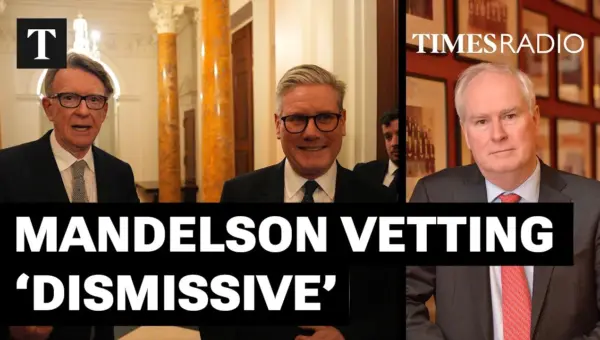
Ex-NSA Chief: Downing St Ignored Vetting for Key Envoy
Former National Security Adviser Sir Mark Lyall Grant stated that Downing Street believed security vetting was unnecessary for Peter Mandelson's appointment, leading to pressure on the Foreign Office. This dismissal of formal checks and potential prioritization of political urgency over national security raises significant questions about government procedures.
Robbins Firing Sparks Anger: PM’s Judgment Under Fire
Senior civil servant Sir Olly Robbins has been fired, sparking controversy and casting a shadow over Prime Minister Rishi Sunak's judgment. Robbins' dismissal is linked to the vetting process for Peter Mandelson's appointment as ambassador, with evidence suggesting Number 10 exerted significant pressure. Critics argue Robbins was a scapegoat, while concerns linger over Mandelson's past and the integrity of the vetting procedures.

PM Accused of Ignoring Due Process in Ambassador Appointment
A Foreign Affairs Committee member has accused the Prime Minister of disregarding due process in appointing an ambassador, Peter Mandelson. Afua Brandford stated that Number 10 applied pressure for rapid security clearance, with the PM announcing the role before vetting was complete. This has led to questions about the Prime Minister's integrity and claims of misleading Parliament.