EU Funds Ukraine With £90 Billion Aid Amid Russia Sanctions
The European Union has approved a £90 billion loan for Ukraine, providing vital support amid ongoing conflict with Russia. The funds will be used for weapons procurement and to bolster Ukraine's national budget. Meanwhile, concerns are rising about Russia's economic stability and its global resource acquisition strategies.

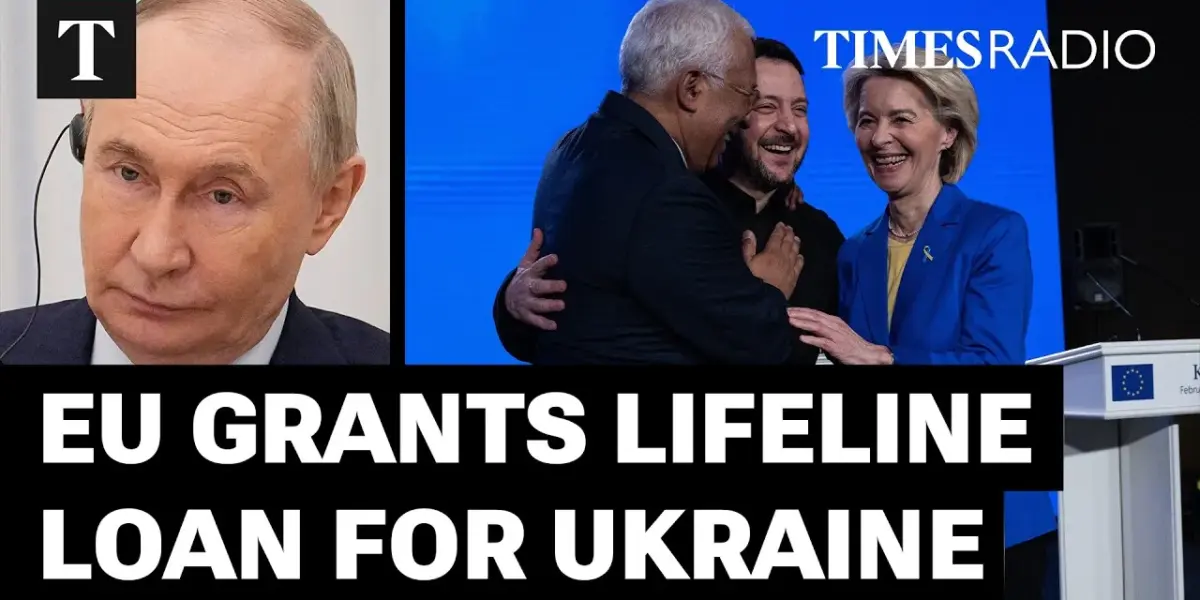
EU Approves £90 Billion Aid Package for Ukraine
The European Union has finally approved a significant £90 billion loan for Ukraine, a move that comes alongside the 20th package of sanctions against Russia. This crucial financial support had been delayed for months due to a veto by Hungary. The deadlock was broken after the Hungarian leader faced electoral defeat in a recent election.
Oleksii Goncharenko, an independent Ukrainian Member of Parliament for Odessa, emphasized the vital importance of this aid. He stated that without this funding, Ukraine would struggle to survive. This money is designated for both supporting the country’s functions and for acquiring weapons.
How the Funds Will Be Used
The £90 billion aid package will be distributed over two years. Approximately £30 billion will be allocated for the procurement of weapons manufactured in the European Union, Ukraine, and other allied countries with special agreements, including the United Kingdom.
The remaining £60 billion is earmarked to support Ukraine’s national budget. This funding will cover essential social payments, salaries, and the general running of the country. Currently, about half of Ukraine’s budget comes from its own economy, through taxes from companies and citizens, with these funds primarily directed towards the war effort and the military.
“Without this money, we would just not survive. And this isn’t just money to support the country, and also it’s the money for weapons. So, it is extremely extremely important.” – Oleksii Goncharenko, Ukrainian MP
Impact on the War and Russia’s Strategy
While the substantial aid package will help Ukraine continue its fight, Goncharenko expressed a strong desire for peace as soon as possible. He indicated Ukraine’s readiness to stop the war along current lines, hoping that the United States, United Kingdom, and Europe will help achieve this.
Meanwhile, Russia is reportedly benefiting from rising oil prices due to conflicts in the Middle East. Goncharenko also highlighted concerns that Russia is actively seeking to control other critical materials globally. He cited efforts to acquire major companies producing cobalt and zinc through proxies, involving entities like Glencore.
Ukraine’s Role in International Security
Ukraine has expressed its willingness to assist in international efforts, such as securing the Strait of Hormuz. President Volodymyr Zelenskyy has discussed supporting allies facing similar threats from what Goncharenko termed an “axis of chaos” involving Iran, Russia, and their proxies, with China also implicated.
However, Goncharenko stressed that Ukraine’s priority remains protecting its own skies and citizens from daily Russian attacks. He noted recent civilian casualties in Dnipro due to drone strikes, highlighting the ongoing need for defense before fully committing resources abroad.
UK’s Role in Strait of Hormuz Operations
The British Ministry of Defence has announced that Royal Navy divers are preparing for mine-clearing operations in the Strait of Hormuz. This initiative is part of efforts to demonstrate Britain’s commitment to keeping the vital sea passage open.
Ryan Ramsey, a former captain in the Royal Navy submarine service, described the mine-clearing capability as incredible, with divers being highly skilled and experienced. However, he cautioned that the Strait of Hormuz is a complex environment, and integrating the Royal Navy into a coalition effort for mine clearance is more intricate than simply deploying divers.
Challenges and Royal Navy Capabilities
Ramsey acknowledged the UK’s decades of experience in mine clearance, despite the decommissioning of dedicated mine-clearing ships. He compared the process to land-based bomb disposal, involving locating mines and using explosives for controlled destruction.
He also mentioned the growing expertise in drone mine hunters, uncrewed vehicles used for searching. While finding mines is considered the easier part, destroying them remains the more challenging task. Ramsey pointed out that decades of underinvestment have exposed limitations in the Royal Navy’s capabilities, necessitating a rapid recovery and modernization effort.
“It has indeed. We we you know, and this isn’t 1 year, 5 years, this is decades and decades of mis- misinvestment into future-proofing the the Royal Navy.” – Ryan Ramsey, Former Royal Navy Captain
Concerns Over Russia’s Economic Stability
Gennady Zyuganov, leader of the Russian Communist Party, warned that Russia could be on the brink of collapse, drawing parallels to the 1917 Russian Revolution. He cited a failing economy and the need for urgent measures to prevent a similar crisis.
Professor Sam Greene, a professor of Russian politics at King’s College London, views this warning as unlikely. While acknowledging dissatisfaction in Russia due to the cost of living and the war, he believes it has not reached a level that would spark widespread action. He suggested Zyuganov’s comments are more about political positioning within the upcoming elections.
The State of the Russian Economy
Professor Greene described the Russian economy as stable, but likened it to a patient on life support. Despite frozen reserves, Russia maintains significant fiscal capacity and strong financial management, allowing it to weather the war’s costs and sanctions.
However, this stability has come at the cost of mortgaging the future. The civilian economy is being used to boost military production, which benefits those in the defense sector but does not drive overall growth or control inflation. Oil revenues are largely benefiting the wealthy and the government, not ordinary citizens, contributing to discontent.
“The Russian economy is uh is is stable, but it it’s stable in the way that a patient in a hospital is is is stable. It’s it’s on a degree of life support.” – Professor Sam Greene
Putin’s Grip on Power
Professor Greene explained that for Putin’s position to be challenged, there would need to be a widespread sense that he is no longer capable of managing the country, particularly among the elite. Currently, Putin has worked to shield ordinary Russians from the war’s direct impact, allowing them to maintain a semblance of normalcy while showing support.
He does not forcibly conscript citizens, offering instead compensated participation in the war. This approach allows many to remain content with the status quo, as long as they project support for the ongoing conflict.
Source: EU Grants £90bn Lifeline To Ukraine: Without It They Would Not Survive | Oleksii Goncharenko (YouTube)

Related Articles
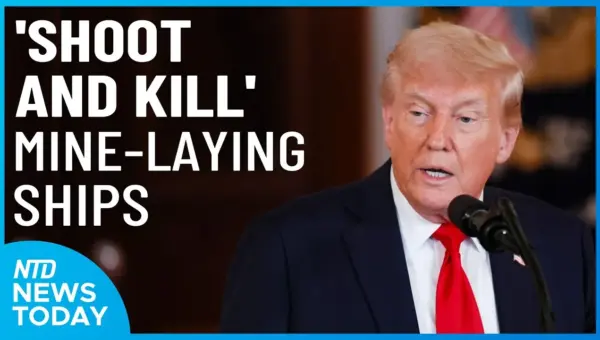
US Navy Readies Lethal Force Against Iran in Hormuz Strait
President Trump has ordered the US Navy to use lethal force against Iranian mine-laying boats in the Strait of Hormuz, escalating tensions. Meanwhile, the White House accuses China of stealing AI technology, adding another layer to global competition. These actions, coupled with economic sanctions on Iran, aim to reshape regional dynamics and prevent nuclear proliferation.
Trump’s Navy Orders Spark Global Firestorm
President Trump's directive for the U.S. Navy to fire on Iranian boats in the Strait of Hormuz, based on a disputed claim of mine-laying, has sparked significant controversy. The author criticizes the order as delusional and highlights concerns about the appointed acting Navy chief's past remarks.
Trump Orders Navy to Shoot Iran Boats in Strait of Hormuz
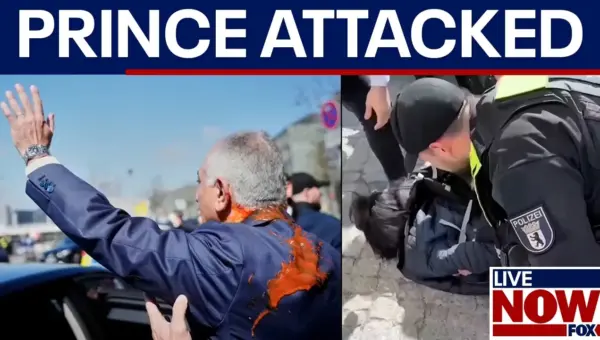
President Trump has ordered the U.S. Navy to "shoot and kill" any Iranian boats attempting to place mines in the Strait of Hormuz, escalating regional tensions. Meanwhile, exiled Iranian Crown Prince Reza Pahlavi was attacked in Berlin after criticizing U.S.-Iran talks. Geopolitical experts highlight the strait's critical role in global trade and the complex diplomatic and military dynamics at play.