China Poisoned Sea Waters, Philippines Claims
The Philippines claims China dumped cyanide near a military outpost in the South China Sea, potentially harming troops and marine life. Lab tests confirmed the toxic chemical in bottles recovered from Chinese vessels. This accusation escalates tensions in the disputed waters.

China Poisoned Sea Waters, Philippines Claims
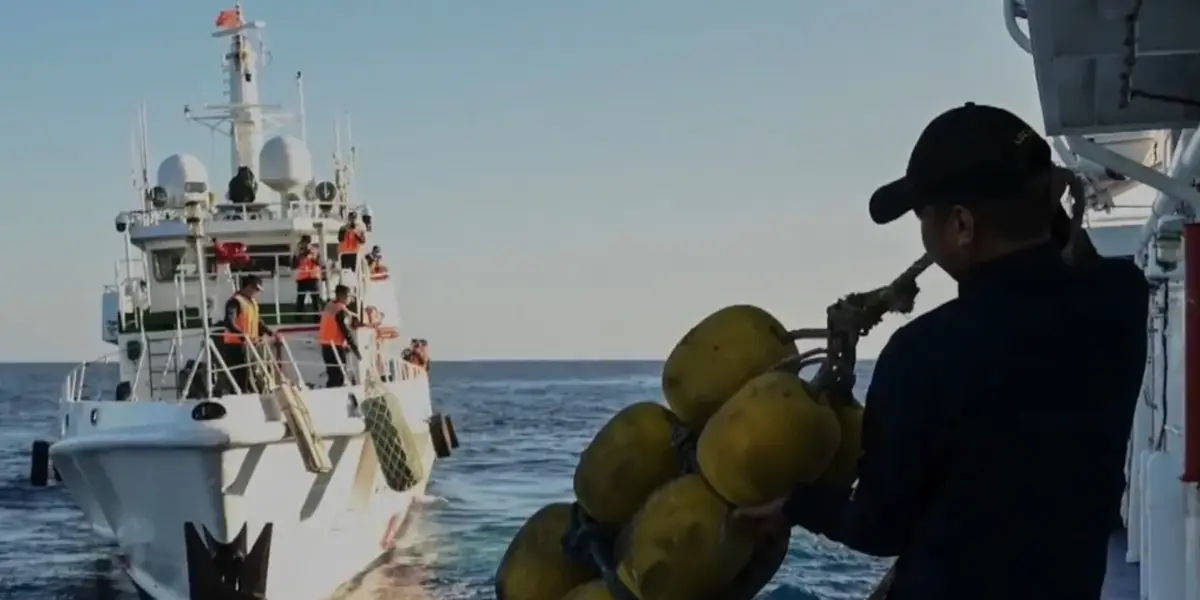
The Philippines has made a serious accusation against China. They say Chinese boats dumped cyanide, a dangerous poison, into the South China Sea near a Philippine military outpost. This happened close to a vital island where Filipino troops are stationed.
Philippine officials stated that lab tests proved this toxic chemical was found in bottles recovered from Chinese ships last year. These bottles were found during several separate incidents near the Second Thomas Shoal. This location is just west of the Philippines.
A Toxic Threat to Troops and Environment
The substance dumped, cyanide, is extremely poisonous. Philippine authorities are worried it could damage the grounded warship, the BRP Sierra Madre. This ship acts as a military base for their soldiers.
Cyanide can weaken metal and structures over time. If the ship’s structure is compromised, it could become unsafe for the troops. This would be a major blow to the Philippines’ presence in the disputed waters. The poison could also kill fish and other sea life. This would remove a crucial food source for the soldiers living on the outpost.
Sabotage and Escalating Tensions
The National Security Council of the Philippines called China’s alleged use of cyanide an act of sabotage. This means they believe China is trying to deliberately harm Philippine assets and personnel.
This incident adds to ongoing tensions between the Philippines and China over the South China Sea. China claims almost the entire sea as its own territory. This claim has been rejected by an international court. However, China continues to assert its control over the area.
Historical Context: A Contested Sea
The South China Sea has been a source of conflict for decades. Several countries, including the Philippines, Vietnam, Malaysia, Brunei, and Taiwan, have competing claims. China’s expansive claims, often shown on maps as a “nine-dash line,” cover about 90% of the sea.
In 2016, the Permanent Court of Arbitration ruled in favor of the Philippines, stating that China’s claims had no legal basis. Despite this ruling, China has continued to build artificial islands, militarize them, and assert its presence through its coast guard and maritime militia. The Philippines, historically a close ally of the United States, has been increasingly assertive in defending its maritime rights.
Philippines Responds
In response to the alleged cyanide dumping, the Philippines announced it will increase patrols. The navy and coast guard will conduct more operations in the area. The goal is to stop further environmental damage and prevent future incidents like this.
This move signals the Philippines’ determination to protect its territory and resources. It also highlights the growing risks associated with the territorial disputes in the South China Sea. The use of toxic substances, if proven, represents a dangerous new dimension to these conflicts.
Why This Matters
This accusation is significant because it involves the potential use of a highly toxic chemical in a disputed maritime area. It raises serious questions about China’s actions and their respect for international law and environmental safety. The incident directly impacts the safety of Filipino troops and the marine environment, which is vital for local economies and global biodiversity.
If confirmed, this act could be seen as a deliberate attempt to weaken a Philippine military presence without direct military confrontation. It pushes the boundaries of acceptable behavior in territorial disputes. The environmental consequences could be long-lasting, affecting fishing grounds and marine ecosystems for years to come.
Implications, Trends, and Future Outlook
The accusation of cyanide dumping points to a potential escalation in tactics used in maritime disputes. Instead of solely relying on physical blockades or harassment, a party might resort to environmental warfare. This could involve making areas uninhabitable or unusable through pollution.
This trend could lead to a more dangerous and unpredictable geopolitical situation. Other nations with territorial claims might feel pressured to adopt similar or retaliatory measures. The international community will be watching closely to see how China responds to these allegations and how the Philippines proceeds with its increased patrols.
The future outlook suggests continued friction in the South China Sea. The Philippines’ commitment to increased patrols shows a resolve to push back against perceived aggression. However, the vast power difference between the Philippines and China means that direct confrontation is unlikely. Instead, we may see more incidents like this, involving alleged harassment, environmental damage, and diplomatic protests.
The international community’s role will be crucial. Strong diplomatic pressure and adherence to international rulings are needed to de-escalate the situation. Without it, the South China Sea could become a more toxic and dangerous place, both environmentally and politically.
Source: Philippines Accuses China of Dumping Cyanide in South China Sea (YouTube)

Related Articles


Nvidia Chips Smuggled: China Gains AI Edge?
An investigation into alleged smuggling of $92 million in Nvidia AI chips to China raises national security concerns. U.S. authorities are scrutinizing how advanced technology bypassed export controls, potentially boosting China's military AI capabilities.

US, Allies Flex Naval Power in Contested Waters
The US and Australia joined the Philippines for joint naval exercises in the South China Sea, boosting regional defense and signaling a united front. These drills highlight growing cooperation and a shared commitment to security amid rising tensions.

Trump’s Tariff Threat: China’s Iran Arms Deal Sparks Crisis
President Trump has warned China against supplying weapons to Iran, threatening a "staggering" 50% tariff if they do. U.S. intelligence reports suggest China may be preparing to send air defense systems, including missiles, to Iran. This development significantly heightens tensions ahead of a crucial summit between President Trump and Chinese President Xi Jinping.